If you’ve never stayed in a hostel, sharing a room with strangers can feel scary. You’ve probably heard mixed opinions, stumbled across a horror story online, or simply wondered: what is a hostel, and is it safe for first timers? This guide answers that clearly. You’ll learn exactly what a hostel is, get 20 real-world safety tips, and leave knowing how to pick the right place, pack smart, and actually enjoy your stay. No fluff, no horror stories, just practical advice you can use right now.
What Exactly Is a Hostel? (The First-Timer’s Definition)
A hostel is budget accommodation where you book a bed rather than a private room. You share the sleeping space with other travellers, typically in a dorm with 4 to 12 beds. Bathrooms are usually shared too.
Hostels are not the grim, chaotic places you might picture. Most are clean, social, and well-run. They attract backpackers, solo travellers, students, and anyone who wants to travel affordably and meet people along the way.
You pay for a bunk, get a locker for your gear, and share communal spaces like a kitchen, lounge, or rooftop. Some hostels feel like boutique hotels. Others are basic but perfectly safe and functional. The experience varies a lot, which is exactly why knowing how to choose the right one matters so much.
Is Staying in a Hostel Safe? The Honest Answer
Yes, hostels are generally safe. The vast majority of travellers stay in hostels without incident. That said, safety is not automatic. Like any shared space, you need to be aware of your surroundings and take basic precautions.
The honest truth is this: most hostel theft is opportunistic. Someone sees an unattended bag, an open locker, or a phone left on a bed. It takes seconds. That is not a reason to avoid hostels. It is a reason to lock your stuff up.
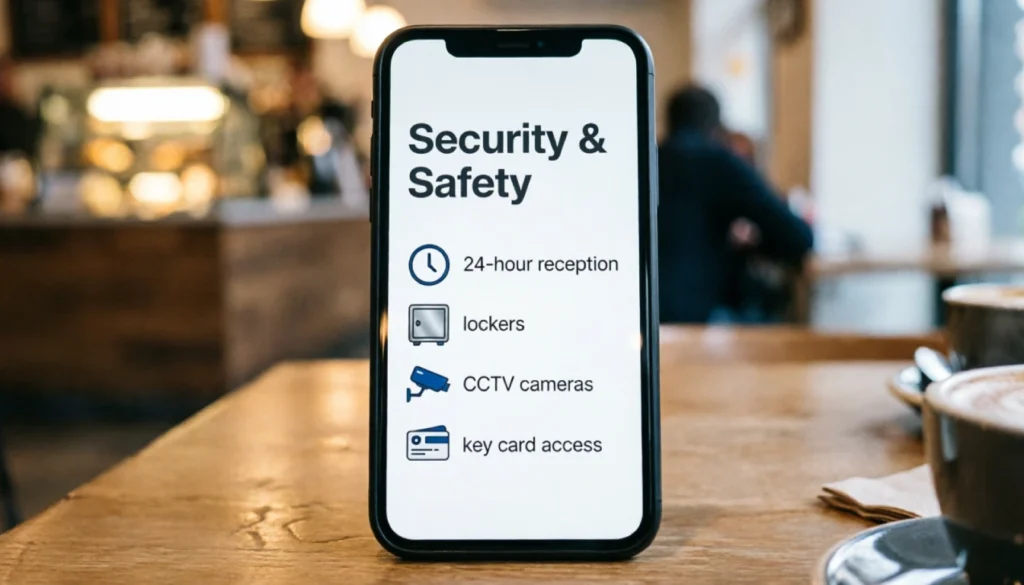
The bigger risks people fear, such as violence or serious crime, are extremely rare. Reputable hostels have security measures in place: key card access, CCTV, 24-hour reception, and staff who actually care.
I stayed in my first hostel in Lisbon in a 10-bed dorm. I was convinced something would go wrong. Nothing did. What I noticed instead was that most guests were tired travellers just like me, wanting a decent sleep and someone to get coffee with in the morning.
20 Beginner Hostel Safety Tips You Can Use Right Now
These tips cover every stage of your stay. Work through them in order and you’ll walk into your first hostel with confidence.
Before You Book
Tip 1. Read recent reviews, not just the star rating. Look at reviews from the last three months. Older reviews may not reflect current management or cleanliness. Search specifically for mentions of “theft,” “lockers,” or “security.”
Tip 2. Confirm lockers are available in the dorm. Not every hostel has lockers in the room. Some keep them in a separate area. Check the amenities list and, if it’s unclear, email the hostel directly before booking.
Tip 3. Book through reputable platforms. Hostelworld, Booking.com, and HostelBookers all show verified reviews. They also list security amenities clearly. Stick to places with a rating above 7.5 out of 10.
Tip 4. Choose a hostel with 24-hour reception. This matters more than you think. If something goes wrong at 2am, you want someone at the desk. No 24-hour reception is a red flag for safety.
Tip 5. Request a female-only dorm if you prefer it. Most hostels offer this option. It is not a sign of paranoia. It is a sensible choice, especially for your first stay.
At Check-In
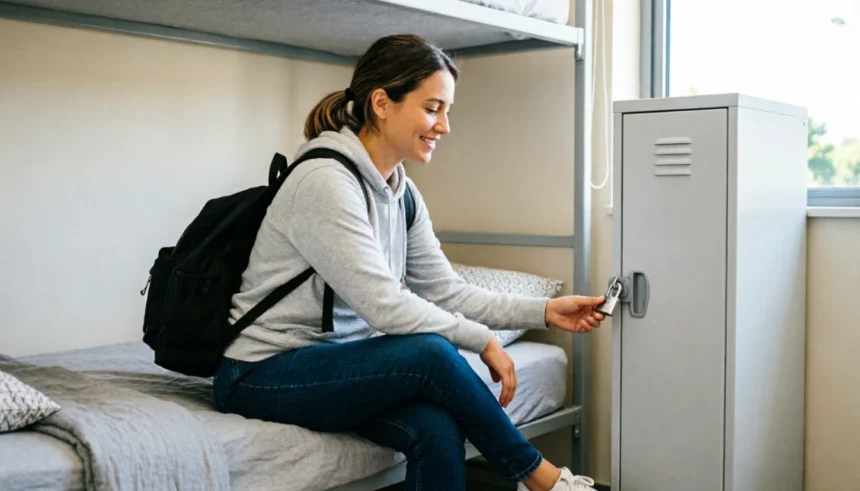
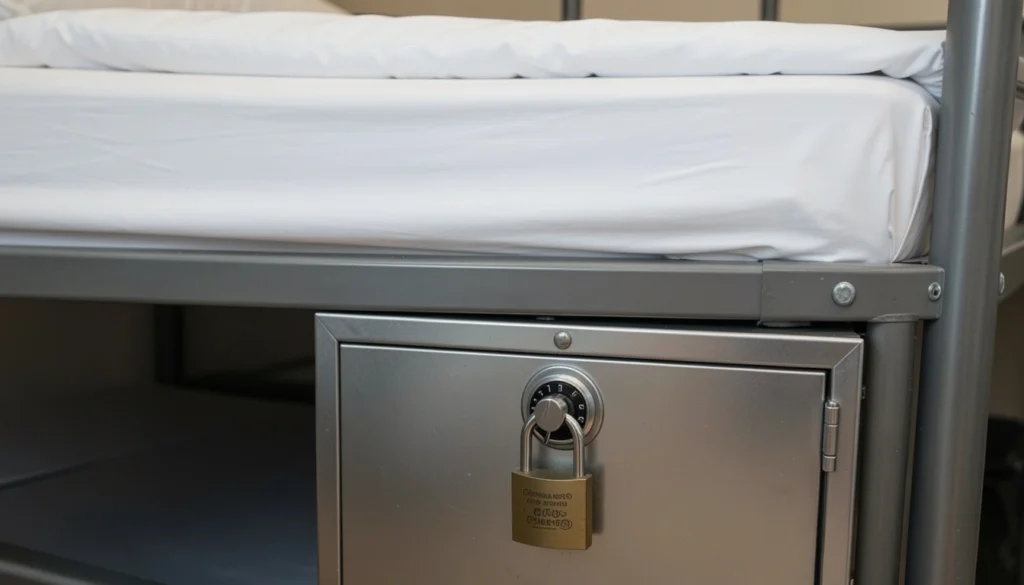
Tip 6. Ask to see the lockers before you unpack. When you arrive, ask the staff to show you the locker in your room. Check the size (will your bag fit?), confirm it has a lock mechanism, and make sure it works. Do this before you settle in.
Tip 7. Take a photo of the locker number and its contents. This sounds over the top but it takes 10 seconds. If anything goes missing, you have a timestamp and a record.
Tip 8. Note where the emergency exits are. Walk the route from your dorm to the nearest exit. It takes two minutes. You will never regret it.
Tip 9. Get the hostel’s Wi-Fi password and save the address offline. This is practical safety. If your phone dies or you get lost, you need to be able to find your way back without data.
Tip 10. Store your passport and extra cash in the locker immediately. Do not walk around with your passport in your pocket. Lock it up. Take a photo of it first and store it in your email or cloud.
In the Dorm
Tip 11. Lock your locker every single time, even for a short trip to the bathroom. Opportunistic theft happens in minutes. Make locking the locker a reflex, not an afterthought.
Tip 12. Use a padlock you bought yourself. Some hostels provide padlocks, but the locks they supply can be low quality or the keys can be duplicated. Bring your own combination padlock.
Tip 13. Secure your large bag with a cable lock. If your bag does not fit in the locker, loop a cable lock through the zips and around a fixed object like a bed frame. This stops someone grabbing your bag quickly.
Tip 14. Keep your phone and small valuables in a zipped pouch under your pillow at night. This is a habit I picked up after my second hostel stay and it completely ended my anxiety about sleeping. You feel your valuables there. You sleep better.
Tip 15. Introduce yourself to your dorm mates. This is both a social and safety tip. When you know the people in your room, even briefly, the atmosphere shifts. Strangers become faces. Everyone is more accountable.
Tip 16. Do not leave charging cables and tech visible and unattended. A phone charger left out is an invitation. Put it in the locker or your bag when you leave the room.
When Out Exploring
Tip 17. Use a money belt for your cards and cash. Wear it under your clothes. Only pull it out in private. It is one of the cheapest and most effective things you can do to protect your money.
Tip 18. Share your daily plan with someone. Tell a dorm mate, message a friend back home, or drop your itinerary in a group chat. Someone should know roughly where you are.
Tip 19. Keep a backup card and emergency cash separate from your wallet. Store a spare debit card and around $50 in your locker. If your wallet gets stolen, you have a fallback.
Tip 20. Trust your instincts about people and places. If a situation feels off, leave. If someone in your dorm makes you uncomfortable, tell reception. You are not being dramatic. You are being sensible.
How to Choose a Safe Hostel Before You Book
When you’re browsing listings, you’re looking for specific signals. Here’s how to choose a safe hostel for first time solo travel without spending an hour on each listing.
Start with the security amenities section. Look for: lockers in dorms, 24-hour reception, key card access to rooms, CCTV in common areas. If four of those five are listed, it’s a strong sign.
Next, read the most recent negative reviews. Not to scare yourself, but to spot patterns. One bad review about a noise complaint is nothing. Three reviews mentioning stolen items in the same month is a red flag.
Check the hostel’s location on a map. Is it in a well-lit, walkable area? Is it easy to get back to late at night? A hostel with great security in a poorly lit street at the end of a difficult route home is not ideal for a first timer.
Finally, look at the photos. Does the dorm look clean and organised? Are the lockers visible and solid? Photos tell you a lot about how a hostel is managed. Poorly lit or obviously outdated photos often mean the listing hasn’t been updated, and that’s a signal on its own.
Hostel Safety for Solo Female Travellers
Solo female travellers stay in hostels all over the world every day. It is a completely viable and often wonderful experience. These specific tips will help you feel more in control.
Book female-only dorms. Most hostels offer them. They’re not always available in smaller towns, but in cities they’re standard. The price difference is minimal.
Sit in the common room in the evening. Common areas are where you meet the best people and where you’re most visible. Solo time in the dorm is fine, but don’t isolate yourself out of fear.
Trust your gut about dorm mates. If someone in the room makes you uncomfortable, tell reception. Staff at reputable hostels take complaints seriously.
Keep your door handle alarm or door stop alarm set at night. These cost under $15 and wedge under the door or hang on the handle. They make a loud noise if the door is opened unexpectedly.
Use apps like iOverlander or Girls LOVE Travel. These communities share real, up-to-date hostel safety reviews from female travellers specifically.
What to Pack for Hostel Security (Plus a Simple Checklist)
Packing right is the best hostel safety checklist for a first time traveller you can put together before you leave home.
Here’s exactly what to bring:
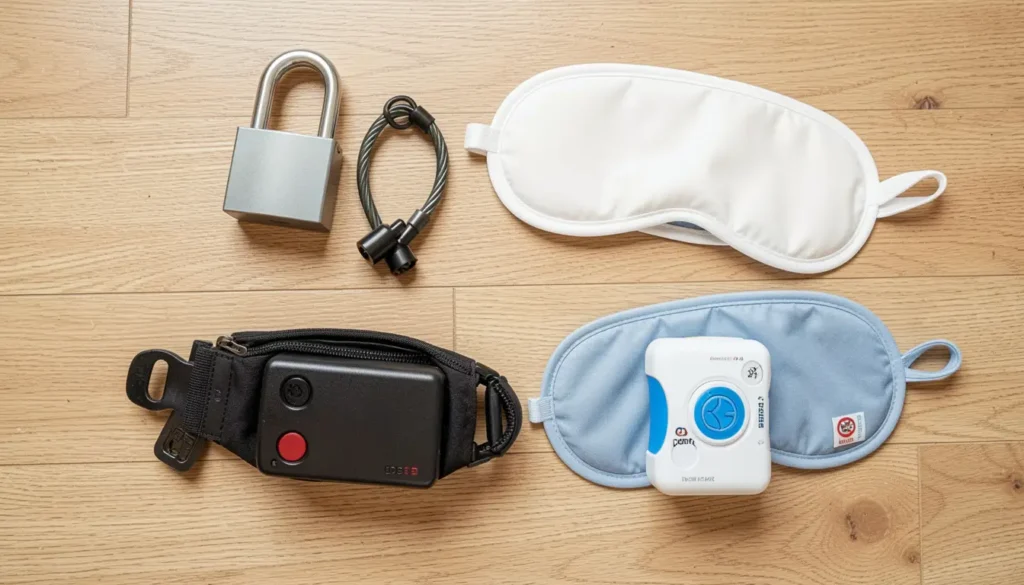
- Combination padlock (not a key lock, keys get lost)
- Cable lock (for securing your bag to a fixed object)
- Money belt (wear it under your clothes)
- Portable door stop alarm (peace of mind for overnight stays)
- Earplugs and sleep mask (practical comfort in shared dorms)
- Zipped travel pouch (for phone and small valuables overnight)
- Photocopies or digital copies of your passport (stored in email or cloud)
- Backup debit card (kept separate from your main wallet)
I used to skip the cable lock because my bag fit in the locker. Then I stayed in a hostel in Prague where the lockers were too small for my 40L pack. I spent the first night anxious about my bag sitting under the bed. After that trip, the cable lock went into my pack permanently. It weighs almost nothing and I’ve never had that problem again.
Frequently Asked Questions
Do hostels have lockers, and are they safe?
Most hostels have lockers, but the quality varies. In-room lockers are better than shared-area lockers. They’re safe when you use your own padlock and lock them every time. Never rely on the locker alone for your passport or cards. Keep a second copy of key documents in the cloud.
Can I trust the people in my dorm?
Most guests are other travellers with no interest in your stuff. They’re tired, they want a bed, and they’re doing exactly what you’re doing. That said, don’t leave things unattended. Trust people, but lock your valuables.
What if someone steals from me?
Report it to reception immediately. File a police report if anything significant is taken. Travel insurance covers theft in most cases. This is exactly why travel insurance is worth buying before any trip.
Is a bottom bunk safer?
For your first stay, yes. Bottom bunks give you easier access to your locker and you’re not climbing up and down in the dark. Experienced hostel guests often prefer top bunks for privacy, but bottom is easier to start with.
What about bed bugs?
Check the mattress and the corners of the bed frame when you arrive. If you see small dark spots or have unexplained bites, tell reception and ask to move rooms. It’s uncommon in well-rated hostels but worth checking.
Is a solo trip to a hostel safe for someone who has never travelled alone?
Yes. Choose a hostel with high reviews, start with a smaller dorm (4 to 6 beds), and follow the tips in this guide. Thousands of first-time solo travellers do it every week without incident.
Ready for Your First Safe Hostel Stay?
Staying in a hostel is one of the best decisions you can make as a first-time budget traveller. You save money, you meet people, and you often end up in locations and conversations that a hotel room would never give you.
The key to answering “what is a hostel and is it safe for first timers” is this: yes, with the right preparation it is absolutely safe. Lock your stuff, choose your hostel carefully, bring a padlock, and trust your instincts. That covers 90 percent of what you need.
Use the 20 tips in this guide as your starting point. Bookmark the packing checklist before you travel. And if you’re nervous, that’s okay. Every experienced hostel traveller was a first timer once.
Your first hostel stay is waiting. Go book it.
Did this guide help you?
Drop a question or your first hostel story in the comments below. If you found this useful, share it with a friend who’s planning their first solo trip.