
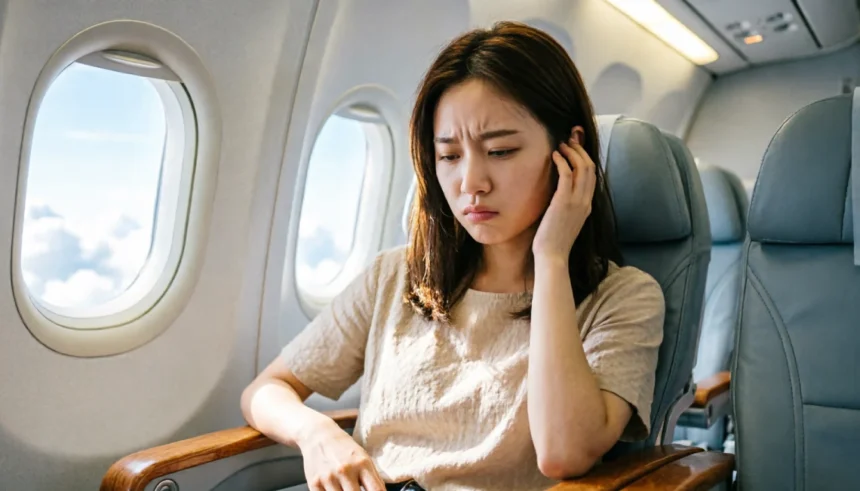
I still remember my first long-haul flight. I was 22, heading to Barcelona, buzzing with excitement. Then the plane started its descent. Out of nowhere, a sharp, squeezing pain hit both my ears. I swallowed hard. Yawned. Tilted my head. Nothing helped. By the time we landed, I could barely hear out of my left ear, and the pressure was so bad I felt dizzy.
If that sounds familiar, you are not alone. Ear pain when flying is one of the most common travel complaints out there. And the frustrating part? Most people have no idea why it happens or what to do about it.
This article covers exactly why your ears hurt on planes, what is actually going on inside your ear during takeoff and landing, and the most effective ways to stop airplane ear pain before it ruins your trip.
Why Do Your Ears Hurt When Flying?
The short answer: air pressure changes.
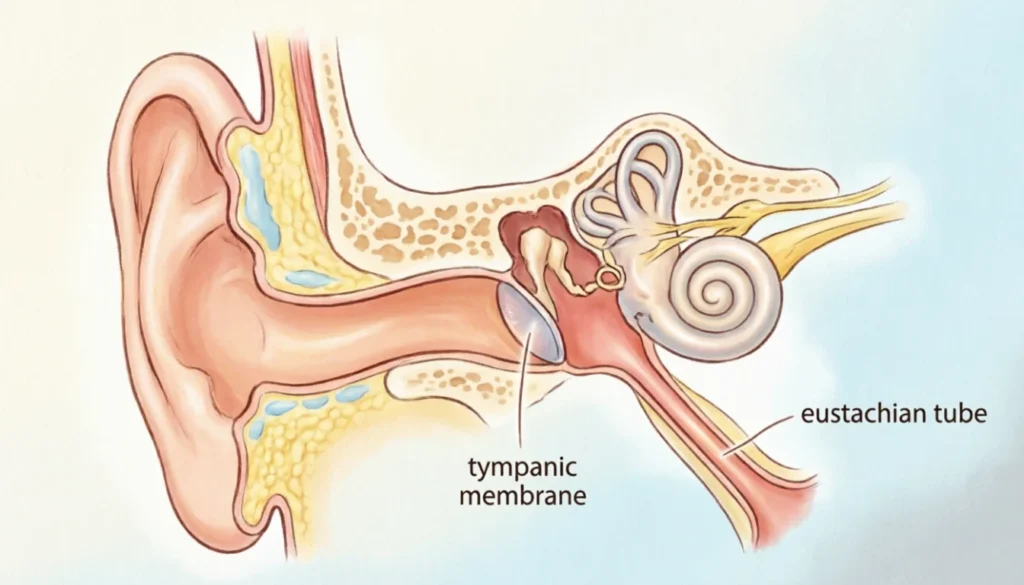
When a plane climbs or descends, the air pressure in the cabin shifts. Your middle ear needs to match that pressure through a small channel called the eustachian tube. This tube connects your middle ear to the back of your throat, and its job is to keep the pressure on both sides of your eardrum equal.
When it works well, you barely notice it. When it does not, you get that awful ear pressure flying feeling, or worse, sharp ear barotrauma pain.
Ear barotrauma is the medical term for what happens when the pressure difference across your eardrum gets too large. It can cause pain, muffled hearing, a feeling of fullness, and in serious cases, a ruptured eardrum.
Why Does It Get Worse During Descent?
Most people notice ear pain during landing, not takeoff. There is a real reason for this.
During takeoff, the cabin pressure drops gradually. Your eustachian tube can usually handle that. But during descent, pressure rises quickly, and your tube has to work harder to keep up. If it cannot equalize fast enough, the pressure difference builds against your eardrum from the outside, which is what creates that intense squeezing pain.
This is also why ear pain during takeoff and landing affects some people every single flight, while others only feel it occasionally.
What Makes It Worse?
Some people are more prone to airplane ear symptoms than others. Here is what increases your risk.
- Flying with a cold. Congestion swells the lining of your eustachian tube, making it harder to open. Flying with blocked ears because of a cold is a recipe for real pain.
- Allergies or sinus pressure. Same issue. Inflammation narrows the tube.
- Small children. Kids have narrower eustachian tubes, which is why babies cry on planes during descent. It genuinely hurts them.
- Ear infections. Flying with otitis media can make pain severe and increase the risk of a perforated eardrum.
- Chronic eustachian tube dysfunction. Some people struggle with this regularly, not just on flights.
How to Stop Ear Pain When Flying: Proven Methods
Here is the practical part. These are the most effective flying ear pain relief strategies, from simple tricks to medical options.
1. Try the Valsalva Maneuver
This is the classic “hold your nose and blow gently” technique. You are forcing air up into the eustachian tube to pop it open. Do it slowly and gently. Never blow hard, as this can damage your eardrum.
It works well during descent. As soon as you feel pressure building, use this every few minutes.
2. Swallow, Yawn, or Chew Gum
Swallowing and yawning both activate the small muscles that open your eustachian tube. Chewing gum keeps you swallowing regularly, which is why it helps many people.
However, for some people, chewing gum can make ear pain worse on planes if they are already congested. If gum is not working, switch to a different method.
3. Use Pressure-Regulating Earplugs
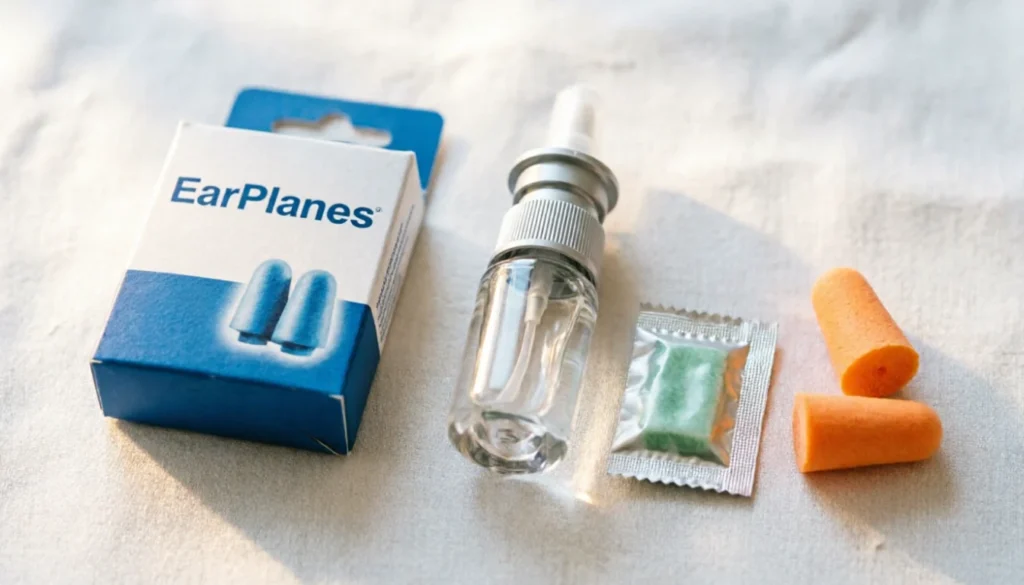
Products like EarPlanes are specifically designed for flying. They slow down the rate of pressure change reaching your eardrum, giving your eustachian tube time to equalize.
These are not regular foam earplugs. They have a built-in ceramic filter that regulates pressure. Many frequent flyers swear by them. You can find EarPlanes for kids too, which is a game-changer for parents.
4. Take a Nasal Decongestant Before You Board
If you know you are prone to ear pain, take an OTC nasal decongestant like pseudoephedrine about 30 to 60 minutes before your flight. It shrinks swollen nasal tissue and opens up the eustachian tube.
Nasal sprays like Afrin also work, but use them carefully. They can cause rebound congestion if overused. One dose before descent is usually enough.
5. Stay Awake During Descent
This one surprises people. When you sleep, you stop swallowing regularly. You miss the natural pressure equalization your body does while awake. Waking up during a rapid descent with clogged ears is miserable.
Set a quiet alarm or ask a flight attendant to wake you before landing.
6. Try the Toynbee Maneuver
Less well-known than Valsalva, but useful. Pinch your nose and swallow at the same time. This creates a different kind of pressure that can open a stubborn eustachian tube. Some people find it works better than the Valsalva method.
How to Help Your Baby or Toddler on a Plane
Babies cannot do the Valsalva maneuver, obviously. But there are ways to help them.
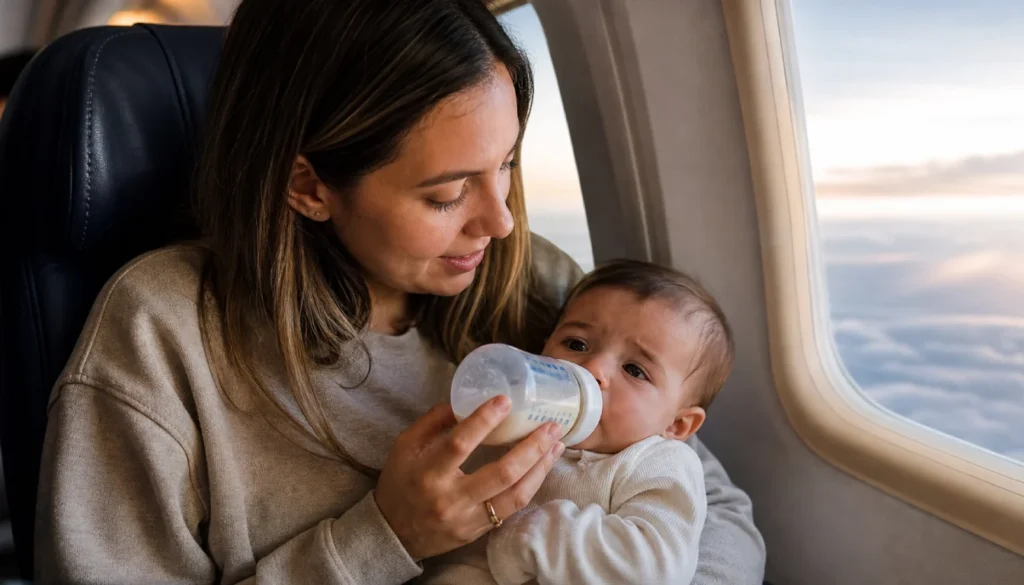
- Breastfeed or bottle-feed during takeoff and landing. Swallowing repeatedly helps equalize pressure.
- Use a pacifier. Same principle.
- Try the sippy cup trick. For toddlers, a sippy cup works well during descent. The sucking and swallowing motion helps pop their ears.
The narrower eustachian tubes in children make them more sensitive, but these simple techniques genuinely reduce the problem. If your child has a current ear infection, talk to your pediatrician before flying.
What If Your Ears Are Still Clogged Days After Flying?
This happens. You land, and hours or even days later, your ears feel full, muffled, or painful. This is called persistent airplane ear, and it means the pressure or mild fluid buildup in your middle ear has not resolved on its own.
What helps:
- Steam inhalation to open the eustachian tube
- A warm compress over the ear
- OTC pain relief medicine like ibuprofen for inflammation
- Nasal decongestant spray for a few days
If your muffled hearing after a flight does not clear within a week, or if you have ear pain after flying for days that keeps getting worse, see a doctor. You may have fluid in the middle ear or mild barotrauma that needs treatment.
Can Flying Cause Permanent Ear Damage?
In rare cases, yes.
Severe ear barotrauma can rupture your eardrum. Signs include sudden sharp pain, hearing loss, ringing in the ear, or fluid draining from the ear. This sounds scary, but most ruptured eardrums heal on their own within a few weeks.
Flying with a perforated eardrum is a different situation entirely. If you already have one, get clearance from your doctor before boarding. The pressure changes can make the injury worse.
For most healthy people, routine flights do not cause permanent damage. But ignoring repeated pain and flying with chronic eustachian tube dysfunction without any protection can lead to cumulative problems over time.
Quick Comparison: Best Methods for Airplane Ear Relief
| Method | Best For | Ease of Use | Cost |
|---|---|---|---|
| Valsalva Maneuver | Adults, teens | Easy | Free |
| EarPlanes earplugs | All ages, kids version available | Very easy | Low |
| Nasal decongestant spray | Congested travelers | Easy | Low |
| Chewing gum | Mild cases | Very easy | Free |
| Toynbee Maneuver | Stubborn ear blockage | Moderate | Free |
| Steam inhalation before flight | Congested travelers | Moderate | Free |
Frequently Asked Questions
Why do my ears hurt more on landing than takeoff?
Cabin pressure rises faster during descent than it drops during ascent. Your eustachian tube has less time to compensate, so the pressure difference builds up more quickly against your eardrum.
Can I fly with an ear infection without feeling pain?
Not reliably. An active ear infection inflames the eustachian tube and middle ear, making barotrauma far more likely and potentially severe. If the infection is mild and your doctor says it is safe, using decongestants and pressure-regulating earplugs can help. But flying with a serious ear infection is risky.
How long does airplane ear last after a flight?
For most people, it clears within a few hours to a day. If your ears are still clogged days after a flight, that suggests lingering fluid or inflammation in the middle ear. Try steam, warm compresses, and a short course of decongestants. See a doctor if it does not improve within a week.
Do noise-cancelling headphones help with ear pressure on planes?
They reduce noise, but they do not regulate cabin pressure reaching your eardrum. They will not prevent ear barotrauma. For pressure relief, use purpose-made pressure-regulating earplugs like EarPlanes instead.
Is ear pain when flying dangerous for frequent flyers?
Occasional discomfort is normal and usually harmless. But if you fly often and regularly experience ear pain, it is worth talking to an ENT specialist. Repeated trauma to the eardrum and middle ear can eventually cause hearing issues or chronic eustachian tube dysfunction.
Final Thoughts
Ear pain on planes is genuinely miserable, especially when you are mid-flight with nothing to do about it. But it does not have to be part of every trip.
The good news is that most airplane ear pain is preventable. A little preparation before your flight, a pair of pressure-regulating earplugs in your bag, and knowing what to do during descent can make a real difference. Whether you are a nervous first-time flyer or someone who boards planes weekly, your ears deserve some attention.
If you have tried everything here and still struggle every single flight, see an ENT. There may be an underlying issue with your eustachian tubes that is worth addressing properly.
Have you dealt with ear pain on a flight? What worked for you? Drop your experience in the comments. Someone else reading this right now is probably in the same situation and would love your tip.