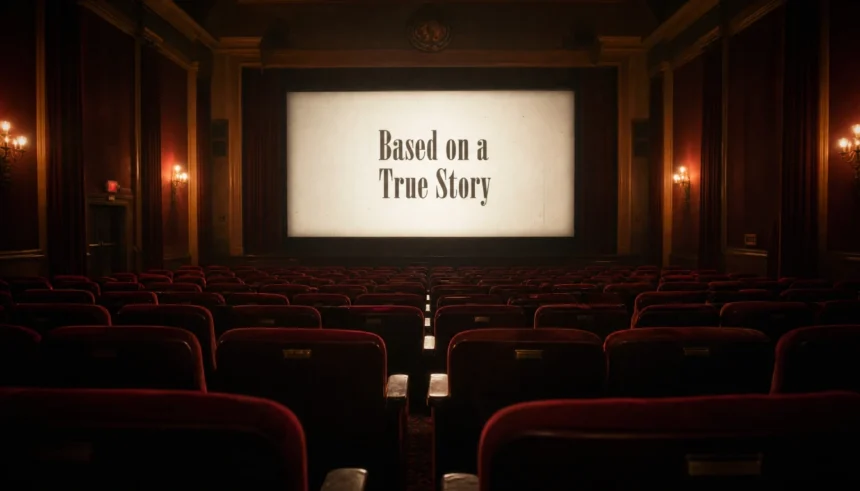
I remember watching The Conjuring with the lights off, completely convinced I was watching a faithful retelling of real events. The title card said “based on a true story.” The marketing leaned into it hard. I went to bed unsettled.
Then I did some digging. What I found changed how I watch movies forever.
The phrase “based on a true story” sounds like a seal of accuracy. Like someone’s vouching for it. But in reality, it’s one of the loosest, most legally undefined labels in the entire film industry.
In this article, I want to break down what this phrase actually means, why filmmakers use it, how much truth you can expect, and what to do when you actually want to know what really happened. No fluff. Just the real story behind the “true story.”
The Definition Nobody Talks About
Here’s the short answer: “based on a true story” has no official legal definition in film.
There is no regulatory body. No checklist. No minimum percentage of accuracy required. A studio can slap that phrase on a movie even if only the names and one plot point came from real life. Everything else can be invented.
The based on a true story definition in practice is this: some real event or person inspired the story. That’s it. The rest is up to the filmmakers.
This is very different from how most viewers interpret it. Research consistently shows audiences trust “true story” films more and rate them higher, even when the events depicted are heavily dramatized or outright fabricated.
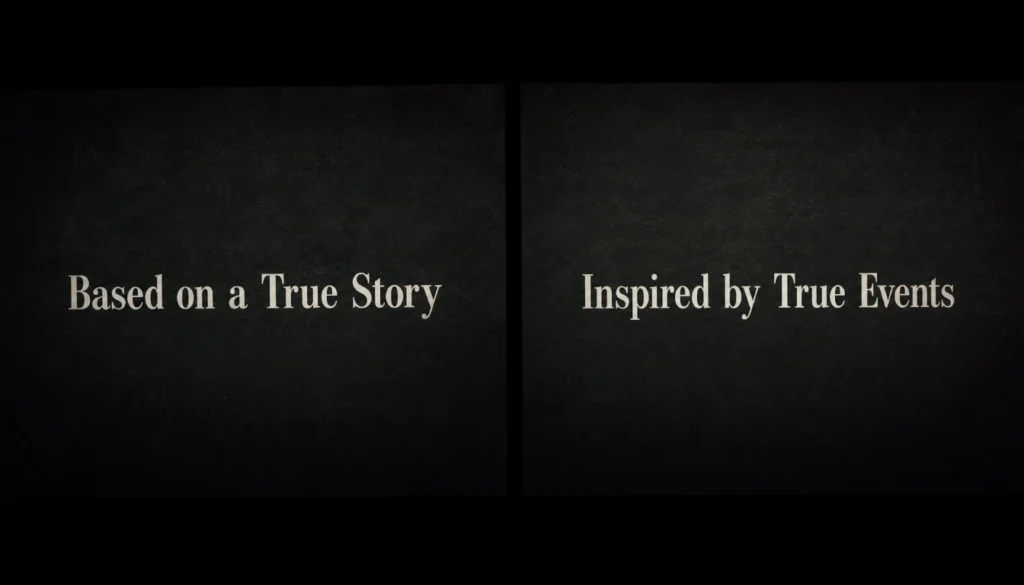
“Based on a True Story” vs. “Inspired by True Events”: Is There a Difference?
Yes, and it matters.
| Label | What It Usually Means |
|---|---|
| Based on a true story | Closer to real events, real names, real timeline (in theory) |
| Inspired by true events | Looser connection; tone or theme drawn from reality |
| True story | Often just marketing language |
| Based on a true account | Usually tied to a specific book, testimony, or document |
In practice, these labels overlap constantly. Studios use them interchangeably depending on what sounds more compelling, not what’s more accurate.
The difference between “based on a true story” and “true story” is mostly vibe. Neither comes with a fact-checker.
Why Do Filmmakers Change Real Events?
This is the question I kept asking. If something really happened, why change it?
Here are the most common reasons:
- Legal protection. Showing a real person doing something unflattering can lead to defamation lawsuits. Changing names or combining characters reduces that risk.
- Pacing. Real life is slow and messy. Films need a three-act structure. Some things get cut, compressed, or reordered.
- Emotional clarity. A real story might have an ambiguous ending or a villain who never got caught. Movies usually need resolution.
- Missing information. Filmmakers often don’t have access to every private conversation or internal thought. They fill gaps with educated guesses.
- Audience appeal. Studios want people to show up. A dramatically heightened version of events sells more tickets.
None of this is inherently dishonest. But it’s worth knowing before you treat a film like a documentary.
How Accurate Does a “True Story” Film Actually Have to Be?
Legally? Not at all.
There is no legal requirement for accuracy. No minimum threshold. No rule that says 70% of events must be factually correct to use the label.
Some films are genuinely close to the truth. All the President’s Men is praised by journalists for its accuracy. Apollo 13 held up well under scrutiny from NASA engineers.
Others? Not so much.
Bohemian Rhapsody rearranged Queen’s entire timeline to make the Live Aid performance a dramatic climax, when in reality Freddie Mercury’s HIV diagnosis came years after that show. The Social Network has been publicly disputed by multiple people involved in Facebook’s founding. Braveheart plays fast and loose with almost every historical detail.
These films all say “based on a true story.” They all mean something completely different by it.
Can a Movie Say “Based on a True Story” and Still Lie?
Technically, yes.
The phrase has no legal teeth. You can’t sue a studio simply because their “true story” movie got the facts wrong. Courts have consistently treated dramatic films as creative works, not factual reports. The disclaimer “this is a dramatization” often appears in smaller print for exactly this reason.
Where legal trouble does come in is defamation. If a film depicts a real, living person committing a crime they didn’t commit, or seriously damages their reputation with false claims, that person may have grounds to sue. This is why so many “based on true events” films change names, merge characters, or add the phrase “some characters and events have been fictionalized.”
It’s legal protection, not a honesty pledge.

How to Actually Fact-Check a “True Story” Movie
I’ve developed a simple process for this. It takes about 10 minutes and saves a lot of confusion.
Step 1: Search the film’s title plus “accuracy” or “fact check.” Sites like History vs. Hollywood, Snopes, and Politifact often cover major releases.
Step 2: Look for primary sources. If the film is based on a book, read reviews of the book. If it’s based on a trial, court records are often public.
Step 3: Find interviews with the real people involved. They almost always push back on something.
Step 4: Check the ending. If the film ends with a neat resolution, look up what actually happened. Tidy endings are often invented.
Step 5: Read the closing title cards carefully. They sometimes quietly admit major changes: “events were condensed for dramatic purposes.”
Quick Tips for Watching True Story Films
- Treat every true story film as a dramatization until proven otherwise.
- Pay attention to which people are composites. This is usually admitted in the credits.
- Check if the real people involved have spoken about the film publicly.
- Notice when dialogue feels suspiciously cinematic; real conversations rarely do.
- Use the film as a starting point, not an endpoint.
Is “Based on a True Story” Just a Marketing Tool?
Sometimes, yes.
Studies on film marketing show that audiences are more likely to watch, and more likely to emotionally invest in, a film labeled as true. Distributors know this. The label gets applied strategically.
There’s also a secondary purpose: it lends films a sense of importance. “This really happened” carries weight that pure fiction doesn’t. It signals that the story matters beyond entertainment.
That’s not always cynical. Sometimes a filmmaker genuinely wants to honor real events and real people. But the label has been used so broadly that it no longer guarantees anything specific.
FAQs
What percentage of a movie has to be true to say “based on a true story”?
There is no set percentage. Legally and industrially, there is no minimum requirement. A film can share only the basic premise with real events and still use the label.
Do filmmakers need permission to make a movie based on someone’s true story?
Not always. Public figures and public events are generally fair game. For private individuals, or to use someone’s direct testimony or memoirs, filmmakers typically need to purchase “life rights.” Without these, they adjust details to avoid legal exposure.
What is the difference between a biopic and a “based on a true story” film?
A biopic focuses on a specific real person’s life, usually using their real name and known biography. A “based on a true story” film may draw from real events without being centered on a single person. Both can be heavily fictionalized.
Can you sue a movie studio for inaccurate “true story” claims?
Generally, no, just for inaccuracy. But if you are a real person depicted in the film and the portrayal is false and damaging to your reputation, you may have grounds for a defamation claim. This is rare but it has happened.
How do I know if a Netflix true story movie is actually accurate?
Start with the end credits and any written disclaimers. Then search for fact-checks from entertainment journalists or historians. Netflix has faced criticism for several dramatized true stories that stretched the facts significantly, so viewer skepticism is warranted.
The Bottom Line
“Based on a true story” is a phrase that opens a door. It says: real events live somewhere in this film. But it does not tell you how far the filmmakers walked through that door, or how far they wandered off from it.
The films can still be great. They can be emotionally honest even when they’re factually loose. They can spark real conversations about real history. None of that requires them to be perfectly accurate.
What changes is how you watch. Go in curious, not credulous. Let the film move you, then let your curiosity lead you to the real story afterward. That’s where things often get even more interesting.
If you’ve ever been surprised by what a “true story” film got right or wrong, I’d love to hear about it. Drop a comment below, share this with someone who loves picking apart movies, or tell me which film you’re going to fact-check next.