

Here are 7 ideas I’ve tested or seen work firsthand, each one suited to people who prefer depth over performance.
Why Introverts Are Built for Online Business
Most high-energy, outward-facing business models burn introverts out fast. But online business? It rewards different strengths: concentration, careful writing, niche research, and consistent solo work.
You do not need a personal brand with 100K followers. You do not need to be on every platform. The businesses below all share one thing: your work does the talking, not you.
What “Low Competition” Really Means in 2026
Low competition does not mean low income. It means you are targeting a specific, underserved corner of a market rather than fighting thousands of sellers for the same generic keywords.
In 2026, the most crowded spaces online are: dropshipping generic products, broad lifestyle content, and commodity print-on-demand. The low-competition sweet spot is specific niches with clear buyer intent, like “Notion templates for ADHD freelancers” or “printable budget planners for nurses.”
That specificity is where introverts thrive. You tend to go deep on topics rather than wide. That is a genuine advantage.
7 Low Competition Online Business Ideas for Introverts
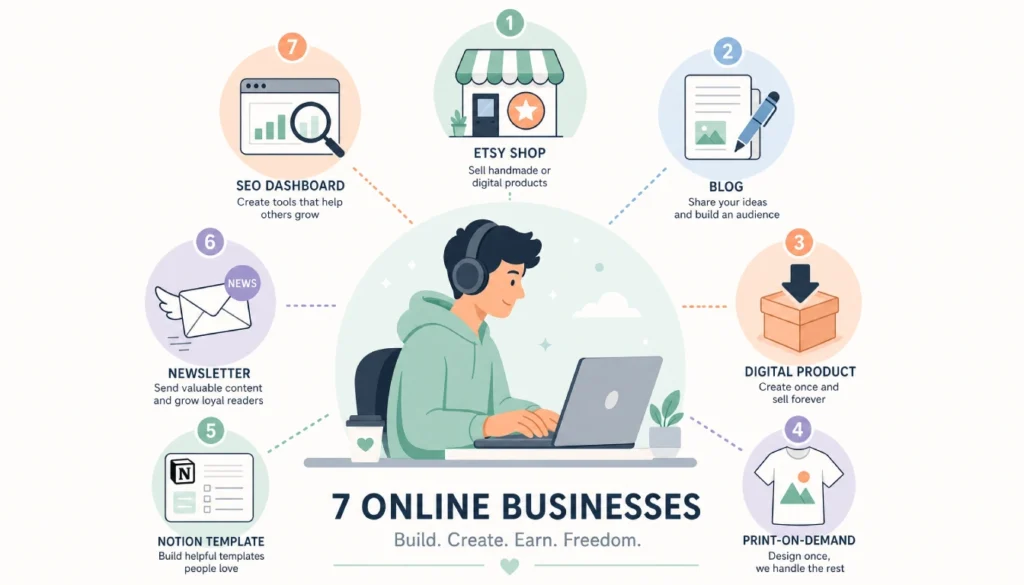
1. Selling Digital Templates and Printables
Interaction Level: 1 / 10You design a template once on Canva or Notion, upload it to Etsy or Gumroad, and it sells while you sleep. No customer calls. No shipping. No face time. Just a product that solves a problem.
Best niches in 2026: ADHD planning systems, nurse scheduling templates, small business invoice kits, wedding planning checklists.
Startup cost: $0 to $35 for a Canva Pro month and an Etsy listing fee.
2. Niche Affiliate Blog
Interaction Level: 2 / 10You write helpful articles on a very specific topic, earn traffic from Google, and place affiliate links for products you actually recommend. No meetings, no client revisions, no phone calls.
This is one of the best introvert-friendly online businesses with no talking because every step happens in writing: research, drafting, publishing, and linking.
Example: A blog about ergonomic gear for remote workers, linking to Amazon Associates products. One solid article on “best lumbar supports for standing desks” can earn $200 to $600 per month passively once it ranks.
3. Faceless Print-on-Demand Store
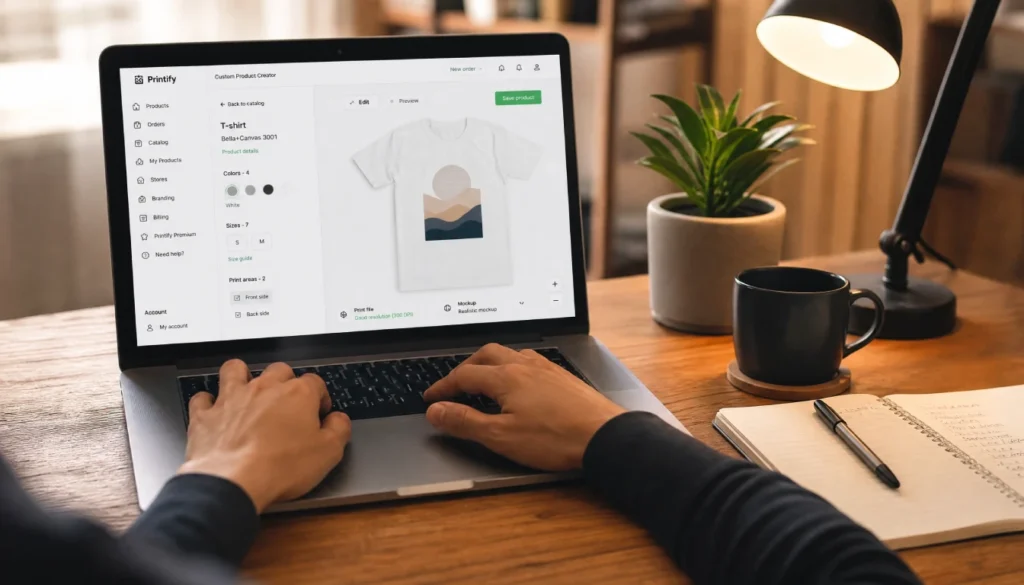
Interaction Level: 2 / 10Platforms like Redbubble, Merch by Amazon, and Printful handle printing and shipping. You just upload designs. You never see a customer or handle a parcel.
The key is niche specificity. “Funny nurse mug with dark humor” outperforms “funny nurse mug” every time. The narrower the niche, the less competition and the more loyal the buyer.
Startup cost: Free on Redbubble. Around $30 to $70/month on Shopify with Printful if you want your own store.
4. SEO Content Writing for Small Businesses
Interaction Level: 3 / 10Small businesses need blog content but most owners hate writing. You write articles for them. All communication happens over email or a shared Google Doc. Many of my freelance writer friends charge $150 to $350 per article and never jump on a call.
This works best if you narrow your niche: “I write SEO blogs for SaaS companies” or “I write for local home service businesses.” Niche writing commands higher rates and attracts better clients.
Where to find work: Contra, ProBlogger job board, cold email to local businesses with weak blog content.
5. Ko-fi or Patreon Membership for a Quiet Skill
Interaction Level: 2 / 10If you have a skill: watercolor, crochet, bookbinding, code, calligraphy, you can share your process in writing or short video and charge a small monthly fee. Ko-fi is particularly good for introverts: no algorithm pressure, no live streams required.
100 members paying $5/month is $500 recurring income. That is achievable in a focused niche within 6 to 12 months of consistent posting.
6. Selling Ebooks or Micro-Courses
Interaction Level: 1 / 10You package what you know into a PDF or a short course on Gumroad or Teachable. No live teaching, no Q&A sessions. You write it once and sell it forever.
This is one of the best passive income ideas for introverts with no social media dependency because you can drive traffic from a blog or Pinterest instead of Instagram or TikTok.
Examples: “A 30-page guide to negotiating your first freelance rate,” “A 5-lesson course on setting up a bookkeeping spreadsheet for Etsy sellers.”
7. Niche Email Newsletter
Interaction Level: 2 / 10A newsletter is a business model most introverts overlook. You write once a week for a specific audience. Readers pay a subscription or you earn from sponsorships. No social media required. No face. Just your words in someone’s inbox.
Beehiiv and Substack are both free to start. A newsletter about “tools for remote freelancers” or “slow travel on a budget” can attract sponsors once you hit 1,000 engaged subscribers.
Growth tip: Cross-post to a single Reddit community or one Pinterest board. No need to be everywhere.
How to Pick the Right Idea for Your Energy and Skills
Ask yourself three questions before you choose.
- Can you tolerate it on a hard day? Client writing is still work. If words exhaust you, templates or print-on-demand might suit you better.
- Do you have a niche you care about? Any of these models gets easier when you already know the audience.
- What is your tolerance for delayed income? Blogs and newsletters take 3 to 12 months to pay. Templates and freelancing pay faster.
I have seen beginners fail by choosing what sounds most impressive rather than what fits their actual life. Pick the one you will show up for on a quiet Tuesday, not just the one that sounds best in a YouTube thumbnail.
Tools That Let You Work Alone and Stay Organised
You do not need many tools. Here is what actually gets used:
- Notion for organizing ideas, content calendars, and project notes.
- Canva for templates, ebook covers, and printable designs.
- Gumroad or Lemon Squeezy for selling digital products with zero coding.
- Beehiiv for an email newsletter if you go that route.
- Ubersuggest or Ahrefs Webmaster Tools (free) for keyword research on a blog.
None of these require a monthly subscription to start. The free tiers cover everything you need in the first six months.
Common Fears (and How to Quietly Overcome Them)
“What if nobody buys?”
Validate before you build. Search the keyword on Etsy or Amazon. If other sellers list similar products with reviews, buyers exist. You do not need to invent demand. You need to serve it slightly better or more specifically.
“I am not an expert.”
You do not need to be the world’s best. You need to know more than your buyer, and to explain it clearly. Someone who spent 6 months learning budget travel can teach someone who has never traveled. That gap is enough.
“I hate promoting myself.”
Most of these models run on search, not self-promotion. Google, Etsy search, and Pinterest can all send you buyers without a single “hey guys” video. If you build a well-optimized product or blog post, people find you. You just have to be findable.
Your First $100 Plan: Start This Weekend

Your Three-Step Weekend Start
- Step 1: Pick one idea from this list that needs zero talking. Print-on-demand, templates, or a simple Gumroad ebook all work for a first $100.
- Step 2: Spend two hours on setup. Open a free account on Gumroad, Etsy, or Redbubble. Create one product. One. Not five. One specific, well-described product aimed at a clear buyer.
- Step 3: Get your first eyeballs without social media. Post in one niche subreddit with a value-first comment. Pin your product link to one Pinterest board. That is enough to start generating data.
Your goal this weekend is not $100. Your goal is to have something live. The first $100 follows when you treat it as a real business, not an experiment you might delete on Monday.
The Quiet Path Is a Real Path
These low competition online business ideas for introverts are not backup plans. Thousands of quiet, behind-the-scenes creators earn full-time income from exactly these models, with no calls, no cameras, and no personal brand performances.
The most important move you make this week is choosing one idea and putting something live, however imperfect. You can improve a real listing. You cannot improve something that still lives in a notebook.
If you found one idea in here that clicked, leave a comment below and tell me which one you are starting with. I read every reply.