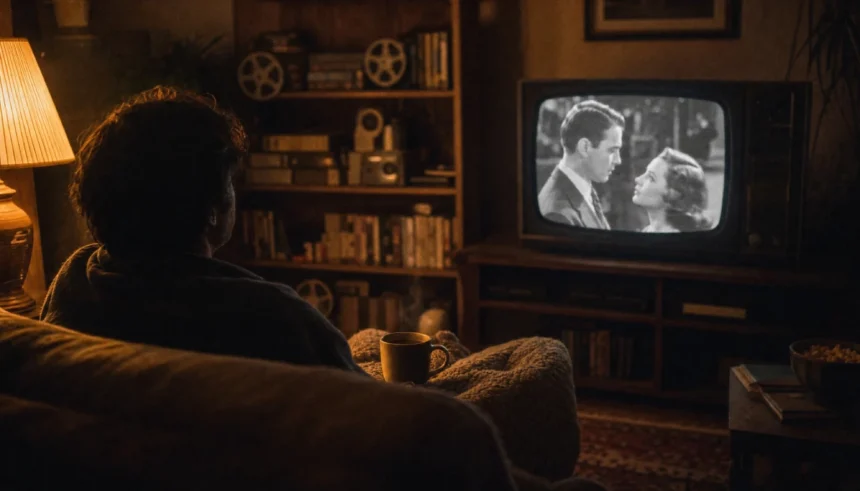
I’ll be honest with you. For years, I avoided old movies. My reasoning was simple: why sit through something slow and grainy when there are hundreds of new releases waiting?
Then one rainy Sunday, I watched Rear Window (1954) almost by accident. I expected to be bored. Instead, I was glued to the screen for two hours, completely unable to look away.
That one film changed everything for me.
If you’ve ever felt curious about classic cinema but had no idea where to start, or if you’ve tried watching old movies and found them boring or hard to follow, you’re not alone. This guide will show you exactly how to find older movies that are still worth watching, ones that feel alive, gripping, and genuinely entertaining even today.
Why Some Old Movies Age Better Than Others
Not every old movie holds up. That’s just the truth.
Some feel slow, awkward, or painfully dated. But others still grip you by the collar and refuse to let go. The difference usually comes down to a few things: strong characters, a tight story, and direction that has something real to say.
Films built around timeless storytelling never really expire. A great thriller from 1960 still makes your heart race. A sharp comedy from 1975 can still make you laugh out loud. The technical polish might look different, but the emotional pull stays intact.
That’s what makes classic cinema worth exploring. You’re not watching history. You’re watching craft.
Start With the Right Sources
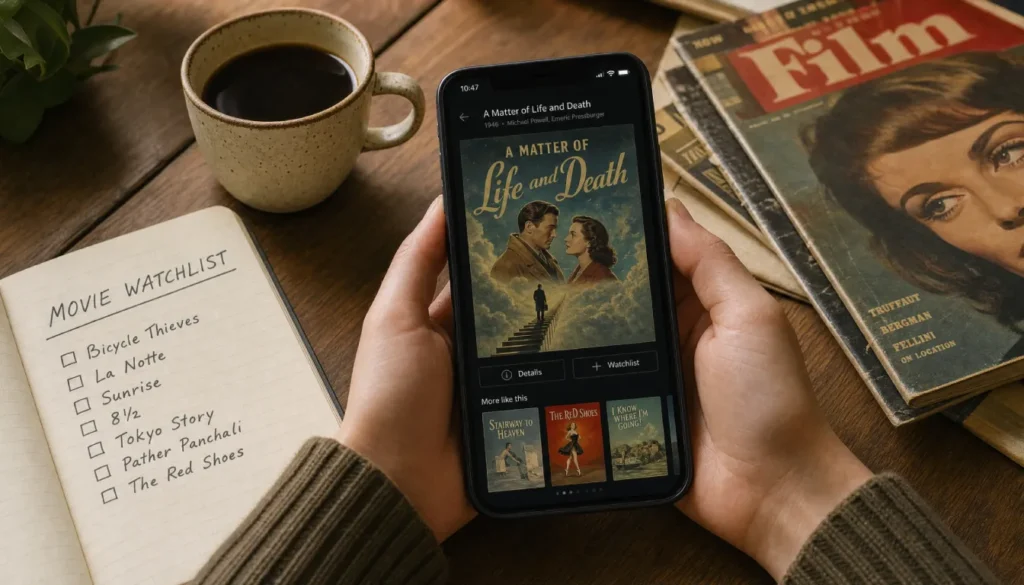
The biggest mistake people make is scrolling aimlessly. There are thousands of old films out there, and most of them aren’t worth your time. You need a filter.
Here are the most reliable starting points:
IMDb Top 250. Filter by decade and look for anything with a rating above 7.8. Films that still maintain that score after 40 or 50 years have clearly earned it. Search specifically for old movies with high IMDb ratings that aren’t widely known, and you’ll find real gems buried in the list.
Letterboxd. This is probably the best tool for discovering classic films right now. Browse curated lists made by real film lovers. Search by mood, theme, decade, or genre. You can even find lists like “Old movies that don’t feel slow or outdated” built by people who share your exact frustration.
Rotten Tomatoes Classic Movies section. The Tomatometer isn’t perfect, but anything sitting at 95% or higher from before 1985 has usually survived critical scrutiny for a reason.
The Criterion Collection. If you’re serious about this, Criterion is your bible. Every film they release has been selected because it matters. Start anywhere on their list, and you won’t be disappointed.
How to Use Streaming Services Smarter
You probably already pay for Netflix, Amazon Prime, or HBO Max. Most people don’t realize how many classic films are buried inside those platforms.
The problem is the algorithm. Streaming services push new content. They don’t make it easy to browse by decade or discover pre-2000 movies that don’t feel dated.
Here’s how to work around that:
- Use JustWatch to search across all your subscriptions at once. Type in a film title or browse by genre and year, and it tells you exactly where to watch it.
- Tubi and Kanopy (free with many library cards) carry a surprising number of public domain films worth watching. Don’t overlook them.
- MUBI streams a rotating selection of arthouse classics and foreign films. If you want to discover old foreign films that still resonate, MUBI is worth every penny.
- The Criterion Channel is the gold standard for classic cinema streaming. If you’re serious about building a watchlist, the subscription pays for itself fast.
The Cheat Sheet: What Makes a Classic Movie Timeless
Before you commit two hours to something, it helps to know what you’re looking for. These are the qualities that separate a timeless movie from just an old movie.
| Quality | What to Look For |
|---|---|
| Strong characters | Motivation, you understand, even if you disagree with it |
| Sharp dialogue | Lines that crackle, surprise, or feel real |
| Emotional stakes | You actually care what happens |
| Direction with intent | Every shot feels like a choice, not an accident |
| Story structure that holds | No sagging middle, no meandering subplots |
| A point of view | The film says something specific about the world |
If a film has most of these, it will likely hold up regardless of when it was made.
Best Genres to Start With (If You’re New to Old Films)
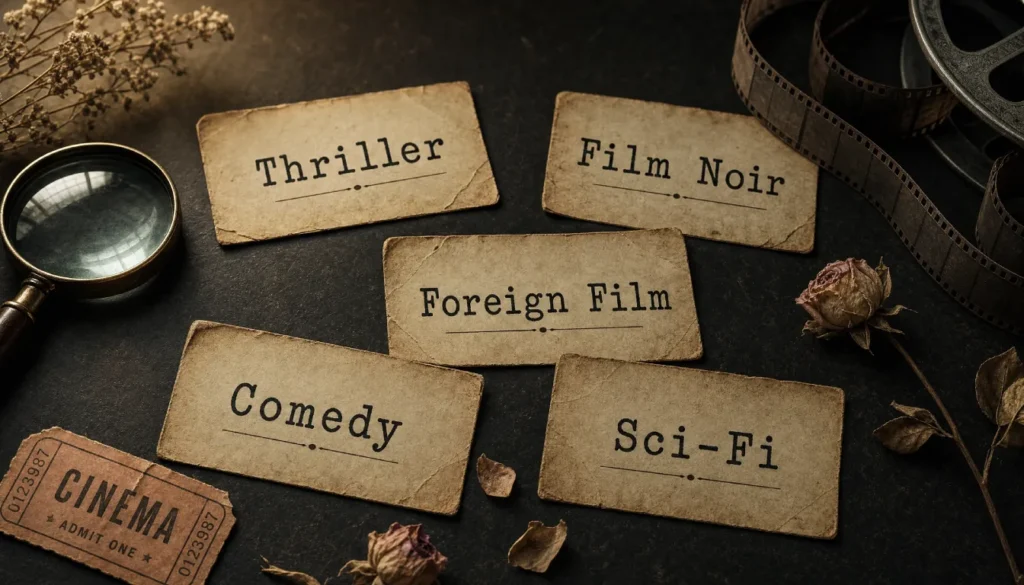
Some genres translate better to modern tastes than others. If you’re not sure where to start with classic cinema, these are the most beginner-friendly.
Thrillers and Suspense. Hitchcock is the obvious entry point, and for good reason. Rear Window, Psycho, Vertigo. Any of these will pull you in immediately. The pacing in his films rarely feels slow because the tension never fully releases.
Film Noir. Moody, fast-talking, and endlessly watchable. Double Indemnity (1944) and The Big Sleep (1946) are perfect starting points. Film noir that holds up almost always has great dialogue, and great dialogue doesn’t go out of style.
Foreign Films. This is where a lot of beginners hesitate. Don’t. Akira Kurosawa’s films (Seven Samurai, Rashomon) are as gripping as any modern action film. French New Wave films from the 1960s feel surprisingly contemporary. Old movies that don’t require knowledge of film history are everywhere in this space.
Comedy. Classic comedies from the 1970s and 80s hit differently than modern ones. They rely on character and situation rather than constant visual gags. If you find most modern comedies flat, this era will surprise you.
Old Sci-Fi. Skip the campy stuff and go straight for films like Invasion of the Body Snatchers (1956) or The Day the Earth Stood Still (1951). Old sci-fi movies that aren’t cheesy do exist. You just have to know where to look.
Quick Tips: Finding Hidden Gems Without Wasting Hours
You don’t have to do this alone or spend hours researching. Here are a few shortcuts that actually work:
- Search Reddit threads specifically for classic movie hidden gems. The r/TrueFilm and r/MovieSuggestions communities are incredibly helpful and specific.
- Follow YouTube channels that review only old movies. Several creators focus entirely on pre-1980 cinema and give honest, modern-audience-friendly breakdowns.
- Check “Best old movies according to critics” lists published by outlets like The Guardian, Sight & Sound, or The Atlantic. These tend to be more adventurous than generic top-10 lists.
- Look up what your favorite modern directors cite as influences. Martin Scorsese’s public recommendations alone could fill a year of watching.
Mistakes to Avoid When Exploring Classic Cinema
A few things that trip people up early on:
Starting with something too long. A three-hour black-and-white epic is not where you begin. Look for the best old movies under 90 minutes first. Build your tolerance gradually.
Watching alone in a distracted environment. Old films reward attention. If you’re half-watching while scrolling your phone, you’ll miss what makes them work. Give it a proper watch.
Expecting modern pacing. Some classic films do move slowly by today’s standards. That’s not always a flaw. Once you adjust, the pacing often starts to feel deliberate rather than slow.
Ignoring foreign language films. Subtitles feel like a barrier until they don’t. Give it two or three films, and you’ll stop noticing them entirely.
FAQs
Where do I start if I’ve never watched classic films before?
Start with something universally recommended and relatively short. Rear Window (1954), Some Like It Hot (1959), or The Good, the Bad and the Ugly (1966) are all great gateway films that feel contemporary and engaging even for first-timers.
Why do some old movies feel so slow?
Modern films are edited much faster, often cutting every 2 to 3 seconds. Older films let scenes breathe and trust the viewer to stay with them. Once your eyes adjust to that rhythm, it stops feeling slow and starts feeling intentional. Give it 15 to 20 minutes before you judge.
What’s the best free way to watch classic films legally?
Tubi, YouTube’s public domain movie section, and Kanopy (via most public libraries) all offer large catalogs of older films at no cost. The quality varies, but you can find some real standouts.
Are there old movies that feel modern?
Absolutely. Films like Chinatown (1974), All About Eve (1950), and The Apartment (1960) feel almost completely contemporary in dialogue, structure, and tone. These are the best old movies for people who don’t like old movies.
How do I know if an old movie is worth my time before watching it?
Check the IMDb rating, read two or three short reviews on Letterboxd, and look at the runtime. If it scores above 7.5, has genuine user reviews praising it from a modern perspective, and runs under two hours, the odds are strongly in your favor.
A Few Films to Start Your Watchlist Tonight
You asked for practical. Here it is. These are classic films that age beautifully and work well for modern audiences:
- Rear Window (1954) — Hitchcock at his tightest
- The Apartment (1960) — Funny, sad, and completely human
- Chinatown (1974) — One of the best screenplays ever written
- Seven Samurai (1954) — Action and character that still hit hard
- Double Indemnity (1944) — Film noir that invented the template
- All About Eve (1950) — Sharp, witty, and brutally modern
- The Conversation (1974) — Quietly disturbing and technically brilliant
- Singin’ in the Rain (1952) — Pure joy, start to finish
Final Thoughts
Classic cinema isn’t a homework assignment. It’s a library of films made by people who cared deeply about the craft, many of whom had no idea anyone would still be watching 70 years later.
The best old movies don’t ask you to be a film scholar. They ask you to show up, pay attention, and let the story do its job. And when you find one that truly works, you’ll understand why people have been recommending it for decades.
Start small. Start specific. Trust the sources that have earned trust over time.
And when you find a film that surprises you, come back and tell someone about it. That’s how classic cinema stays alive.
What’s the first classic film you ever loved? Or the one you’re curious about but haven’t watched yet? Drop it in the comments. I’d genuinely love to hear.