A beginner’s guide to building a budget-friendly minimalist wardrobe that actually works
I used to open my closet every morning and feel nothing but stress. Clothes everywhere. Drawers that wouldn’t close. A laundry chair that was basically a second wardrobe. And yet, I had nothing to wear.
Sound familiar?
I spent years buying things on sale, chasing trends, and filling gaps that somehow never got filled. My wardrobe was overflowing, and I was still getting dressed on autopilot, reaching for the same five things anyway.
Then I tried the $200 capsule wardrobe challenge. Ten pieces. Two hundred dollars. One month to see if it could actually work.
It changed how I think about getting dressed. And in this guide, I’ll walk you through exactly how to do it yourself, including what to buy, where to shop, and how to get 30+ outfits from just 10 pieces.
What Is a Capsule Wardrobe (and Why Only 10 Items)?
A capsule wardrobe is a small, curated collection of versatile clothing pieces that work together. Every item pairs with at least two or three others. Nothing is random. Everything earns its place.
The 10-item version is a popular challenge right now, and it’s trending hard in 2026 under tags like underconsumption core and slow fashion. But it’s not just a trend. It’s a practical approach to dressing better with less.
When you limit yourself to 10 pieces, you stop buying things you’ll never wear. You get dressed faster. You spend less money overall. And you actually feel put-together more often.
The 10 Essentials for a Budget Capsule Wardrobe Under $200
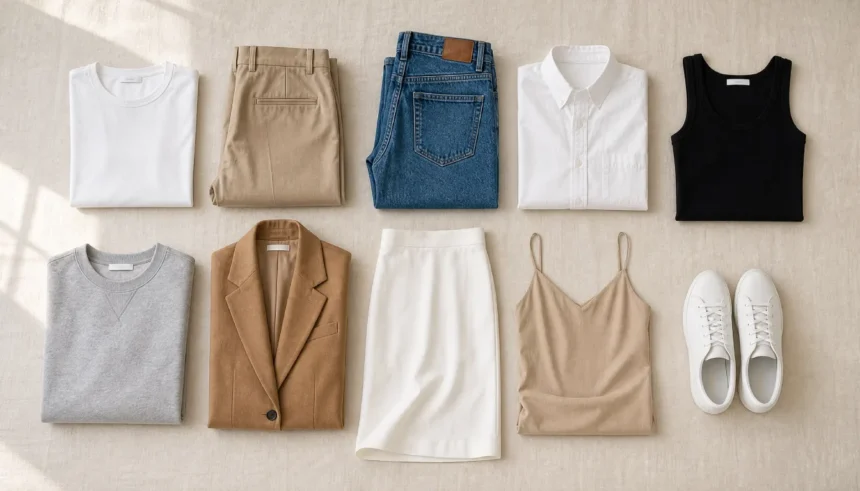
Here’s a simple 10-item wardrobe checklist you can use as your starting point. These pieces work across seasons, mix well together, and cover most everyday situations.
| Item | Suggested Budget |
|---|---|
| White or cream fitted tee | $10–$15 |
| Neutral button-down shirt | $20–$30 |
| Classic straight-leg or slim jeans | $25–$40 |
| Tailored trousers (beige, navy, or black) | $20–$30 |
| Versatile midi skirt or shorts (based on preference) | $15–$25 |
| Simple crewneck sweatshirt or lightweight knit | $20–$30 |
| Solid black or white tank top | $8–$12 |
| Casual blazer or denim jacket | $25–$40 |
| One dress (casual or smart-casual) | $20–$30 |
| Comfortable sneakers or loafers | $25–$40 |
Total: roughly $168–$292 (shop sales and secondhand to stay under $200 easily)
These are your wardrobe essentials, and they form the base of your affordable capsule wardrobe.
Step-by-Step Plan to Build Your 10 Piece Capsule Wardrobe
Step 1: Choose Your Color Palette First
This is the step most beginners skip, and it’s the reason things fall apart later.
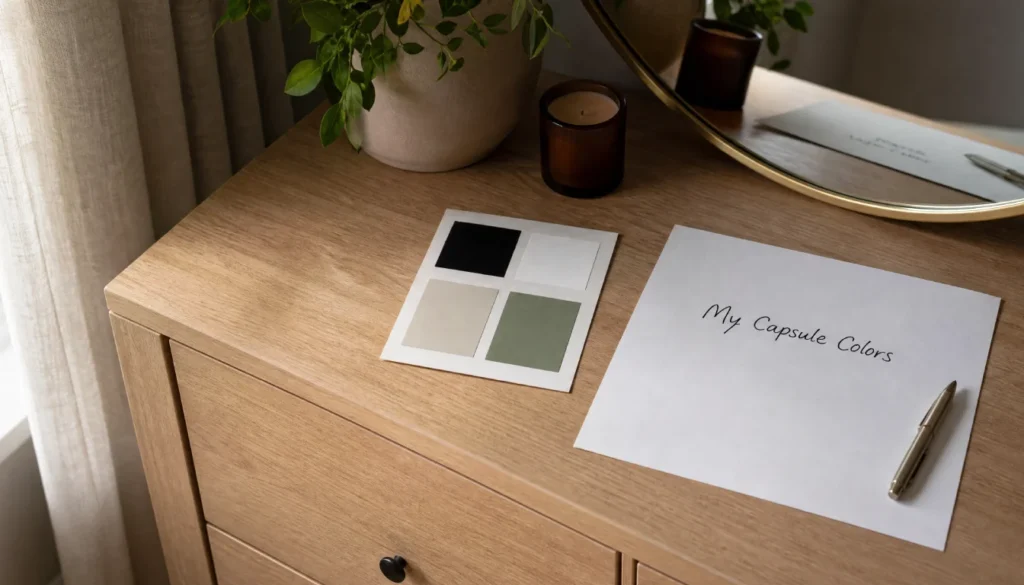
Pick two neutrals and one optional accent color. Think black and beige with a soft olive green, or navy and white with a clay terracotta. When everything shares a palette, every piece pairs with every other piece. That’s how you get 30 outfits from 10 items.
Step 2: Audit What You Already Own
Before you spend a single dollar, go through your current clothes. You probably already own two or three pieces that fit this list.
Pull out anything neutral, versatile, and in good condition. Your 10-piece capsule doesn’t have to start from scratch, and your $200 budget goes further when you’re not replacing things you already have.
Step 3: Write Your Shopping List (and Stick to It)
This is where the $200 capsule wardrobe challenge gets real. Write down exactly what you need based on what you already own, then shop with a list.
No impulse buying. No, “it was on sale.” If it’s not on your list, it doesn’t go in your cart.
Step 4: Shop Smart and Secondhand
You don’t need to spend retail prices to build a 10-piece minimalist wardrobe. Some of the best places to shop on a budget:
- ThredUp, Poshmark, or Depop for secondhand basics
- H&M, Uniqlo, or Target for affordable new staples
- ASOS sale section for basics under $20
- Amazon Essentials for simple, low-cost pieces that hold up
Slow fashion doesn’t mean expensive fashion. It just means buying less, buying intentionally, and making things last.
Step 5: Test Your Outfits Before You Commit
Before you remove tags, try on every combination. Can you build at least 20 different looks from your 10 pieces? If not, something in your selection isn’t pulling its weight.
A good rule of thumb: every item should work with at least three others.
How to Get 30 Outfits from 10 Pieces
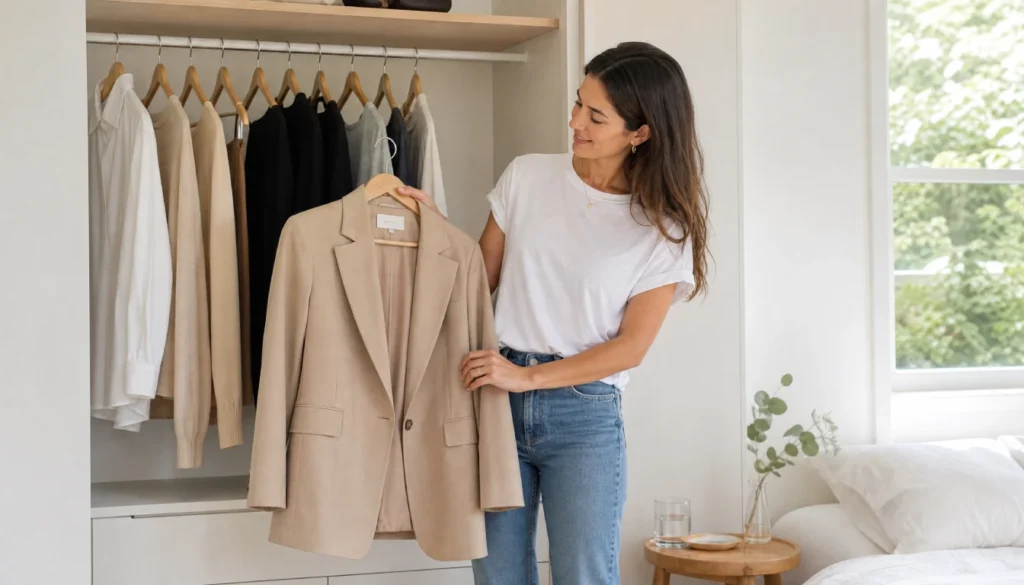
This is the part people find hard to believe until they try it. Here’s a quick example using the list above.
5 outfit combinations from just 3 items (white tee + jeans + blazer):
- White tee + jeans + sneakers
- White tee + trousers + sneakers
- Blazer + jeans + sneakers
- Blazer + trousers + loafers
- Blazer + dress + loafers
Now multiply that across all 10 items, and you start to see how the math works. Mix and match outfits become second nature once you’ve built your color palette and stuck to it.
Common Mistakes to Avoid When Starting a Capsule Wardrobe
Buying too many patterns. Patterns limit how pieces mix. Stick to solids when you’re starting.
Ignoring fit. A cheap item that fits well always beats an expensive item that doesn’t. Prioritize how things sit on your body over brand or price.
Choosing trendy over timeless. Your capsule should be built on classic, timeless clothing staples. Trends have a short shelf life. A well-fitted straight-leg jean does not.
Rushing the process. You don’t have to buy all 10 items at once. Build slowly. Fill real gaps instead of imagined ones.
Quick Tips for Seasonal Transitions
One of the most common questions about the 10-item capsule wardrobe concept is: how do you handle changing seasons?
The answer is layering and swapping one or two pieces at a time.
For summer, swap your sweatshirt for a linen shirt and your jeans for shorts or a skirt. For winter, add a coat (which doesn’t count toward your 10) and swap sneakers for ankle boots. Your core 10 pieces stay mostly the same.
This is also why neutral colors work so well. They cross seasons without looking out of place.
Does a Capsule Wardrobe Really Save Money?
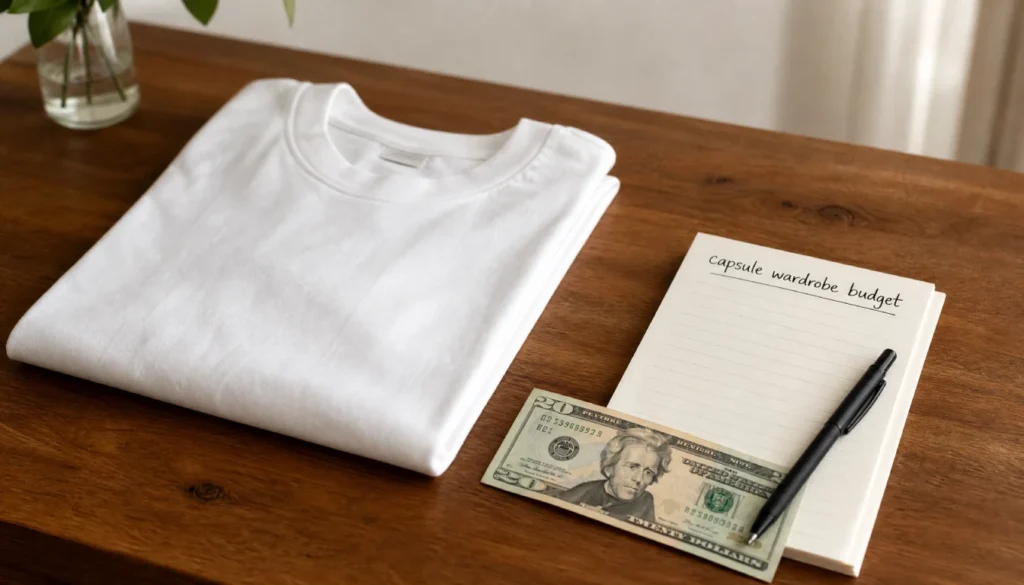
Yes, but not in the way most people expect.
You might spend more per item upfront, but you buy far fewer items overall. You stop buying things you wear once. You stop filling your closet with near-misses and sale regrets.
Research consistently shows that the average person wears only 20% of their wardrobe 80% of the time. A 10-piece capsule is basically just making that 20% official.
Over a year, most people who commit to a capsule wardrobe report spending significantly less on clothes, sometimes by hundreds of dollars, even when they invest in slightly better quality basics.
Frequently Asked Questions
Can you really build a capsule wardrobe with just 10 items and a small budget?
Yes. It takes planning, but it’s very doable. Stick to a neutral palette, shop secondhand where you can, and focus on versatile basics. The $200 budget is tight but achievable, especially if you already own a few qualifying pieces.
What are the 10 essential items for a capsule wardrobe on a tight budget?
A white tee, neutral button-down, straight-leg jeans, tailored trousers, a tank, a sweatshirt or knit, a casual blazer or jacket, a midi skirt or shorts, a simple dress, and one pair of versatile shoes. These 10 cover most everyday situations and mix well together.
How do I choose a capsule wardrobe color palette?
Start with two neutrals you already wear, like black and beige, or white and navy. Add one soft accent color if you want variety. Every piece should work with every other piece in your palette.
How do I transition a 10-item wardrobe between seasons?
Keep your core pieces and swap one or two items as the weather changes. Add a coat or layer for winter. Switch heavy knits for lighter shirts in summer. Neutral colors make this much easier because they read well in any season.
Where should I buy cheap capsule wardrobe pieces?
Secondhand platforms like ThredUp, Poshmark, and Depop are great starting points. For new basics, try Uniqlo, H&M, Target, and Amazon Essentials. All of them carry solid, affordable minimalist wardrobe staples in neutral colors.
You Don’t Need More Clothes. You Need the Right Ones.
Building a capsule wardrobe with 10 items under $200 is one of the most practical things you can do for your everyday life. It simplifies your mornings, stretches your money, and makes getting dressed something you actually enjoy.
You don’t need a big budget. You don’t need to start over from scratch. You just need a plan and a little patience.
Start with your color palette. Audit what you own. Fill the gaps with intention. And permit yourself to stop buying things you don’t really need.
If you’ve tried a capsule wardrobe before, or if you’re just getting started, I’d love to hear about it. Drop your questions or share what’s worked for you in the comments. Someone else is probably wondering the same thing.