
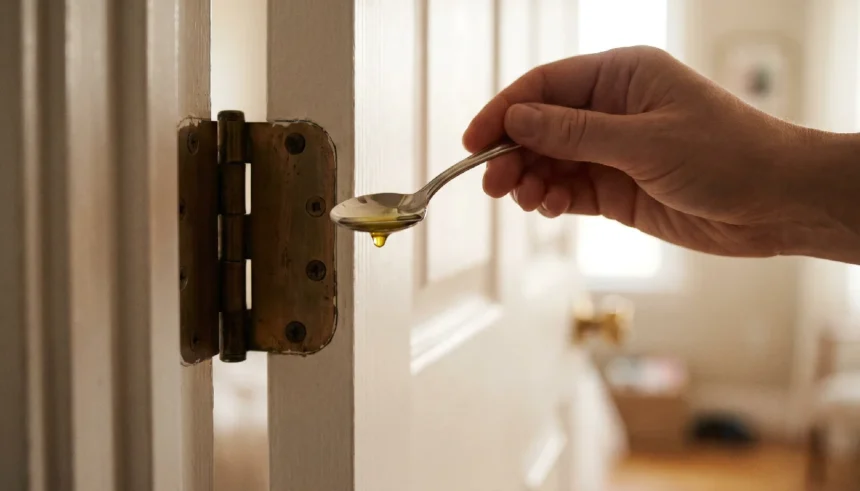
It was 2 a.m. I got up for water, pushed open the bedroom door, and that hinge let out a screech loud enough to wake the whole house.
I stood there, half-asleep, genuinely annoyed. I knew I had no WD-40 in the house. I had no lubricating spray, no fancy hardware store product, nothing. What I did have was a bottle of olive oil sitting on my kitchen counter.
So I tried it.
If you’ve ever found yourself in the same situation, this article is for you. We’re going to cover whether olive oil actually works on squeaky door hinges, how to apply it properly, how long it lasts, and what you should know before you grab that bottle.
Why Do Door Hinges Squeak in the First Place?
Before you fix anything, it helps to understand what’s causing the noise.
Door hinges squeak because of metal-on-metal friction. Over time, the hinge pin rubs against the hinge barrel, and if there’s no lubrication, that friction creates a sound. Dust, rust, age, and dry air all make it worse.
The fix is simple: reduce the friction. That’s where any lubricant, including olive oil, comes in.
Does Olive Oil Work on Squeaky Door Hinges?
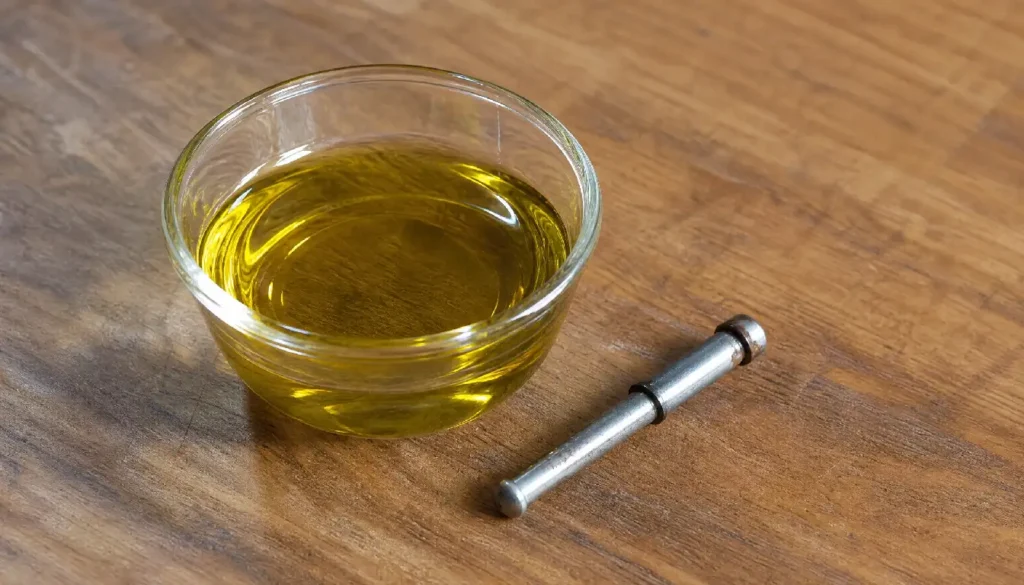
Short answer: yes, it works. But there’s more to it.
Olive oil is a natural lubricant. It reduces friction between metal surfaces, which is exactly what a squeaky hinge needs. It’s also non-toxic, food-safe, and sitting in almost every kitchen. That makes it one of the most accessible squeaky door home remedies around.
Here’s the thing, though. Olive oil is not a long-term solution. It works quickly and quietly, but it breaks down faster than purpose-made lubricants. You’ll likely need to reapply it every few months, and over time, it can oxidize and attract dust or dirt on the hinge.
So yes, olive oil stops door hinges from squeaking. Just don’t expect it to be permanent.
Olive Oil vs WD-40: What’s the Difference?
A lot of people reach for WD-40 first. It’s the classic fix. But there are good reasons to consider olive oil instead.
| Feature | Olive Oil | WD-40 |
|---|---|---|
| Cost | Free (already in your kitchen) | Requires purchase |
| Availability | Immediate | Requires a trip to the store |
| Non-toxic | Yes | No |
| Smell | Mild, neutral | Strong chemical smell |
| Lasts how long | A few months | Several months to a year |
| Risk of attracting dust | Moderate | Low |
| Safe for painted metal | Generally yes | Can strip some finishes |
If you want a natural alternative to WD-40 for door hinges, olive oil is a solid short-term option. If you want something more durable, a silicone-based spray or petroleum jelly will outlast it.
What Kind of Olive Oil Should You Use?
You don’t need anything special here.
Regular olive oil works fine. Extra virgin olive oil also works. The difference in quality that matters for cooking does not matter for hinge lubrication. Any bottle of olive oil sitting in your pantry will do the job.
Avoid flavored or infused oils. They can leave residue or stains on painted surfaces. Plain olive oil is your best bet.
How to Fix a Squeaky Door Hinge With Olive Oil (Step by Step)
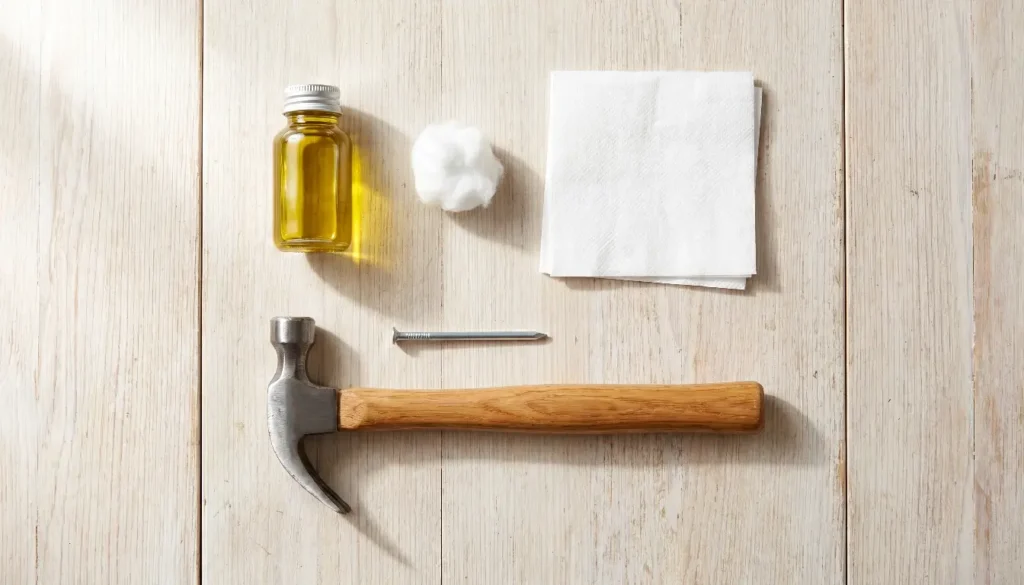
This process takes about five minutes. You don’t need tools unless the hinge pin is stuck.
What you need:
- Olive oil
- A cotton ball, cloth, or small brush
- A paper towel or old rag
- A hammer and nail (optional, if you need to tap out the hinge pin)
Step 1: Open the door and prop it open. You want the door still so the hinge doesn’t move while you work.
Step 2: Locate the squeaky hinge. Open and close the door slowly to pinpoint exactly which hinge is making the noise. Sometimes it’s just one. Sometimes it’s two.
Step 3: Apply olive oil to the hinge pin. The hinge pin sits in the center of the hinge barrel. You can apply olive oil directly to the top of the pin and let gravity carry it down. Use a cotton ball, small brush, or your fingertip. You only need a small amount, about half a teaspoon.
Step 4: Work the hinge. Open and close the door several times. This spreads the oil into the friction points inside the barrel. You’ll often hear the squeak fade after just a few swings.
Step 5: Remove the hinge pin for deeper lubrication (optional). If the squeak persists, you can remove the hinge pin entirely. Tap the bottom of the pin upward with a nail and hammer until it slides out. Coat the pin with olive oil, reinsert it, and work the door again. This method gives better coverage.
Step 6: Wipe away the excess. Use a dry cloth to clean up any oil that dripped onto the door frame or floor. Olive oil can stain light-colored surfaces if you leave it too long.
How Long Does Olive Oil Last on Door Hinges?
Realistically, two to four months before you notice the squeak returning.
Olive oil is an organic substance. It breaks down, oxidizes, and eventually goes rancid when exposed to air and heat. On a door hinge, this means it gradually loses its lubricating effect. If your door is in a high-traffic area, reapply every couple of months. For a rarely-used door, it can last longer.
Will Olive Oil Damage Your Door Hinges?
This is a fair concern, and the answer depends on your hinges.
For standard steel or iron hinges, olive oil is generally safe. It won’t corrode or weaken the metal with occasional use. However, if you let it oxidize and go rancid without reapplying fresh oil, the old buildup can attract dirt and create gunk around the hinge.
For painted metal hinges, olive oil on hinges safe for painted metal is a common question. In most cases, yes. But wipe away excess oil right after application to avoid staining or softening the paint around the hinge.
Other Household Lubricants That Work on Squeaky Hinges
Olive oil is not your only option. Here are a few other household items worth knowing about.
- Petroleum jelly (Vaseline): Thick, long-lasting, and great for hinge pins. Apply it the same way you’d use olive oil.
- Canola oil: Works just like olive oil. Same process, same limitations.
- Mineral oil: A cleaner choice than cooking oils. Less likely to go rancid and won’t attract as much dust.
- Bar soap or wax: Rub a dry bar of soap or a candle directly on the hinge pin. It reduces friction without any liquid mess.
- Coconut oil: Works short-term but solidifies in cold temperatures, which can make hinges stiff.
Each of these is a legitimate natural lubricant for door hinges. Olive oil just tends to be the most common because it’s always nearby.
Quick Tips to Get the Best Results
- Use just a small amount of oil. More is not better here. Excess oil drips and stains.
- Wipe the hinge clean before applying oil if there’s visible grime or rust.
- Reapply every two to three months to keep the squeak away.
- If the squeak doesn’t stop after oiling, the hinge itself might be loose. Check the screws.
- A door that squeaks even with fresh lubrication might need a hinge replacement, not just oil.
Common Mistakes to Avoid
Using too much oil. A few drops go a long way. Pouring oil directly onto the hinge creates mess and waste without improving results.
Ignoring rust or dirt. If the hinge is visibly corroded, clean it first. Oil applied over rust has less contact with the metal and won’t work as well.
Forgetting to wipe the excess. Olive oil left on the floor or door frame can cause slipping or staining.
Expecting a permanent fix. Olive oil buys you time. If your hinge squeak returns every few weeks, consider switching to a silicone spray or a long-lasting grease instead.
Frequently Asked Questions
Can I use extra virgin olive oil to lubricate door hinges?
Yes. Extra virgin olive oil works the same as regular olive oil for hinge lubrication. The grade only affects flavor, not its lubricating properties.
How often should I apply olive oil to squeaky hinges?
Every two to four months is a reasonable schedule. High-traffic doors may need it more often.
Does olive oil attract bugs or pests to door hinges?
It’s possible in warm climates or near food areas, but unlikely in small amounts. Wiping away excess oil reduces this risk significantly.
Can I use an olive oil spray bottle for squeaky hinges?
Yes, an olive oil spray bottle gives you more control and helps you apply a thin, even coat. It also reduces dripping.
What is the best permanent fix for a squeaky door hinge?
For a longer-lasting solution, use a silicone-based lubricant or white lithium grease. These outlast cooking oils and don’t break down as quickly.
Final Thoughts
That 2 a.m. squeak got fixed in about three minutes with olive oil and a cotton ball. The door stayed quiet for the better part of three months before I needed to touch it again.
Is olive oil the best lubricant for door hinges? No. Is it the easiest and most immediate fix when you have nothing else on hand? Absolutely yes.
If you’re dealing with a squeaky door right now and you have olive oil in your kitchen, go try it. It takes almost no effort, costs nothing extra, and it works.
If you’ve tried it before, I’d love to hear how it went for you. Drop a comment below and let me know whether the olive oil hinge fix worked in your home or if you ended up going with something else. Your experience might help someone else who’s googling this at 2 a.m.