
That Annoying Sound in the Middle of the Night
It started for me at 2 a.m. on a Tuesday.
I was half asleep when I heard it. A soft, steady hiss comes from the bathroom. Then silence. Then the hiss again, about five minutes later.
I got up, checked the toilet, saw nothing wrong, and went back to bed. The next morning, my water bill notification hit my phone. It was $40 higher than usual.
That “nothing wrong” moment? It was costing me real money.
If your toilet keeps running every few minutes, or you hear it randomly refill when nobody flushed, you are not imagining things. And you are definitely not alone. A running toilet can waste up to 200 gallons of water per day, according to the EPA. That adds up to thousands of gallons a month if you ignore it.
The good news is that most causes behind a toilet running intermittently are simple to fix. You probably do not need a plumber. You might not even need a single tool.
Here is what is going on inside your tank, why it happens, and the 3 quick fixes that actually work.
What Is Actually Happening Inside Your Toilet Tank?
Before jumping to fixes, it helps to understand the basic setup.
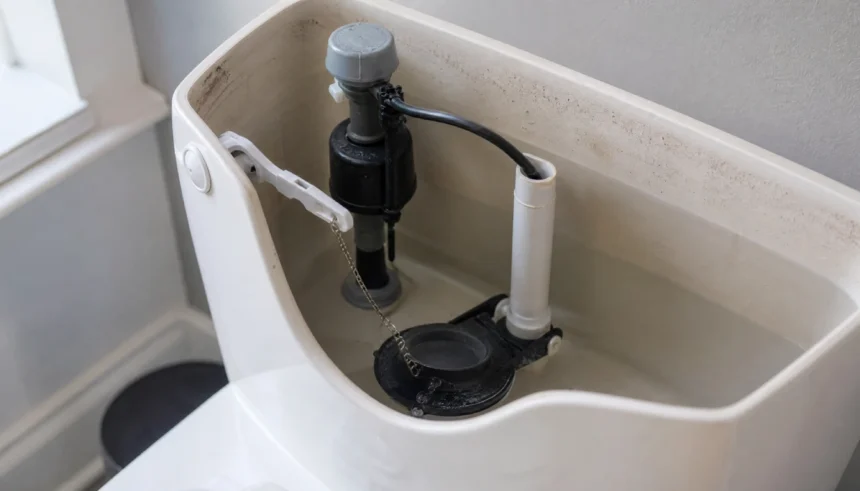
Your toilet tank holds water after each flush and refills automatically. Inside, two main parts control this: the flapper and the fill valve.
The flapper is a rubber seal at the bottom of the tank. It lifts when you flush, lets water rush into the bowl, then drops back down to seal the tank so it can refill.
The fill valve controls how much water enters the tank and shuts off once the water hits a set level.
When either part fails, water silently leaks from the tank into the bowl. Once enough water escapes, the fill valve kicks in to refill the tank. This cycle repeats every few minutes. That is why people call it phantom flushing or ghost flushing.
Now you know exactly what you are hearing.
Fix 1: Check and Replace the Toilet Flapper
This is the most common cause of a toilet that runs every few minutes. A worn or warped flapper creates a slow leak that you cannot see but your water meter absolutely notices.
How to check your flapper
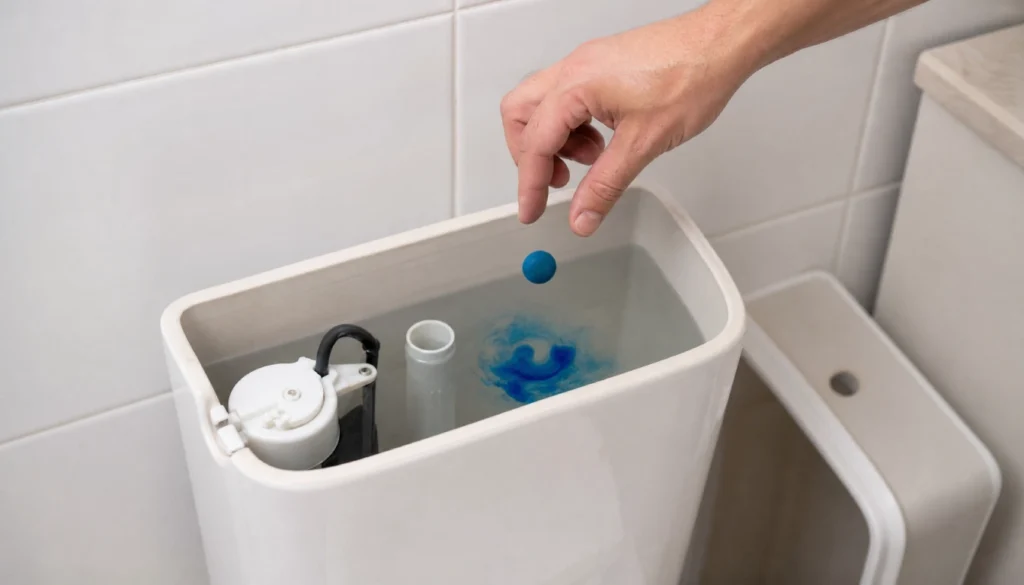
Try the food coloring test. Drop a few drops of food coloring or a dye tablet into the tank (not the bowl). Wait 15 minutes without flushing. If color shows up in the bowl, your flapper is leaking.
You can also press down on the flapper with your finger while the toilet is running. If the sound stops, the flapper is the problem.
How to replace it
- Turn off the water supply valve behind the toilet.
- Flush to empty the tank.
- Unhook the old flapper from the side pegs and disconnect the chain.
- Take the old flapper to your hardware store to match the size.
- Snap the new one in place and reconnect the chain.
- Turn the water back on and test.
A replacement flapper costs between $5 and $15. Brands like Korky and Fluidmaster are reliable picks that fit most standard toilets. If your toilet runs for a few seconds every hour, this fix alone will likely solve it.
Fix 2: Adjust or Replace the Fill Valve
If a new flapper did not stop the intermittent running, your fill valve is probably the issue.
The fill valve shuts off water flow once the tank reaches the correct level. If it wears out, it may not close properly, which lets water trickle into the overflow tube and drain away continuously.
How to spot a fill valve problem
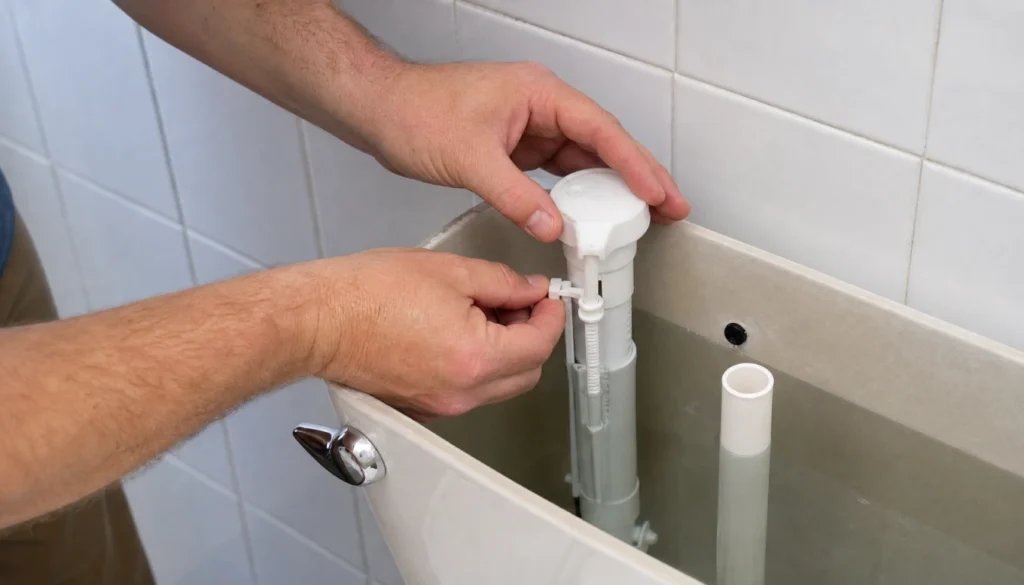
Look inside your tank while the water is running. Watch where the water level sits. If water is flowing into the tall tube in the center (that is, the overflow tube), the water level is too high, and the fill valve is not shutting off correctly.
You might also notice the toilet runs randomly for 5 seconds every hour or so, even with a brand-new flapper in place.
Two things to try
Adjust the float first. Most modern fill valves have an adjustment screw or a clip you can slide up or down to lower the water level. Turn the screw counterclockwise or slide the clip down about half an inch. The water line should sit about one inch below the top of the overflow tube.
Replace the fill valve if adjusting does not work. A Fluidmaster 400A is a widely used universal replacement that costs around $12 and fits almost every toilet. Installation takes about 20 minutes with no special tools beyond an adjustable wrench.
Fix 3: Shorten the Flapper Chain or Clean the Flush Valve Seat
This one gets overlooked a lot, but it causes plenty of intermittent toilet-running issues.
The chain problem
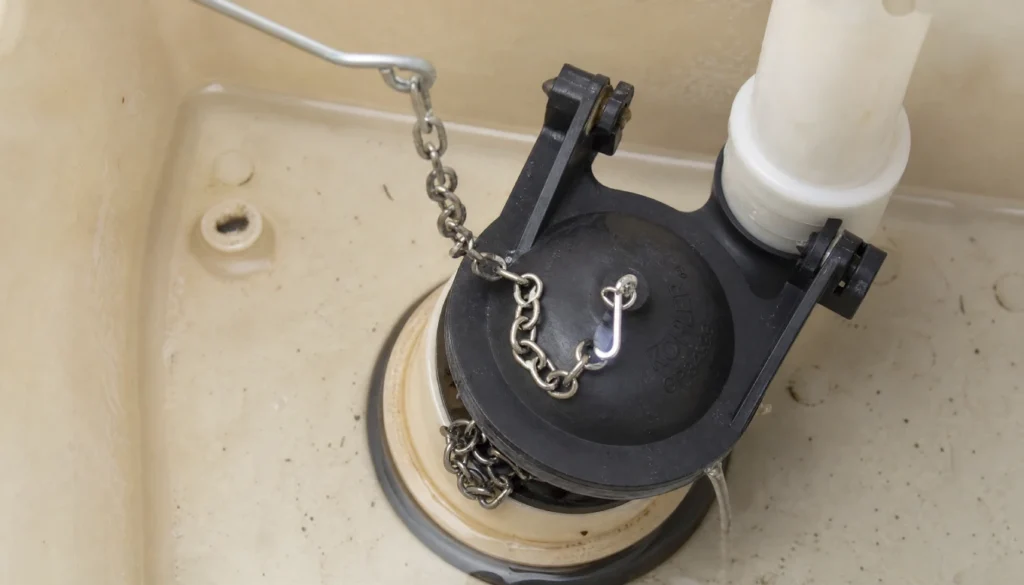
If the flapper chain is too long, it can get caught under the flapper and prevent a proper seal. Even a tiny gap lets water leak out constantly.
Open the tank lid and look at the chain connecting the flapper to the flush handle arm. You want about half an inch of slack. Any more than that and the chain may fold under the flapper during a flush.
Simply reattach the chain to a different hole on the handle arm to shorten it.
Cleaning the flush valve seat
Even a brand-new flapper will not seal properly if the surface it sits against (the flush valve seat) is rough, cracked, or coated with mineral buildup.
Run your finger around the rim where the flapper makes contact. If you feel rough spots or grit, clean it with a cloth dampened in white vinegar. For heavier mineral buildup, a fine piece of emery cloth works well.
If the seat is visibly cracked, you may need a full flush valve replacement. That is a slightly bigger job, but still a DIY-friendly repair for most people.
Quick Comparison: Flapper vs. Fill Valve Problem
| Symptom | Likely Cause |
|---|---|
| The toilet runs for 2 to 5 seconds every few minutes | Leaking flapper |
| The water level reaches the top of the overflow tube | Fill valve not shutting off |
| Running stops when you hold the flush handle | The chain is too long or misaligned |
| Running continues after flapper replacement | Fill valve or flush valve seat issue |
| Food coloring appears in the bowl without flushing | Flapper leak confirmed |
How Much Water Is a Running Toilet Actually Wasting?
A slow toilet leak that runs every few minutes can waste between 30 and 200 gallons of water per day, depending on how bad the leak is. Over a month, that is up to 6,000 gallons lost silently.
At average US water rates, a constantly running toilet can add $50 to $150 to your monthly bill. Some households have reported bill spikes of over $200 before they realized the toilet was the culprit.
Are there repair parts to fix it? Under $20 total in most cases.
Mistakes to Avoid When Fixing a Running Toilet
- Do not buy a replacement flapper without checking the size. Most toilets use a 2-inch flapper, but some use a 3-inch flapper. Bring the old one to the store or check your toilet’s model number.
- Do not skip the food coloring test. It takes 15 minutes and confirms the issue before you spend money.
- Do not overtighten the fill valve nut when installing a new one. Hand tight plus a quarter turn is enough. Over-tightening cracks the plastic.
- Do not assume a new flapper automatically fixes things. If the valve seat is damaged, you will need to address that too.
Frequently Asked Questions
Why does my toilet run for a few seconds every few minutes with no visible leak? This is almost always a slow flapper leak. Water seeps from the tank into the bowl silently until the water level drops enough to trigger the fill valve. The food coloring test will confirm it in 15 minutes.
Can a toilet running intermittently raise my water bill? Yes. Even a small leak running every 10 minutes can waste 30 to 50 gallons per day. A constant running toilet can waste up to 200 gallons daily.
How do I know if it is the flapper or the fill valve causing the problem? If food coloring leaks into the bowl, it is the flapper. If the water level sits at or above the overflow tube, it is the fill valve. You can have both issues at the same time, so check for each separately.
Is a phantom flush dangerous or just wasteful? It is not a safety hazard, but it is expensive and wasteful. It should be fixed as soon as you notice it, especially during drought conditions or if you are on a fixed-rate water plan.
Do I need a plumber to fix a toilet that runs every few minutes? In most cases, no. A leaking flapper or faulty fill valve is a straightforward DIY repair. If you have replaced both and the toilet is still running, that is a good time to call a plumber to check for a cracked flush valve or other internal issue.
You Can Fix This Today
A toilet running every few minutes is frustrating, but it is one of the easiest plumbing problems to solve yourself.
Start with the flapper. If that does not do it, check the fill valve and the water level. If the chain is too long or the valve seat is dirty, those fixes take five minutes and cost nothing.
Most people who tackle this repair are surprised by how simple it turns out to be. A $10 flapper and 20 minutes of your time can cut your water bill, silence that midnight hiss, and give you a small but real win at home.
Have you tried any of these fixes? Did one of them work for you, or did you run into something unexpected? Drop a comment below. Your experience might be exactly what another reader needs to hear.
Related reads you might find helpful:
- How to fix a toilet that keeps clogging
- Why does your toilet whistle after flushing
- How to replace a toilet fill valve in under 30 minutes