
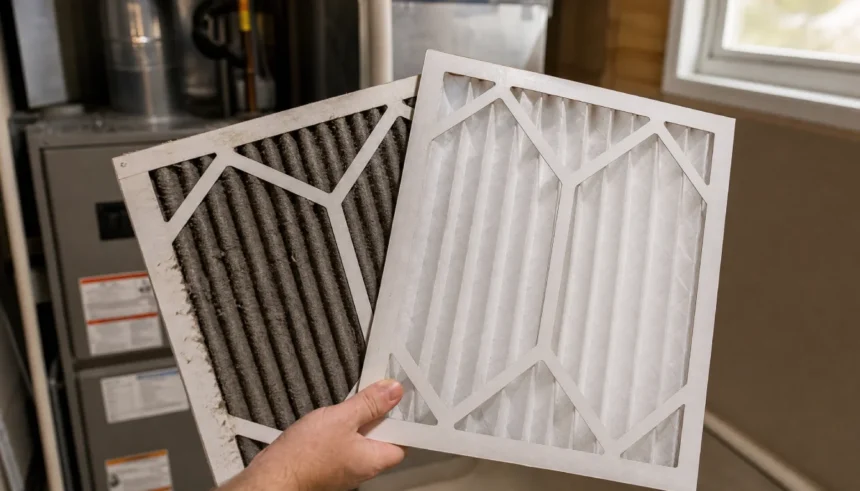
I changed my furnace filter. Felt good about it. Checked it three weeks later, and it looked like it had been sitting in a construction zone for a year.
Sound familiar?
If your furnace filter is getting dirty quickly after replacement, you are not imagining things, and you are definitely not alone. A lot of homeowners deal with this exact frustration. You buy a filter, install it, and before you know it, it is already clogged, and your HVAC system is struggling again.
The good news? There are real, specific reasons this happens, and most of them are totally fixable. In this article, I will walk you through the most common causes of rapid furnace filter clogging, give you a simple homeowner checklist to diagnose your situation, and share some practical tips to help your filter last longer.
First, What Does a Dirty Furnace Filter Actually Look Like?
Before we get into causes, let us quickly cover what you are looking for. A clean filter is usually white or light gray. A dirty one will be dark gray, brown, or even black, depending on what is in your air.
If your furnace filter turns black after a few days, that is a major red flag worth investigating right away. Grey is normal after a few weeks. Black usually means something specific is going on, like candle soot, mold, or serious air quality issues.
If the filter looks wet and dirty, that points to humidity or moisture problems in your system.
The Homeowner Checklist: Why Is Your Furnace Filter Getting Dirty Fast?
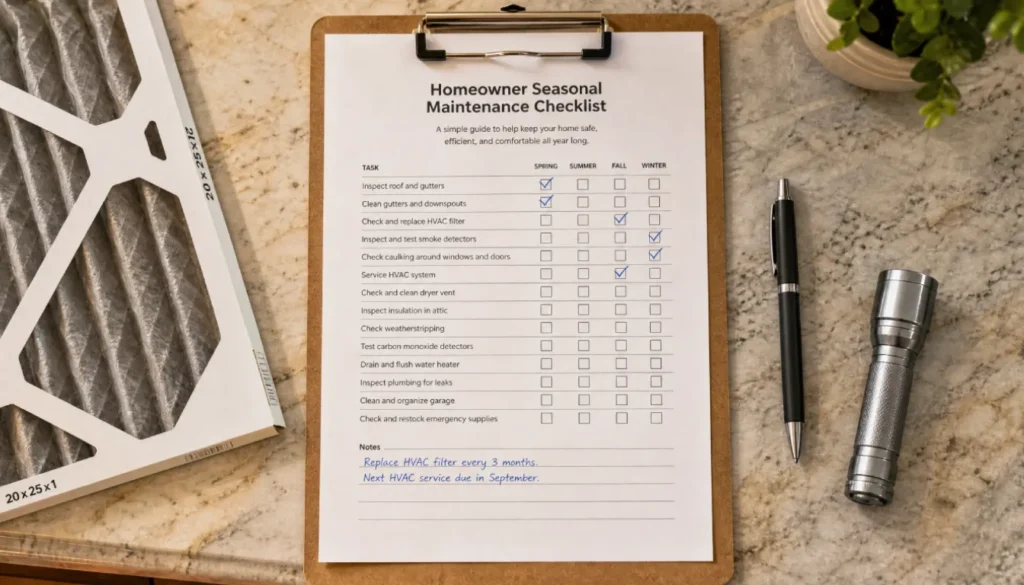
Work through this list one item at a time. Check off anything that applies to your home.
1. You Have Pets in the House
Pet dander and fur are two of the biggest contributors to rapid clogging of furnace filters. Dogs and cats shed constantly, and that dander travels through your return air ducts and gets trapped in the filter.
If you have multiple pets or a heavy shedder, your filter gets dirty quickly, almost by default. In homes with pets, monthly filter checks are a minimum, and some owners need to replace filters every 3 to 4 weeks.
Quick tip: Vacuum and brush your pets regularly. It reduces the amount of dander circulating in your air.
2. Your Home Has High Foot Traffic or Recently Had Construction
More people in a space mean more dust, skin cells, and debris in the air. If you have had recent construction, renovations, or drywall work done, your furnace filter is working overtime.
Construction dust is extremely fine and gets into everything. A furnace filter dirty from drywall dust is one of the fastest-clogging scenarios out there. After any home renovation, plan to check your filter every few days and replace it more frequently than usual.
3. You Are Burning Candles or Using a Fireplace
This one surprises a lot of people. Burning candles, especially paraffin-based ones, produces a fine black soot that circulates through your home’s air supply. That soot gets pulled into the return duct and coats your filter fast.
If you are wondering why your furnace filter turns black quickly, candles are often the answer. Even incense and fireplaces contribute to this problem.
Try switching to beeswax or soy candles. They produce significantly less soot.
4. Your Fan Is Running Constantly
Check your thermostat. Is your fan set to “ON” instead of “AUTO”?
When your fan runs continuously, it pulls air through the filter 24/7, even when the furnace is not actively heating or cooling. The filter loads up much faster because more air passes through it every hour.
Switching your fan setting from ON to AUTO alone can meaningfully extend your filter’s life.
5. You Have Leaky or Dirty Ductwork
If your ducts have gaps, cracks, or disconnected sections, they pull in unfiltered air from unconditioned spaces like attics, crawlspaces, or wall cavities. That air is loaded with insulation particles, dust, and debris.
Your filter then has to capture all of that extra material, and it clogs far sooner than it should. If you have had your ducts cleaned recently and your filter is still getting dirty quickly after duct cleaning, a leak inspection is probably your next step.
An HVAC technician can run a pressure test to find duct leaks.
6. Your MERV Rating Is Too High for Your System
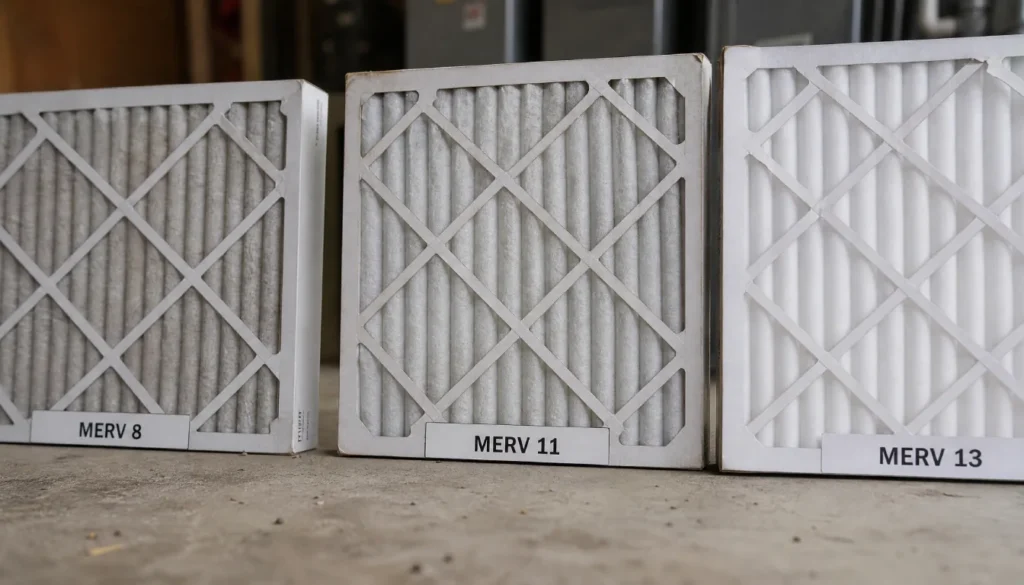
Higher is not always better when it comes to MERV ratings. A MERV 13 or MERV 16 filter catches much smaller particles than a MERV 8, which sounds great. But if your HVAC system was not designed for that level of filtration, it has to work harder to pull air through the denser filter media.
The result? Your MERV 11 filter or higher gets dirty faster, restricts airflow, and can strain your blower motor.
Check your furnace manual or ask your HVAC technician what MERV rating is right for your specific system. For most residential systems, MERV 8 to MERV 11 is the sweet spot.
7. You Have Poor Indoor Air Quality or Live Near a Busy Road
If you live near a highway, construction site, or industrial area, outdoor air quality directly affects your indoor air and your filter’s lifespan. Wildfire smoke is another major factor, especially if you are in an area prone to it.
During wildfire season or high pollen periods, your filter works significantly harder than usual. Check it every 1 to 2 weeks during these events, not every month.
8. Your Home Has High Humidity
Excess moisture in the air causes dust and particles to clump and stick to the filter more aggressively. If your home feels humid or you notice condensation on windows, your filter is dealing with wet air, which accelerates clogging.
Humidity can also cause your filter to look wet and dirty, which creates a different problem: mold growth on the filter media itself.
A whole-home dehumidifier or portable units in problem areas can help extend filter life and protect your HVAC system.
9. You Are Using a Cheap Fiberglass Filter
Low-cost fiberglass filters are designed to protect your furnace equipment, not your air quality. They have a very loose filter media and load up quickly with larger particles. While they are inexpensive upfront, they often need more frequent replacement.
A pleated filter with a moderate MERV rating typically lasts longer and does a better job of filtering your air. Think of it as spending a little more to replace less often.
10. Your Furnace Filter Is the Wrong Size
A filter that does not fit properly allows air to bypass around the edges rather than passing through the filter media. This means your filter only catches some of the airborne particles, and the ones that sneak past can build up on your evaporator coil and inside your system.
Check that your filter fits snugly with no visible gaps around the frame. Also, confirm you have the filter installed with the airflow arrow pointing toward the blower.
Quick Reference: Common Causes and How Fast They Dirty Your Filter
| Cause | How Fast It Clogs Your Filter |
|---|---|
| Multiple pets | Every 2 to 4 weeks |
| Construction dust | Every few days |
| Candle soot | 1 to 3 weeks |
| Fan always on AUTO vs ON | 30 to 50% faster on ON |
| Leaky ductwork | Varies; often doubles the clog rate |
| Wrong MERV rating | Faster than normal for the system |
| Wildfire smoke or high pollen | Every 1 to 2 weeks |
| High indoor humidity | Faster; may cause mold |
How to Prevent Your Furnace Filter from Getting Dirty Fast
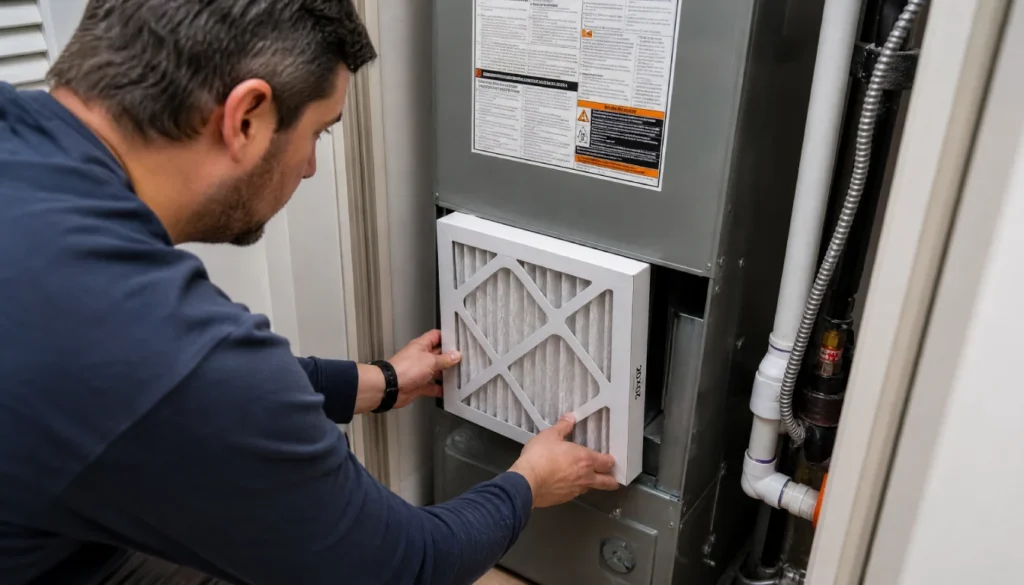
Here is a quick checklist of things you can do starting this week:
- Switch your fan setting to AUTO on your thermostat
- Vacuum floors, furniture, and vents weekly
- Brush and groom pets regularly
- Reduce or eliminate paraffin candle use
- Check your filter every 2 weeks until you understand your home’s pattern
- Have your ductwork inspected for leaks if the problem is severe
- Confirm your filter size is correct and seated without gaps
- Consider an air purifier for rooms where dust accumulates fast
Frequently Asked Questions
Why does my furnace filter get dirty so fast in winter?
Your furnace runs more often in winter, which means more air cycles through the filter each day. Combined with closed windows (less fresh air exchange) and drier air that lifts dust more easily, winter is the fastest season for filter clogging. Check your filter at least monthly from November through March.
Is it normal for a furnace filter to be dirty after 2 weeks?
It depends on your home. If you have pets, multiple people, or recent construction, yes, 2 to 3 weeks is entirely normal. If you live alone with no pets in a clean environment, a filter should typically last 60 to 90 days. If it is getting dirty in under 2 weeks repeatedly, work through the checklist above.
Can a dirty furnace filter cause my AC to freeze?
Yes. A clogged filter restricts airflow over the evaporator coil. Without enough warm air passing over it, the coil drops below freezing and ice forms on it. This is a common and damaging problem. If you notice reduced airflow or ice on your coil, check your filter first.
Why is my furnace filter black instead of gray?
Black soot on your filter usually points to candles, incense, fireplaces, or, in some cases, a gas combustion issue with your furnace. If you do not burn candles and notice black deposits on your filter regularly, have a technician inspect your furnace for backdrafting or combustion problems.
How often should I really check my furnace filter?
Once a month is a good minimum for most homes. If you have pets, allergies, or recently had construction work done, check it every 2 weeks. Seasonal spikes like wildfire smoke or high pollen periods call for weekly checks.
You Can Get Ahead of This
A furnace filter that gets dirty fast is frustrating, but it is usually a sign your home is telling you something. High dust, air leaks, wrong filter type, too many candles, a fan that never turns off; each of these is fixable.
Work through the checklist in this article, identify your most likely culprit, and make one change at a time. Most homeowners find that addressing one or two causes dramatically extends how long their filter stays clean.
Your HVAC system will thank you, your energy bills might come down a little, and you will breathe easier knowing your air is actually being filtered properly.
Have you figured out what was causing your filter to clog so fast? Drop a comment below and share what worked for you. If you are still stuck, ask your question and I will do my best to help you troubleshoot it.