You land in a new city at night, exhausted and alone. You get to your room and realize the door lock is flimsy. Your stomach drops.
That feeling is exactly what this guide gets rid of. Finding safe accommodation for solo female travelers is not about luck. It’s a repeatable system you can use before every trip. I’ve spent 8+ years traveling solo, and below I’ll walk you through every step I still use today. You’ll also get a downloadable 20-point safety checklist to take on your very next trip.
1. What “Safe Accommodation” Actually Means for Women Traveling Alone
Most people think “safe hotel” means a working deadbolt. It means a lot more than that.
Real safety starts with the neighborhood. A five-star hotel in a poorly lit district is not safer than a mid-range guesthouse two minutes from a busy metro station.
Here’s what you should evaluate before you even look at room photos:
- Location. Is the property on a main road or a quiet side street with no foot traffic at night?
- Host or staff responsiveness. Does someone answer messages within a few hours? If not before you book, definitely not if something goes wrong at 2 a.m.
- Female-friendly signals. Do other solo women leave reviews? Does the listing or hotel page mention female guests specifically?
Safety is the total picture. A lock is just one piece of it.
2. How to Find Safe Hotels for Solo Female Travel (Before You Even Open a Booking Site)
The research you do before touching a booking app is the most important step of all.
Step 1: Search the hotel name and “solo female” on TripAdvisor and Reddit. Read only reviews written by women traveling alone. They will flag things a general rating never will, including whether staff made them feel watched, whether hallways were dim, or whether the neighborhood felt unsafe after dark.
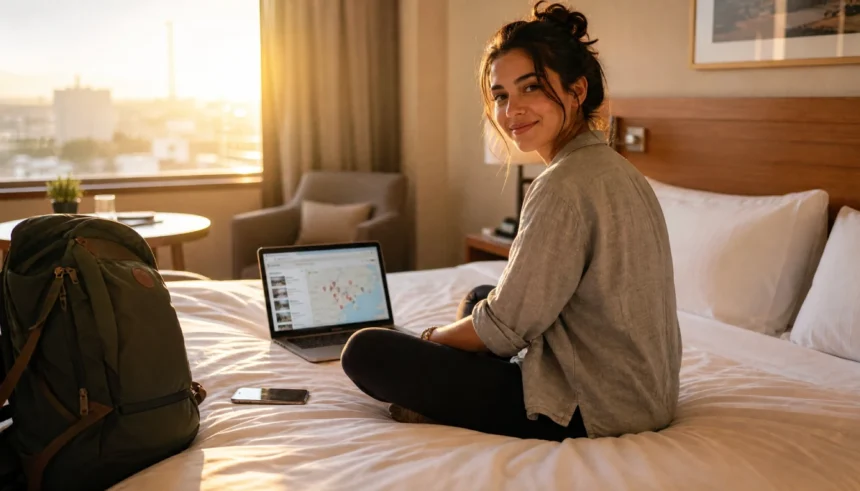
Step 2: Use Google Maps Street View. Walk the route from the nearest train or bus stop to the property. Do it at night-time view if possible. Are there streetlights? Open shops? Other people around? A 4-minute walk that feels fine at noon can feel very different at 11 p.m.
Step 3: Check a neighborhood crime map. For most major cities, tools like Numbeo or CrimeMapping give you a rough safety grade by area. You don’t need to read every data point. You just need to know whether you’re booking in a green or red zone.
Do all three steps before you open Booking.com or Expedia. This filters out bad options fast.
3. Safe Airbnb for Solo Female Travelers: A No-Nonsense Vetting Framework
Airbnb can be one of the safest options out there if you know what to filter for.
Start with Superhost status. It’s not a guarantee, but it signals that the host has a track record of reliable communication and good reviews. Skip anyone who isn’t a Superhost for your first few solo trips.
Next, search for the words “solo female” or “woman traveling alone” in the listing’s reviews. Guests leave these naturally when they want to reassure other women. If you don’t see any, that’s not a red flag on its own. But if you find five reviews with that phrase, you’ve just found your host.
Before booking, send this short message:
“Hi, I’m traveling solo and was wondering: is there a secure lock on the bedroom door? Is the building entrance gated or keypad-accessed? And are you or a property manager reachable 24 hours if something comes up?”
A good host replies quickly and specifically. A vague reply or no reply is your answer.
Photo verification on Airbnb is also worth checking. The blue “verified” badge means Airbnb has matched host photos to a government ID. Not all hosts have it. Prioritize the ones who do.
4. Hostels, Guesthouses, and Women-Only Dorms: What First-Timers Need to Know
I made a mistake on my very first hostel stay. I booked a mixed dorm because it was $4 cheaper per night. I did not sleep.
Now I always filter for female-only dorms on Hostelworld, even when it costs more. The difference in how you feel getting ready for bed is worth every cent.
Here’s what to look for when booking a hostel:
- 24-hour reception. Non-negotiable. You need someone staffed at all times in case you return late or feel unsafe.
- Lockers in the room. Ideally, with space for a full backpack, not just a small purse.
- Female-only dorm option. Use Hostelworld’s filter. It’s under “Room Type.”
- Private room upgrade. When in doubt, budget an extra $10-15 for a private room. Privacy equals control over your door.
Guesthouses are often run by families, which adds a layer of accountability. Check whether guests have access to common areas and whether the front door is locked at night.
5. Questions to Ask a Hotel or Host Before Booking
Copy and paste these directly into your next inquiry message. Tone matters. Keep it friendly, not interrogative.
- Is the front desk staffed 24 hours a day?
- Is there a deadbolt or chain on the room door?
- Can you confirm the property entrance is secured (keypad, key fob, or staffed door)?
- Are there security cameras in hallways or entrances?
- Is the neighborhood considered safe to walk in at night?
- Can I request a room not on the ground floor?
- Is there reliable WiFi, including in the room?
- What is the best number to call if I need help at night?
- Is the property accessible by public transport at night?
- Can you send a photo of the door lock if I ask?
You will not use all 10 every time. Pick the 3-4 that matter most for that specific trip. The goal is to see how the host or hotel responds. Speed and detail tell you a lot.
6. Red Flags When Booking Accommodation as a Solo Female Traveler
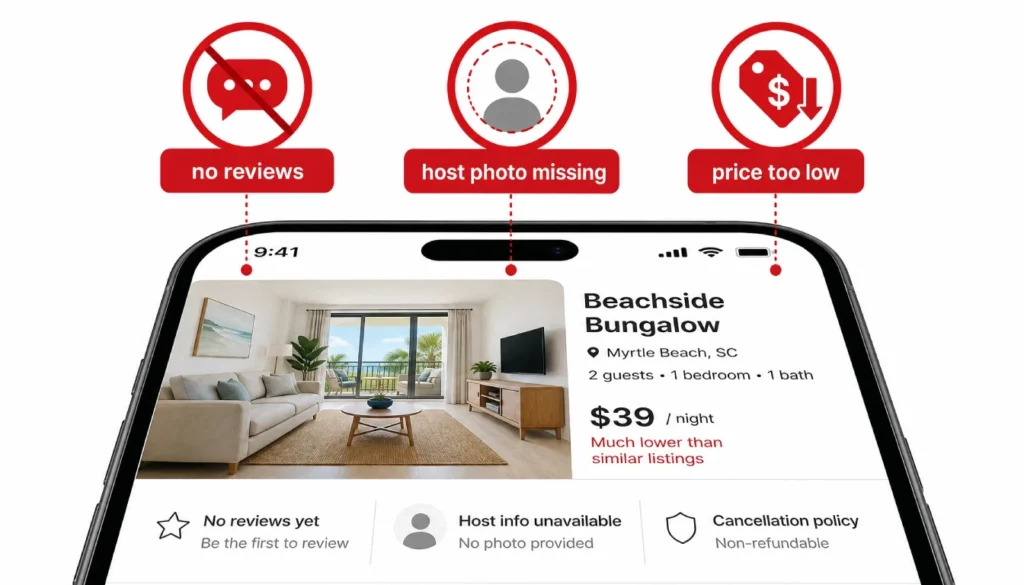
Some listings look fine on paper and feel wrong the moment you read carefully. Here are the signs to never ignore.
In the listing itself:
- Only exterior photos. No photos of the door lock, the hallway, or the entrance.
- Reviews mention “it’s fine” but are never enthusiastic about safety or comfort.
- No reviews at all, or reviews that look copy-pasted.
- The host profile photo is missing.
- The price is dramatically lower than comparable options nearby.
In the host’s communication:
- They answer days later.
- Replies are vague (“everything is fine, don’t worry”).
- They ask for payment outside the platform.
- They push back when you ask basic security questions.
Once you arrive:
- The property looks nothing like the photos.
- The lock is broken, or the door doesn’t close properly.
- Staff seem confused about who you are or your booking.
I personally faced a bait-and-switch in Rome. The Airbnb looked perfect online, but when I arrived, the locks were different from the photos. The door didn’t fully close. I left within 10 minutes, filed a claim with Airbnb, and got a full refund. After that trip, I added a portable door lock to my bag and have never traveled without one since.
Your gut is a data point. If something feels off, trust it.
7. The 20-Point Solo Female Travel Accommodation Safety Checklist
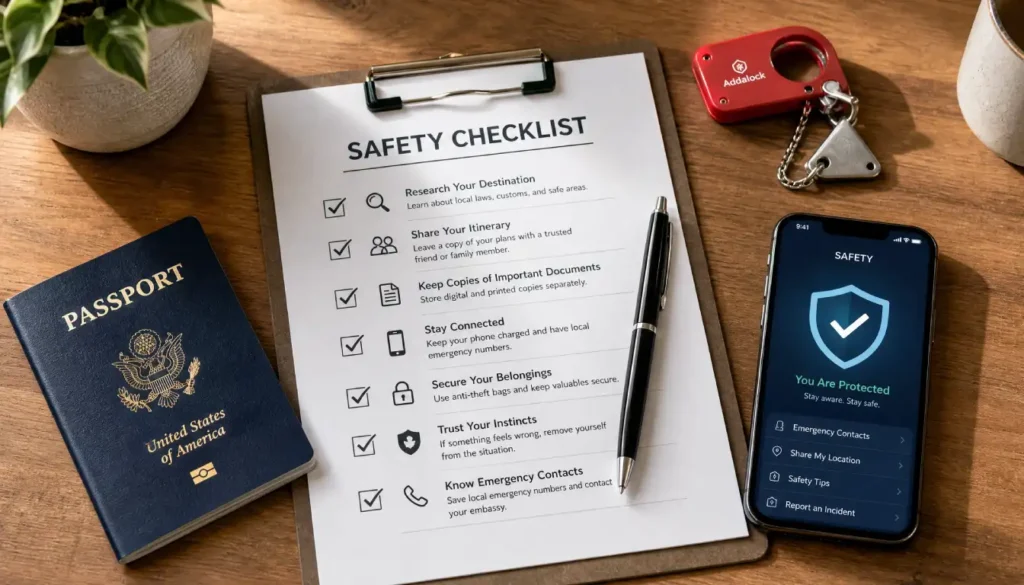
Print this or save it as a photo on your phone. Run through it before every stay.
Pre-Booking (do these at home):
- Searched hotel/host name with “solo female” on TripAdvisor and Reddit
- Checked Google Maps street view route at night
- Confirmed neighborhood safety rating on Numbeo or local crime data
- Verified Superhost status (for Airbnb) or confirmed brand credibility (for hotels)
- Sent the pre-booking security questions and evaluated the reply
- Checked that the listing has 10+ recent reviews from the past 6 months
- Confirmed 24-hour front desk or host availability
Day of Arrival:
8. Saved the property address and local emergency number offline
9. Shared your booking confirmation and address with one person at home
10. Confirm your arrival time with the host or hotel in advance
11. Noted the nearest police station and hospital on Google Maps offline
12. Charge your phone fully before landing or arrival
In the Room (first 5 minutes):
13. Tested the deadbolt and chain on the door.
14. Checked that the windows lock from the inside.
15. Scanned for hidden cameras (check smoke detectors, USB chargers, and wall clocks)
16. Locate the emergency exit nearest to your room
17. Identified a secondary exit in case the hallway is blocked
Every Night:
18. Used your portable door lock before sleeping
19. Keep your phone and passport within arm’s reach
20. Kept your room number private and never said it aloud at the front desk
8. What to Do the Moment You Enter Your Room: The 5-Minute Security Sweep
Do not unpack first. Do this first.
1. Test the lock. Close the door and try both the deadbolt and any chain lock. If either is broken, call the front desk immediately. Do not wait.
2. Check the windows. Open and close each one. Confirm they latch securely from the inside, especially on lower floors.
3. Scan for hidden cameras. This sounds extreme, but it takes 90 seconds. Look for any object with a small hole pointing toward the bed or bathroom: smoke detectors, USB chargers, picture frames, alarm clocks. Turn off the lights and use your phone flashlight at eye level. A camera lens reflects light differently from a regular surface.
4. Find your emergency exit. Walk to the nearest stairwell. Count how many doors from your room. You want to know this before you ever need it.
5. Install your portable door lock. Even if the existing lock is fine, use it. It takes 10 seconds and gives you an additional layer of security no one else can override.
This entire sweep takes five minutes. Do it every single night.
9. Affordable Safety Gear That Actually Works (And What’s a Waste of Money)
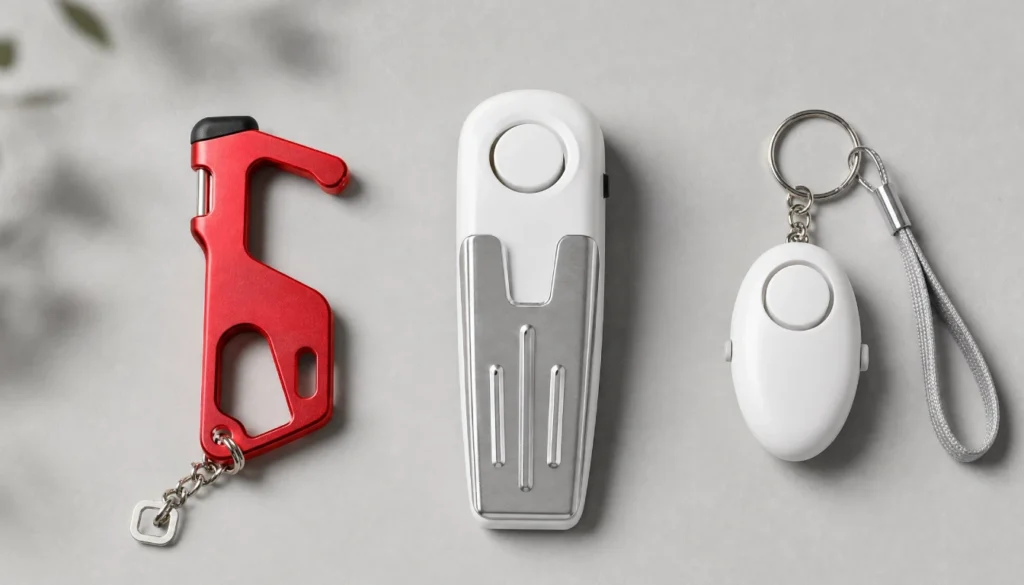
You do not need a full tactical kit. You need three things.
1. Portable door lock (Addalock or BurglarBar). This fits in any door latch and prevents the door from being opened from the outside, even with a master key. It costs under $20, weighs almost nothing, and is the single most useful travel safety item I own.
2. Doorstop alarm: You wedge this under the door. If anyone tries to push it open, a 120dB alarm goes off. It also physically resists the door being forced. Under $15 on most travel gear sites.
3. Personal alarm keychain (Birdie): You pull the pin, and it emits a loud alarm to attract attention in public. Keep it in your jacket pocket or clipped to your bag. Lightweight, legal everywhere, and genuinely effective.
What to skip:
- Most “smart lock” gadgets that require phone setup are unreliable in foreign sockets.
- Pepper spray is illegal in many countries. Check the laws of every destination before packing it.
- Personal GPS trackers are useful for other reasons, but they won’t help in an accommodation emergency.
Spend $50 total on these three items. You’ll use them on every trip for the next decade.
10. FAQs
Is Airbnb safe for solo female travelers?
Yes, with proper vetting. Superhost status, strong recent reviews, and direct communication before booking make it just as safe as a hotel, often safer because you have a named, verified host.
Is Booking.com or Hotels.com reliable?
Yes. These platforms have robust review systems. For solo female safety, filter results by “women traveling solo” in review keywords and prioritize properties with 8.5+ ratings and 100+ reviews.
Are female-only hotel floors worth it?
Sometimes. A few chains offer them in certain markets. They add a layer of privacy but do not replace good personal security habits.
Can I trust Couchsurfing as a solo woman?
This one is personal. Many women use it safely with a strong profile, verified hosts, and vouched references. If you’re new to solo travel, stay in paid accommodation for your first few trips. Get comfortable with your own security routines first.
What if I arrive late at night and the hotel seems sketchy?
You can and should leave. Most booking platforms allow free cancellation within 24 hours of check-in. If you feel unsafe, find a nearby alternative and sort out the refund the next morning.
Is a hostel safe for a first solo trip?
Yes, with a female-only dorm. Choose a hostel with a 9.0+ rating, 24-hour staff, and in-room lockers. Read reviews from solo female guests specifically before booking.
11. Your Action Plan: From “I’m Nervous” to “I’m Booked and Confident”
You now have everything you need. Here’s how to put it together.
Step 1: Research. Before opening any booking site, search the area on Reddit and TripAdvisor with “solo female.” Open Google Maps and walk the route at night on Street View. Check neighborhood safety data.
Step 2: Verify. Send your pre-booking questions to the top two or three options. Pick the one with the fastest, most specific reply. Run the listing through your red flag checklist.
Step 3: Pack the right gear. Order a portable door lock, a door stop alarm, and a personal alarm keychain. All three together cost less than one extra night in a “safer” hotel.
Finding safe accommodation for solo female travelers comes down to a system, not luck. Run the system before every trip, and that sinking feeling in your stomach becomes confidence before you even board the plane.
You’ve got this.