

Two years ago, I got handed the title “Marketing Manager” at a small company. Sounds fancy, right? Here’s the catch. There was no team. No budget for freelancers. No one to bounce ideas off. Just me, a laptop, and a long list of things marketing was supposed to do.
If you’re running a one-person marketing department, you already know this feeling. You’re the strategist, the writer, the designer, and the analyst. All in one body. All before lunch.
This article walks you through exactly how to build a working, sustainable solo marketing department. You’ll get the tools, the systems, and the mindset shifts that actually make this job doable. No fluff. Just what works.
What a One-Person Marketing Department Really Means

A marketing department of one is exactly what it sounds like. One person handles every marketing function a normal team would split among five or six people.
That means content, social media, email, analytics, branding, and sometimes even sales support. It’s a lot. But it’s also more common than you think.
Small businesses, startups, and solo entrepreneurs run this way all the time. The trick isn’t doing everything. It’s doing the right things, in the right order.
The Biggest Challenges of a Solo Marketer
Before we get into solutions, let’s name the problems. You can’t fix what you don’t admit.
Common struggles for a one-man marketing team:
- Too many tasks, not enough hours
- No one to review your work before it goes live
- Constant context switching between creative and analytical work
- Pressure to prove ROI with limited resources
- Burnout from wearing every hat at once
Sound familiar? Good. That means you’re not doing anything wrong. You’re just missing a system.
Step 1: Build Your Marketing Foundation First
Before you touch a single tool or tactic, get clear on three things: your audience, your message, and your goals.
Write down who you’re actually talking to. Not “everyone.” A real person, with real problems your product solves.
Then define your core message in one sentence. If you can’t explain what you do in ten seconds, your audience won’t get it either.
This foundation becomes your filter. Every task, every post, every campaign gets checked against it. If it doesn’t support your message or your goals, skip it.
Step 2: Pick the Right Tools for a Solo Marketer
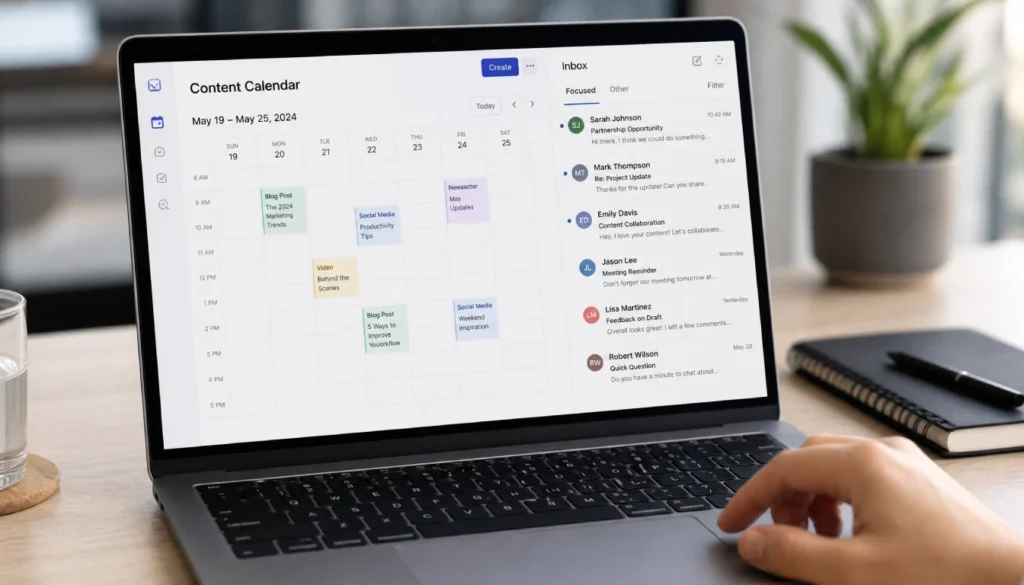
The right tools needed for a one-person marketing department can save you ten or more hours a week. Here’s a simple stack that covers the basics without overwhelming you.
| Task | Tool Type | Why It Helps |
|---|---|---|
| Content calendar | Scheduling app | Keeps posts organized weeks in advance |
| Email marketing | Automation platform | Sends sequences without daily effort |
| Design | Templated design tool | Creates graphics fast, no designer needed |
| Analytics | Built-in dashboard | Tracks what’s working in one place |
| CRM | Simple contact tool | Keeps leads and customers organized |
You don’t need ten tools. You need five that talk to each other and save you time every single day.
Step 3: Create a Simple Content Calendar
A content calendar is your best friend when you’re working alone. It removes the daily “what do I post today” panic.
Plan content in monthly blocks. Pick two or three themes tied to your business goals. Then batch-create posts, emails, and blog topics around those themes in one sitting.
This one habit alone will save your sanity. You stop reacting every day and start working from a plan you already trust.
Step 4: Automate What You Can
Marketing automation isn’t just for big companies. For a solo marketing department, it’s survival.
Quick wins to automate right away:
- Welcome email sequences for new subscribers
- Social media post scheduling
- Basic customer follow-up emails
- Weekly performance reports
- Abandoned cart reminders (if you sell online)
Set these up once. Let them run in the background while you focus on strategy and creative work that actually needs a human touch.
Step 5: Know What to Outsource First
You can’t do everything forever. At some point, you’ll need help. The question is what to hand off first.
Marketing tasks a one-person team should outsource first:
- Graphic design (if it’s not your strength)
- Video editing
- Bookkeeping for ad spend
- Technical website fixes
- Bulk content writing during busy seasons
Start small. A few hours a month from a freelancer can free up time for the strategic work only you can do.
How to Prioritize Marketing Tasks as a Solo Marketer
Not every task deserves equal attention. Use this simple filter before adding anything to your to-do list.
Ask yourself: Does this directly support a business goal? Will this task still matter in three months? Can I measure the result?
If the answer to all three is yes, it stays. If not, cut it or delegate it. This is the heart of minimum viable marketing. Do less, but make it count.
A Sample Weekly Checklist for a Marketing Department of One
Here’s a realistic weekly rhythm that keeps things moving without burning you out.
| Day | Focus |
|---|---|
| Monday | Plan content and review KPI tracking from last week |
| Tuesday | Write and schedule blog or social content |
| Wednesday | Email campaigns and customer follow-ups |
| Thursday | Analytics review and small campaign adjustments |
| Friday | Admin, outsourced task check-ins, planning ahead |
You don’t have to follow this exactly. Build your own version based on your business and your energy levels.
Mistakes to Avoid as a Solo Marketer
Learn from these before they cost you time and energy.
- Trying to be active on every social platform at once
- Skipping analytics because you’re “too busy”
- Saying yes to every marketing request from other departments
- Ignoring your own burnout warning signs
- Comparing your output to a full marketing team
Avoiding these mistakes matters more than any single tool or tactic.
How to Avoid Burnout as a Solo Marketer

Burnout sneaks up fast when you’re the only marketer in the building. Protect your energy the same way you protect your budget.
Set clear work hours and stick to them. Batch similar tasks together instead of switching constantly. Take real breaks, not just five minutes scrolling on your phone.
And permit yourself to say no. You can’t do it all, and trying to will only slow you down.
Fractional CMO vs One-Person Department
If you’re growing fast, you might wonder if a fractional CMO makes more sense than staying solo.
A fractional CMO brings strategic leadership on a part-time basis. A one-person department handles both strategy and execution alone.
If you need high-level direction but still want to do the hands-on work yourself, staying solo with occasional consulting support often works better than a full fractional hire.
FAQs
Can one person really handle all marketing for a business?
Yes, especially for small businesses or early-stage startups. It requires strong prioritization and the right tools, but it’s absolutely doable.
What skills does a one-person marketing department need most?
Basic copywriting, simple design skills, comfort with data, and strong organization. You don’t need to be an expert in everything, just capable enough to get things done.
How do I measure marketing ROI when I work alone?
Focus on a few key metrics tied directly to revenue or leads. Website traffic, email signups, and conversion rate are a solid starting point.
What’s the first thing I should set up as a solo marketer?
A content calendar. It brings order to everything else and removes daily decision fatigue.
When should a one-person marketing department hire help?
When repetitive tasks are eating time you need for strategy. That’s usually the sign it’s time to outsource or hire.
Final Thoughts
Building a one-person marketing department is hard work, but it’s also one of the most rewarding challenges in business. You learn fast, you see direct results, and you build skills that last a career.
Start with your foundation. Pick simple tools. Automate the repetitive stuff. Outsource what drains you. And protect your energy along the way.
You’ve got this, even on the days it feels like too much.
What’s the biggest challenge you’re facing as a solo marketer right now? Drop a comment below. I’d love to hear what you’re working through, and maybe we can figure it out together.