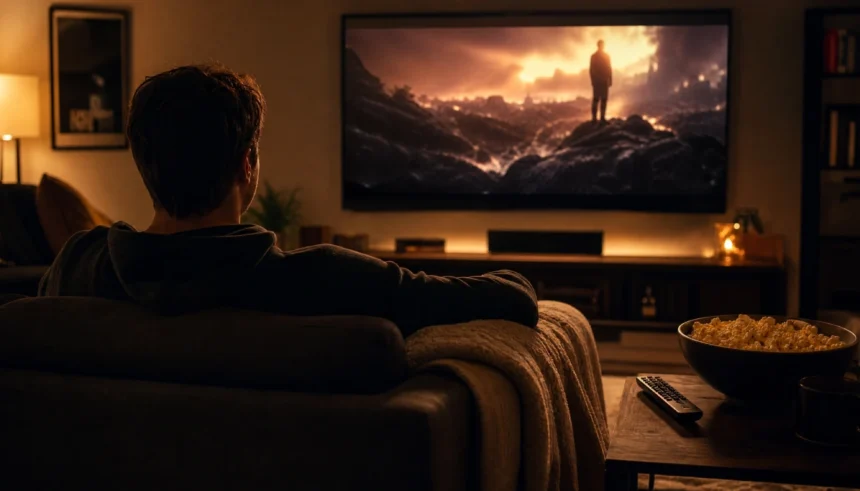
I still remember the night I paused a movie halfway through and said out loud, “Wait, I know exactly what happens next.” My roommate laughed and said I was just paying too much attention. But I wasn’t wrong. The hero was about to lose everything right before the final act. The quiet friend was about to reveal a secret. The love interest was about to show up at the worst possible moment.
That’s when it hit me. Movies and TV shows follow patterns. Once you learn to spot them, you can’t unsee them. And honestly, that’s part of the fun.
If you’ve ever felt like you can predict a plot twist before it happens, or you’ve wondered why so many shows use the same character types over and over, you’re not imagining things. You’re noticing tropes.
In this guide, I’ll walk you through what movie tropes actually are, why writers use them, and break down 35+ of the most common ones you’ll recognize instantly. By the end, you’ll watch your favorite shows with a whole new level of understanding.
What Is a Movie Trope, Exactly?
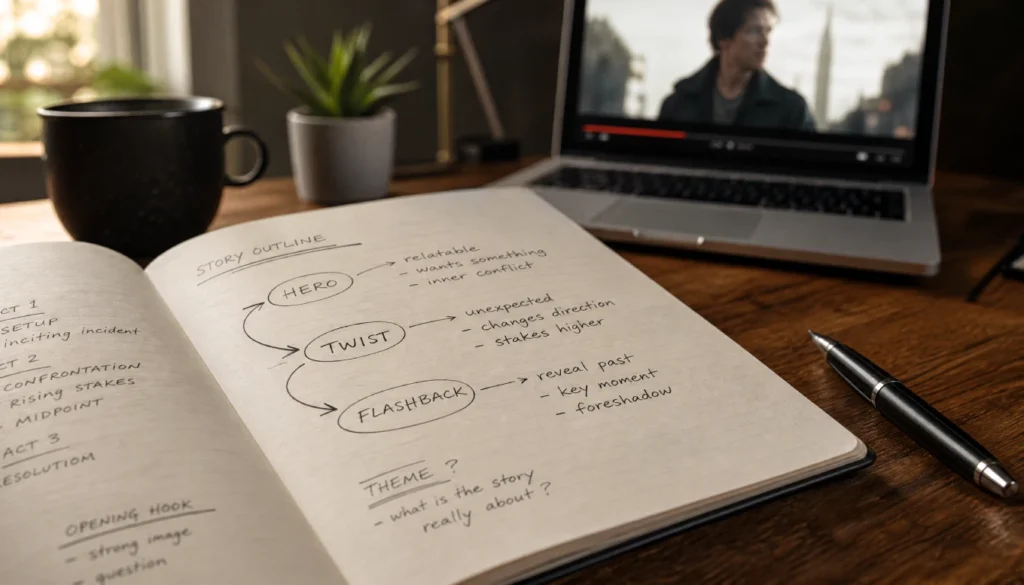
A trope is a recurring theme, character type, or plot device that shows up again and again across movies and TV. Think of it as a storytelling shortcut. Writers use tropes because audiences already understand them without needing extra explanation.
A lot of people ask what the difference is between a trope and a cliché. Here’s the simple answer: a trope is a tool, and a cliché is a trope used badly. The chosen one storyline is a trope. A chosen one with zero personality and no stakes is a cliché.
Tropes aren’t automatically bad. In fact, they’re the backbone of good storytelling. The trick is in how well a writer uses them.
Why Do Writers Rely on Tropes So Much?
You might wonder why filmmakers don’t just come up with something completely new every time. Here’s the truth: totally original stories are rare, and even the ones that feel fresh usually borrow from familiar structures underneath.
Tropes work because they tap into patterns your brain already recognizes. Your mind fills in gaps quickly, which keeps you emotionally invested instead of confused. That’s not laziness. That’s smart storytelling.
Here’s why tropes matter for storytelling:
- They set expectations quickly.
- They give writers a shared language with the audience.
- They speed up character development.
- They make emotional payoffs feel earned.
- They give writers something familiar to subvert for surprise.
Character Tropes You’ll Recognize Instantly
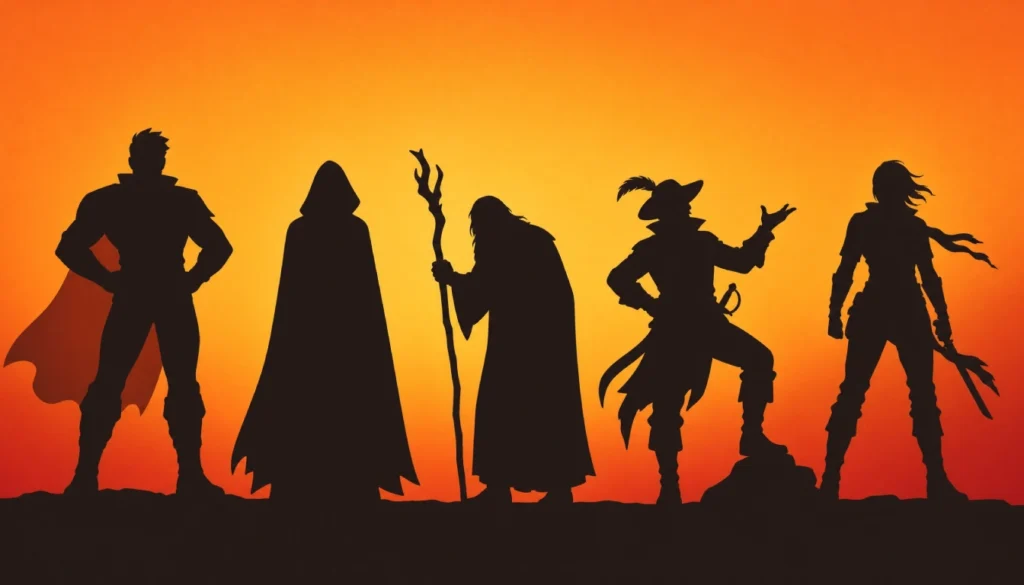
Character tropes are the backbone of most stories. Once you know them, you’ll spot them in almost every show you watch.
- The Chosen One. A regular person destined for greatness. Think of any young hero who discovers a hidden power.
- The Manic Pixie Dream Girl. A quirky love interest whose only job is to help the male lead grow.
- The Anti-Hero. A morally messy character you root for anyway.
- The Final Girl. The last survivor in a horror movie, usually smart and resourceful.
- The Damsel in Distress. A character who needs rescuing, often criticized today for feeling outdated.
- The Wise Mentor. An older character who guides the hero, then often dies right when things get serious.
- The Comic Relief Friend. Lightens tense moments with humor.
- The Femme Fatale. A seductive character who hides dangerous motives.
- The Loveable Rogue. Charming, a little dishonest, but impossible to hate.
- The Ensemble Cast. A group of characters who each play a specific role in the story’s balance.
Plot Tropes That Shape the Story
Plot tropes are the structural tricks that keep a story moving. They shape pacing and build tension.
- The MacGuffin. An object everyone wants, even if it barely matters to the plot itself.
- Deus Ex Machina. An unexpected solution that saves the day out of nowhere.
- The Red Herring. A clue meant to mislead you.
- The Plot Twist. A sudden reveal that changes how you see everything before it.
- The Training Montage. Quick scenes showing a character improving their skills.
- The Meet-Cute. A charming first encounter between future love interests.
- The Love Triangle. Two people competing for one person’s affection.
- The Flashback. A scene from the past that explains present-day motivation.
- The Fourth Wall Break. A character speaking directly to the audience.
- The Unreliable Narrator. A storyteller whose version of events can’t be fully trusted.
Genre-Specific Tropes Worth Knowing
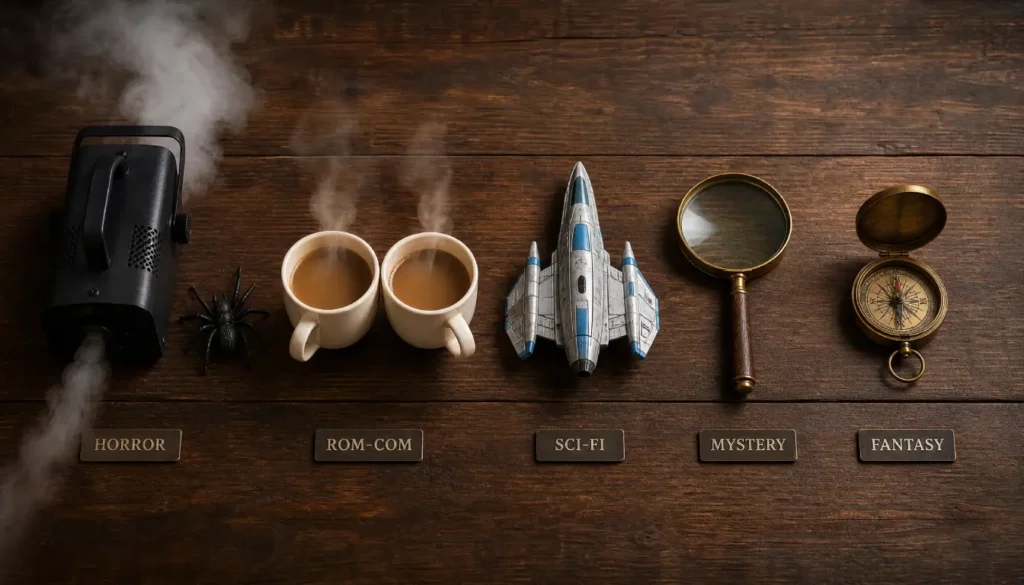
Every genre has its own set of go-to tropes. Here’s a quick breakdown by category.
| Genre | Common Trope | Why It Works |
|---|---|---|
| Horror | The Final Girl | Builds tension and gives audiences someone to root for |
| Rom-Com | The Meet-Cute | Creates instant emotional investment |
| Sci-Fi | The Chosen One | Gives scale and purpose to the story |
| Action | The Loveable Rogue | Adds humor to high-stakes situations |
| Mystery | The Red Herring | Keeps viewers guessing until the end |
| Fantasy | The Wise Mentor | Provides guidance and emotional grounding |
- The Origin Story. Shows how a hero became who they are.
- The Training Under Pressure Trope. A character forced to grow fast under danger.
- The Secret Identity. A double life that adds tension to every scene.
- The Betrayal Twist. A trusted character turns out to be the enemy.
- The Slow Burn Romance. Feelings build gradually instead of all at once.
- The Countdown Clock. A ticking deadline that raises stakes.
- The Villain Monologue. The bad guy explains their plan right before losing.
- The Sacrifice. A character gives up something major for the greater good.
- The Reluctant Hero. Someone who doesn’t want the responsibility but takes it anyway.
- The Redemption Arc. A flawed character works to become better.
Sitcom and TV-Specific Tropes
TV shows, especially sitcoms, have their own bag of tricks that keep episodes moving fast.
- The Laugh Track. Signals when something is supposed to be funny.
- The Will-They-Won’t-They. A couple whose romantic tension stretches across seasons.
- The Bottle Episode. A low-budget episode set in one location.
- The Clip Show. An episode built from flashbacks of previous episodes.
- The Cliffhanger Ending. Leaves you desperate for the next episode.
- The Character Reset. A character who never seems to learn from past mistakes.
- The Ensemble Hangout Trope. A group of friends who always seem to have time for each other, no matter their jobs.
Are Tropes Bad for Storytelling?
This is where a lot of people get confused. Tropes aren’t the problem. Lazy writing is the problem.
A trope done well feels satisfying, even comforting. A trope done poorly feels predictable in a boring way. The difference usually comes down to character depth, emotional stakes, and whether the writer adds a twist to something familiar.
Signs a trope is used well:
- It feels earned, not forced.
- The character has depth beyond the trope itself.
- It surprises you even though you saw it coming.
Signs a trope is used poorly:
- The character exists only to serve the trope.
- The outcome feels rushed or unearned.
- Nothing about it feels personal to the story.
How to Use Tropes as a Writer
If you’re working on your own script or story, tropes can actually help you, not hurt you. Here’s how to use them the smart way.
- Start with a familiar trope, then add one unexpected twist.
- Give side characters more depth than the trope suggests.
- Avoid stacking too many tropes into one story at once.
- Use tropes to set expectations, then subvert them for impact.
- Study your favorite shows and notice which tropes they lean on.
Subverting a trope doesn’t mean avoiding it completely. It means using it in a way audiences don’t expect, which keeps your story feeling fresh instead of tired.
Frequently Asked Questions
What is a movie trope in simple terms?
A movie trope is a common pattern, character type, or plot device that shows up across many films and shows. It’s a storytelling shortcut that audiences instantly recognize.
What’s the difference between a trope and a cliché?
A trope is a tool. A cliché is a trope used without originality or depth. Any trope can become a cliché if it’s handled poorly.
Are tropes bad for original storytelling?
Not at all. Most great stories use tropes. What matters is how the writer builds on them and adds fresh details or twists.
Why do so many movies use the same tropes?
Because tropes work; they help audiences connect emotionally and understand a story quickly, without needing extra explanation.
Can tropes make a story feel more relatable?
Yes. Familiar patterns help audiences settle into a story more quickly, making emotional moments hit harder when they arrive.
Final Thoughts
Once you start noticing tropes, you can’t stop. And honestly, that’s a good thing. It doesn’t ruin the magic of movies and shows. It actually makes watching them more fun, because you start to appreciate the craft behind every twist, every character, and every emotional gut punch.
The next time you’re watching something and you feel like you know what’s coming, take a second to notice why. Chances are, you just spotted a trope doing exactly what it’s supposed to do.
I’d love to hear which trope you notice the most in your favorite shows. Drop a comment and let me know, or share this with a friend who always guesses the plot twist before it happens.