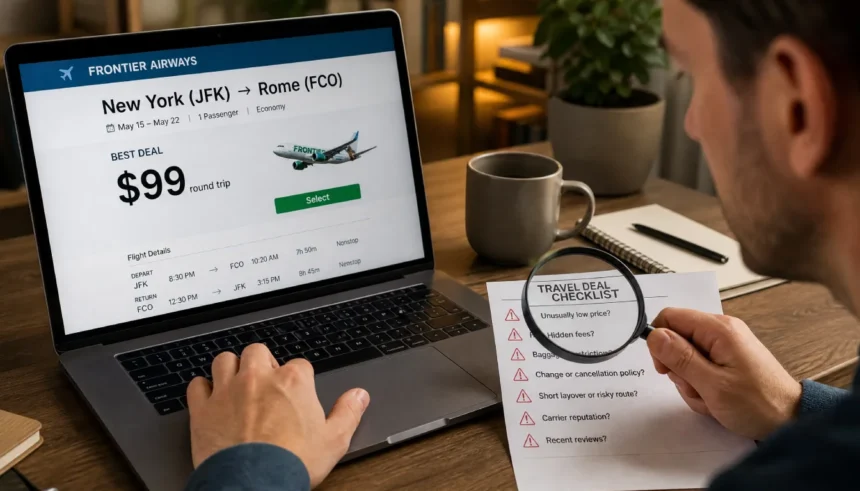
You found a flight or villa priced way below everything else. Your gut says wait. Your wallet says book now.
That tension is exactly why you need a reliable way to tell if a travel deal is a scam, checklist in hand, before you type in your card number.
I’ve been tempted by deals like this myself, and one close call taught me exactly which red flags matter. In this guide, you’ll get a step-by-step checklist you can run through in five minutes. No tech skills required.
Common Travel Scams You’ll Encounter in 2026
Scammers have gotten faster and better at mimicking real booking sites. Here are the patterns showing up most right now.
Fake flight deals. A Facebook or Instagram ad shows a flight for half the normal price. You pay, get a confirmation number, and the airline has never heard of you.
Ghost vacation rentals. The photos look stunning. The property does not exist, or it exists, but the person messaging you doesn’t own it.
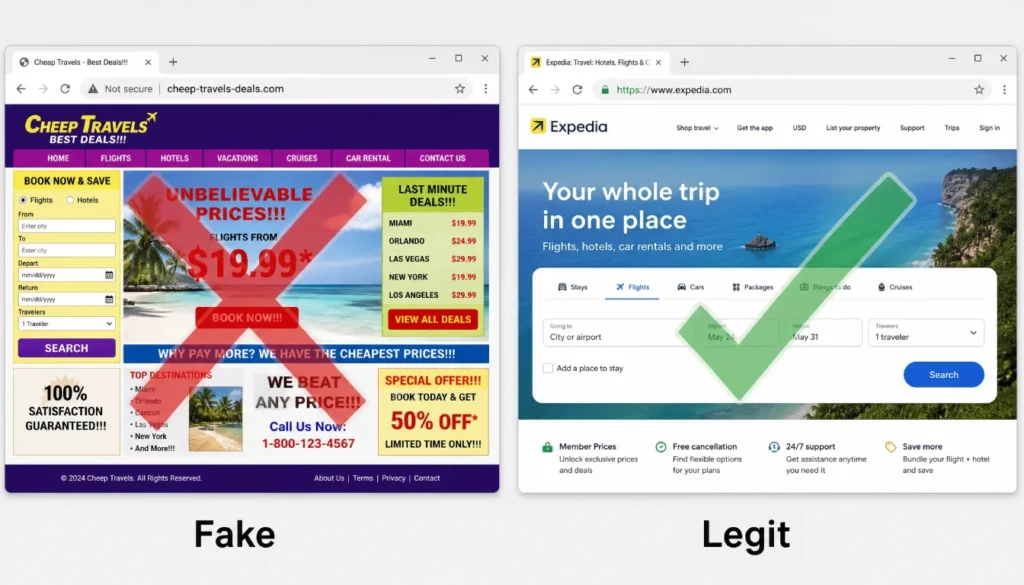
Fake travel agencies. A slick website with a professional logo, but no real business behind it. They take your deposit and disappear.
Urgency scams. “Only 2 seats left” or “this price expires in 10 minutes.” The pressure is the point. It stops you from checking.
Each of these follows a similar playbook. Once you see the pattern, you’ll spot it fast.
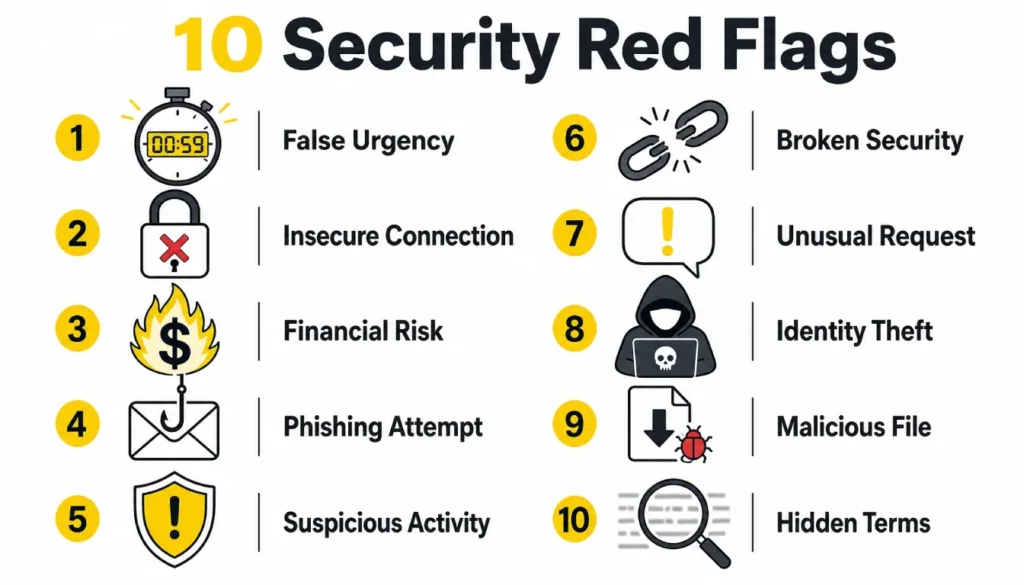
10 Red Flags That Scream “Travel Scam” (Printable Checklist)
Print this out or save it to your phone. Run through it before you pay for any deal that feels too good.
- The price is 50% or more below every other listing for the same dates and location.
- The seller pushes you toward wire transfer, gift cards, or crypto instead of a credit card.
- There’s no phone number, or the number goes straight to voicemail.
- The website has no HTTPS padlock in the address bar.
- You’re rushed with a countdown timer or “last room available” message.
- The host or agent avoids video calls or live proof of the property.
- Reviews are all five stars and posted within the same week.
- The email domain doesn’t match the company name (e.g., a Gmail address for a “major airline”).
- You can’t find the business on Google Maps or any licensing registry.
- The confirmation email has typos, odd formatting, or a generic greeting like “Dear Customer.”
If you check two or more boxes here, stop and verify before you pay.
How to Verify a Travel Agency or Booking Website (Step-by-Step)
A polished website means nothing. Scammers build good-looking sites in a weekend. Here’s how to check if the business behind it is real.
Step 1: Look up their license number. Legitimate agencies carry an IATA, TICO, or ABTA registration depending on your country. Search the number on the official registry, not on the agency’s own site.
Step 2: Search “[company name] + scam.” Check independent review sites like Trustpilot, Reddit, and the Better Business Bureau. One bad review isn’t a dealbreaker. A pattern of complaints is.
Step 3: Call the phone number listed on their site. If it’s disconnected, or the person who answers can’t tell you basic details about the booking process, walk away.
I once found a “verified” agency selling package deals to Thailand at prices no real airline could match. Their license number, when I checked it against the registry, belonged to a completely different company. That five-minute check saved me over $800.
Is That Vacation Rental Legit? 7 Ways to Check
Rental scams hit both budget travelers and people booking luxury villas. Here’s how to check before you send a deposit.
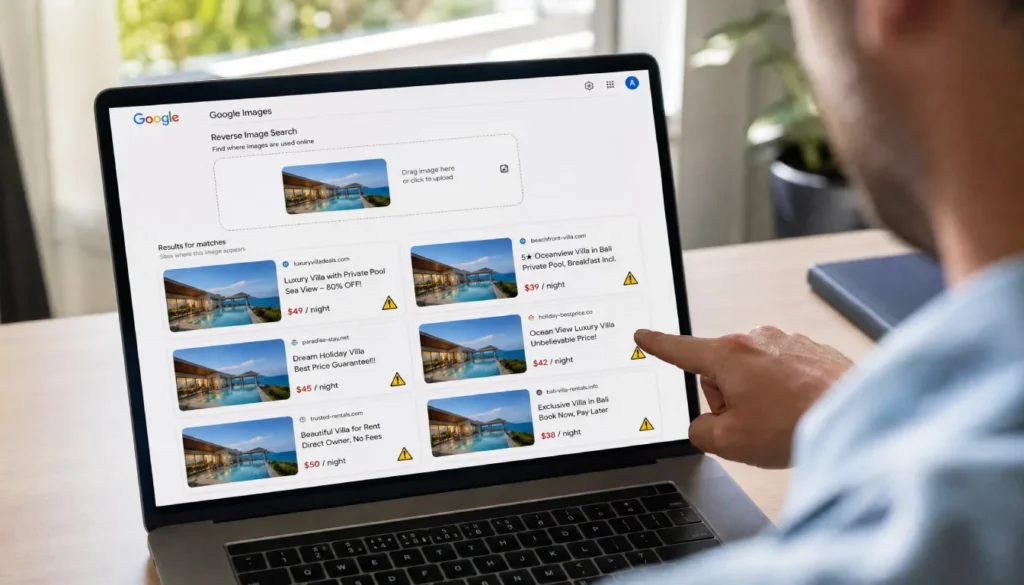
- Reverse image search the photos. Drag the listing photo into Google Images. If it appears on multiple unrelated sites, it’s stolen.
- Ask for a live video walkthrough. A real host can show you the property in real time. A scammer will make excuses.
- Cross-check the address. Look it up on Google Maps and Street View. Confirm it’s a real residential building, not a parking lot.
- Check how long the listing has been live. Brand-new listings with no reviews carry more risk.
- Read the cancellation policy carefully. Scam listings often skip this section entirely.
- Message the host through the platform, not email. Airbnb and Vrbo can only protect you if the payment stays inside their system.
- Never wire money directly to a host. This single rule blocks most rental scams before they start.
I once spotted a Bali villa listed at 70% less than nearby rentals. The host pushed me toward a wire transfer over WhatsApp. When I asked for a quick video tour, they stopped replying within an hour. That taught me a simple rule: if a host won’t show you the property live, treat it as a hard stop.
Safe Payment Methods That Protect Your Money
How you pay matters as much as who you pay. Here’s the order of safety, from best to worst.
- Credit card. Offers the strongest fraud protection and chargeback rights.
- Payment through the platform itself (Airbnb, Booking.com, Expedia). These platforms hold funds until check-in and refund you if the listing turns out fake.
- PayPal Goods and Services. Buyer protection applies, but only if you select this option, not “Friends and Family.”
- Debit card. Weaker protection than credit, but better than the options below.
- Wire transfer, gift cards, or cryptocurrency. Avoid these completely for travel bookings. Once sent, this money is nearly impossible to recover.
If a seller only accepts option five, that alone tells you everything you need to know.
What to Do If You Already Paid a Scammer
If you’ve already sent money and now suspect a scam, act fast. Every hour matters.
Step 1: Contact your bank or card issuer immediately. Request a chargeback and explain the situation clearly.
Step 2: Report it to the platform. If you booked through Airbnb, Booking.com, or a similar site, their fraud team can freeze the listing and may refund you directly.
Step 3: File a report with the FTC (in the US) or your country’s consumer protection agency. This creates a paper trail even if you don’t get your money back right away.
Step 4: Report the listing or ad on the platform where you found it, so it gets pulled down before someone else falls for it.
Step 5: Change your passwords if you shared any account details during the transaction.
Acting within 24 to 48 hours gives you the best shot at recovering your money.
Frequently Asked Questions About Travel Scams
How can I tell if a travel deal is a scam before booking?
Run through the 10 red flags above. Check the price against at least three other sources, verify the seller’s license number, and confirm the payment method is traceable.
Are all cheap flight deals scams?
No. Real fare drops and error fares happen. The difference is that legitimate deals come from recognized airlines or established booking sites, not random ads pushing wire transfers.
Can I get my money back after a travel scam?
Sometimes, especially if you paid by credit card. Report it fast and file a chargeback. Wire transfers and gift cards are rarely recoverable.
Is it safe to book through Facebook or Instagram ads?
Treat these with extra caution. Verify the business independently before clicking through, since ad platforms don’t fully vet every seller.
Final Thoughts
You don’t need to be a fraud expert to avoid getting scammed. You need a short checklist and the discipline to use it every time a deal looks too good.
Run through the red flags, verify the agency or host, and always pay through a traceable method. That’s the full answer to how to tell if a travel deal is a scam checklist, and it works whether you’re booking a $200 flight or a $2,000 villa.
Save this checklist, share it with a friend who’s about to book a “too good to be true” deal, and comment below if you’ve spotted a scam we didn’t cover.