
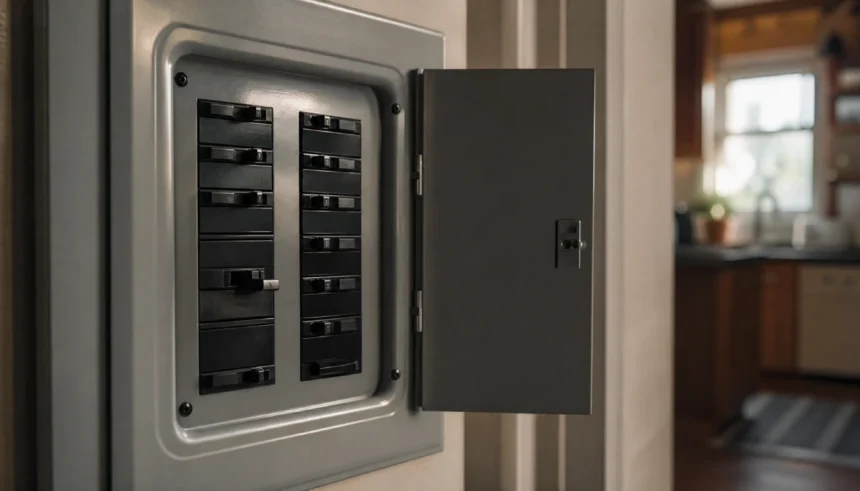
A few winters ago, my breaker tripped at 2 a.m. No lights on. No space heater running. Nothing plugged in anywhere near that circuit. I stood in my dark kitchen flipping the switch back and forth, convinced I was losing my mind.
If you’ve ever asked why my breaker trips when nothing is plugged in, you know that exact feeling. It’s confusing. It’s a little scary. And it makes you wonder if your whole house is one flip away from a real problem.
Here’s the good news. A breaker trips with nothing plugged in for specific, findable reasons. In this article, I’ll walk you through the most common causes, how to check each one, and when it’s time to call an electrician instead of guessing.
What It Means When a Circuit Breaker Trips With No Load
A breaker’s job is simple. It shuts off power when it senses something unsafe, like too much current or a short. Normally that happens because something plugged in is pulling too much power. But a no-load breaker trip means the problem is inside the wiring or the breaker itself.
That’s the part that throws people off. You start checking outlets and appliances, but the real issue is hiding behind the wall or inside the panel. Let’s get into the actual causes.
Common Causes of a Breaker Tripping With Nothing Connected
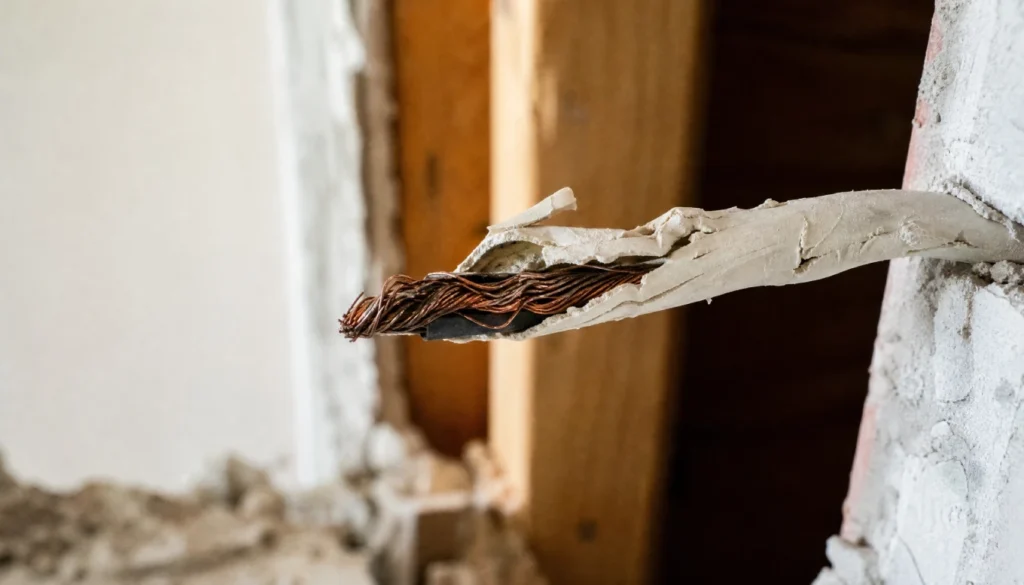
1. A Short Circuit in the Wiring
This is one of the top reasons a circuit breaker trips with no load. A short happens when a hot wire touches a neutral wire or a grounded surface. The breaker senses the sudden surge and shuts off, even though nothing is plugged in.
Shorts often come from damaged insulation, old wiring, or a nail that pierced a wire during a home repair. If your breaker trips immediately when you reset it, a short circuit is a strong suspect.
2. A Ground Fault Somewhere in the Circuit
A ground fault is close to a short circuit, but the current escapes through a grounded path instead of a neutral wire. This often happens near moisture, like a damp basement or an outlet close to a sink.
If your breaker trips during rain or after a humid day, moisture could be reaching bare wire somewhere on that circuit. GFCI breakers are built to catch this fast, which is why they trip so quickly.
3. Arc Faults From Damaged Wiring
AFCI breakers watch for tiny electrical arcs, the kind caused by a loose connection or a wire that’s starting to fray. These arcs can happen even with nothing plugged in, especially in older homes.
An AFCI breaker trips with nothing plugged in when it detects one of these micro arcs. It’s doing its job. The trip is a warning sign, not a glitch, so don’t ignore it.
4. A Loose Connection Inside the Panel or Outlet
Loose wiring is one of the sneakiest causes. A connection that isn’t tight can heat up, arc, or create a small surge on its own. This can trip the breaker even when every device in your home is turned off.
Backstabbed outlets are a common culprit here. These are outlets wired with push-in connections instead of screw terminals, and they loosen more easily over time.
5. A Faulty Breaker Itself
Sometimes the breaker is the problem, not the wiring. Breakers wear out. The internal spring and trip mechanism can weaken after years of use, causing it to trip on its own.
If you have a bad circuit breaker, you might notice it feels warm, buzzes slightly, or trips at random times with no clear pattern. Swapping the breaker often fixes it right away.
6. Moisture Inside an Outlet or Junction Box
Water and electricity never mix well. If moisture gets into an outlet, switch, or junction box, it can create a ground fault or short circuit even without anything plugged in.
This is especially common after storms, in older homes, or near exterior walls. If your breaker trips overnight with nothing plugged in during wet weather, check outlets near windows, doors, or plumbing.
7. Rodent Damage to Wiring
This one surprises a lot of people. Mice and rats chew through wire insulation, and exposed wire can short out or arc. If your breaker trips randomly and you’ve noticed droppings or chew marks near your attic or crawl space, this could be your answer.
8. An Overloaded Circuit From Hidden Devices
Even with nothing “plugged in” visually, some circuits power hardwired devices like a furnace, water heater, or built-in appliance. These can pull enough load to trip a breaker without anyone touching an outlet.
Quick Comparison: What the Type of Trip Tells You
| Breaker Behavior | Likely Cause |
|---|---|
| Trips instantly on reset | Short circuit |
| Trips during rain or humidity | Ground fault or moisture |
| AFCI breaker trips randomly | Arc fault from damaged wire |
| Trips after running for a while | Loose connection or overheating |
| Trips only in one room | Localized wiring issue |
| Trips with no pattern at all | Aging or faulty breaker |
How to Diagnose a Breaker That Trips With No Load
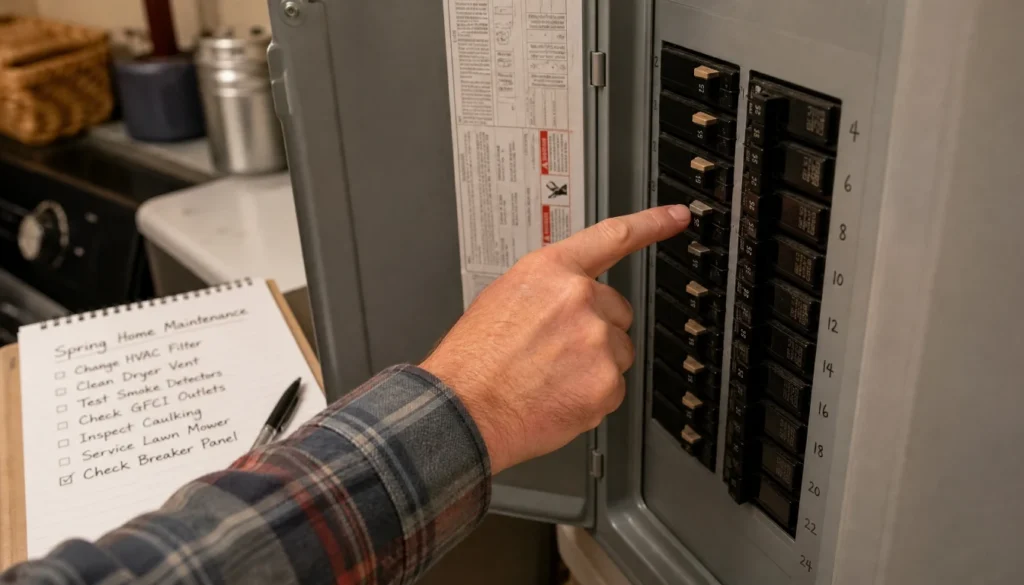
You don’t need to be an electrician to start narrowing things down. Try these steps first.
- Reset the breaker and watch the timing. An instant trip usually means a short. A delayed trip often points to a loose connection or overload.
- Unplug everything on that circuit, even hardwired items if you can safely shut them off. If it still trips, the wiring itself is the issue.
- Check for AFCI or GFCI type breakers. These trip for different reasons than standard breakers, so knowing which type you have helps you narrow the cause.
- Look and listen at the panel. Warm plastic, a burning smell, or a faint buzzing sound are signs of a failing breaker.
- Check nearby outlets for moisture or damage, especially after storms or in humid rooms.
Mistakes to Avoid
- Don’t keep resetting the breaker over and over. Repeated trips can mean a real hazard, not a fluke.
- Don’t ignore a burning smell or warm breaker. Turn off the main power and call an electrician.
- Don’t assume it’s random. A no-load breaker trip almost always has a specific cause.
- Don’t try to rewire a panel yourself if you’re not trained. This is one job where a mistake can be dangerous.
When to Call an Electrician
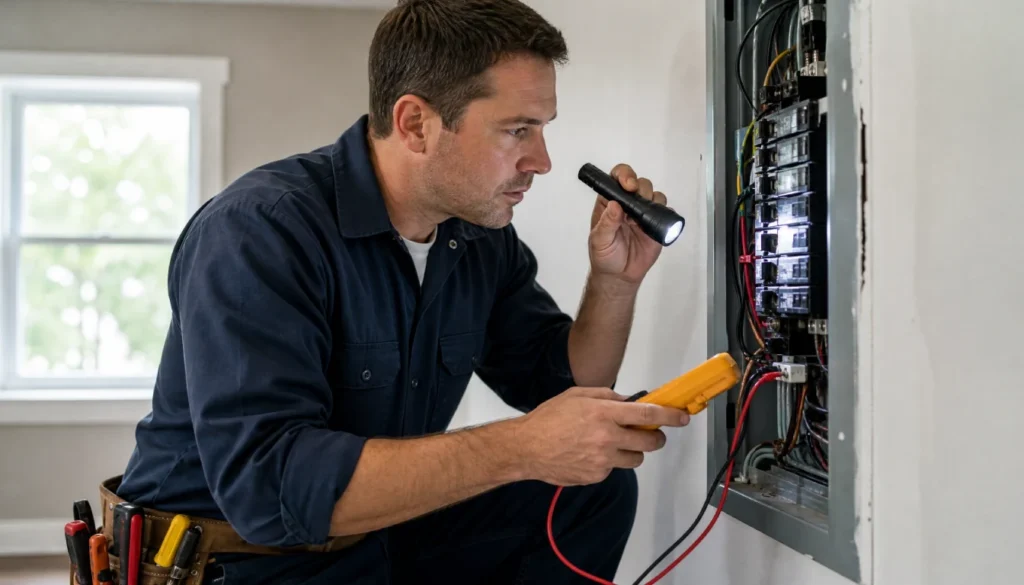
If your breaker trips immediately every time you reset it, that’s a short circuit and needs a professional right away. The same goes for any burning smell, visible scorch marks, or a breaker that feels hot to the touch.
You should also call an electrician if the trips happen daily, if you’re in an older home with a Federal Pacific or Zinsco panel, or if you’ve already checked the basics and still can’t find the cause. Some issues just aren’t safe to guess at.
Frequently Asked Questions
Why does my breaker trip when nothing is plugged in but the lights still work?
This usually points to a specific device or hardwired appliance on that circuit, or a short circuit isolated to part of the wiring. Not every outlet or fixture on a circuit fails at once.
Can a bad breaker trip with nothing plugged in?
Yes. Breakers wear out over time. A worn spring or trip mechanism can cause random trips even with zero load on the circuit.
Why does my AFCI breaker trip with nothing plugged in?
AFCI breakers detect tiny electrical arcs from damaged or loose wiring. These arcs can happen with nothing plugged in, especially in walls with aging insulation.
Is it dangerous if my breaker keeps tripping with no load?
It can be. Frequent trips often signal a short, ground fault, or wiring damage. These are worth checking soon rather than waiting.
How much does it cost to fix a breaker that trips with nothing plugged in?
Simple breaker replacement often costs less than a wiring repair. A full inspection and repair can run higher, especially in older homes. Getting a quote from a licensed electrician gives you the real number for your situation.
Final Thoughts
A breaker tripping with nothing plugged in feels strange, but it’s rarely random. Somewhere in your walls, panel, or wiring, something is telling you it needs attention. Trust that signal instead of brushing it off.
Start with the easy checks. Watch the timing of the trip, look for moisture or damage, and pay attention to smells or warmth near the panel. If anything feels off or the trips keep happening, bring in an electrician. Your home, and your peace of mind, are worth it.
Have you dealt with a breaker that trips for no clear reason? Share what you found in the comments. Your experience might help someone else figure out their own mystery trip.