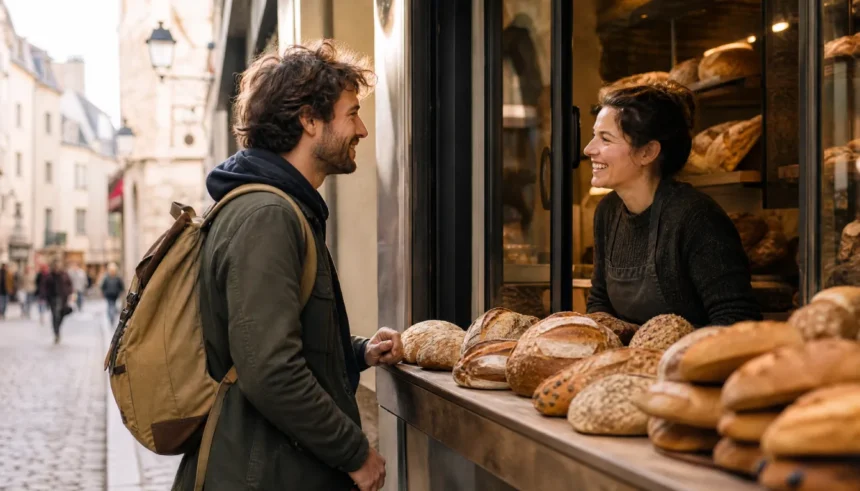
I still remember standing in a tiny bakery in Rome, pointing at bread like a caveman. The woman behind the counter laughed, not unkindly, and handed me the wrong thing twice. I left with a loaf I didn’t want and a face full of embarrassment.
That trip taught me something. You don’t need to be fluent to travel well. You just need a few words. Learning basic phrases before traveling changed every trip I took after that bakery disaster.
If you’ve ever frozen up trying to order food abroad, or felt like a burden because you couldn’t ask a simple question, this article is for you. I’ll walk you through the real benefits of learning the local language, how many phrases you actually need, and which ones matter most.
The Real Benefits of Learning Local Language for Travel
Learning a handful of phrases does more than help you order coffee. It changes how people treat you and how you experience a place.
You Break Down the Language Barrier Fast
You don’t need grammar rules. You need survival language. A few solid phrases let you handle directions, food, and emergencies without a translation app glued to your hand.
Locals Appreciate the Effort
Ask any frequent traveler this question: do locals appreciate when you try to speak their language? The answer is almost always yes. Even a rough “thank you” in the local tongue opens doors that English alone never will.
It Boosts Travel Safety
Basic phrases can help with travel safety too. Knowing how to say “help,” “I’m lost,” or “call a doctor” in the local language matters more than any packing list item you own.
You Get a Real Taste of Cultural Immersion
Speaking even a little of the language pulls you into the culture instead of watching it from the outside. You notice local customs faster. You catch on to travel etiquette without someone having to explain it to you.
How Many Phrases Do You Really Need for a Trip
You don’t need hundreds of words. For most short trips, twenty solid phrases will carry you through almost any situation.
Here’s a simple breakdown:
- Weekend trip: 10 to 15 phrases
- One to two week vacation: 20 to 30 phrases
- Long-term travel or digital nomad life: 50+ phrases plus basic grammar
Start small. You can always add more once you land.
The First 10 Phrases to Learn for Any Trip
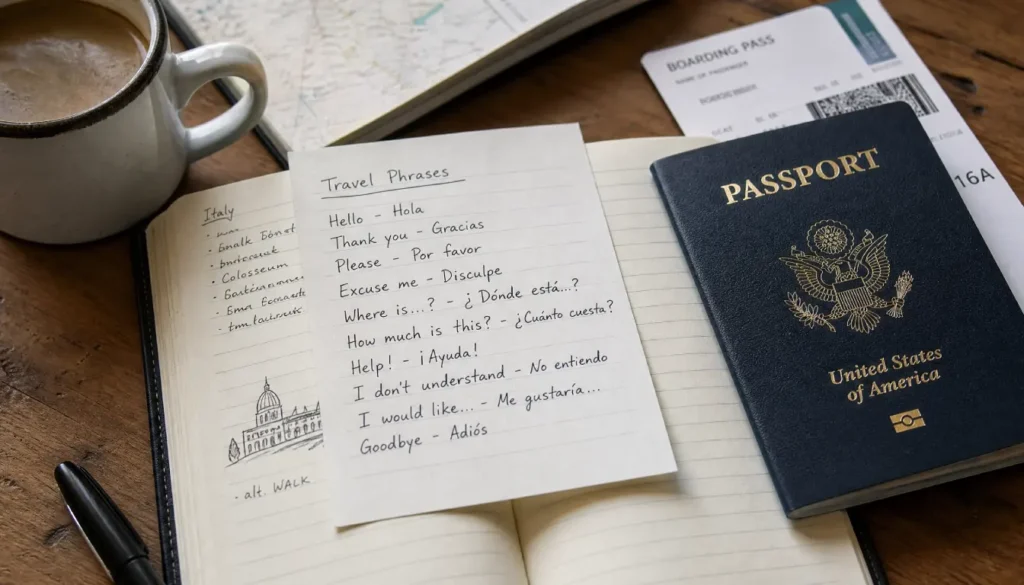
If you’re short on time, memorize these before anything else:
- Hello and goodbye
- Please and thank you
- Yes and no
- Excuse me / sorry
- Do you speak English?
- How much does this cost?
- Where is the bathroom?
- I need help
- I don’t understand
- Water, please
These ten phrases cover food, safety, politeness, and basic navigation. Learn them well, and you’ll survive almost any trip without panic.
How to Learn Travel Phrases Fast
You don’t need a tutor or a classroom. Here’s a simple plan to learn twenty travel phrases in one week.
Step 1: Pick Your Core List
Choose phrases based on your trip. A beach resort trip needs different words than a city trip. Beach trips lean toward food and leisure phrases. City trips need more transport and direction phrases.
Step 2: Use a Language Learning App for Travel
Apps built for travel focus on practical phrases instead of grammar drills. Practice for ten minutes a day. Repetition beats cramming every time.
Step 3: Record Yourself Speaking
Say the phrases out loud and record them. Compare your pronunciation to a native speaker’s audio phrase guide. This step alone fixes most beginner mistakes.
Step 4: Practice With a Language Exchange Partner
A quick language exchange before travel, even one conversation, builds confidence. You’ll stumble less once you land because your mouth already knows the shapes of the words.
Step 5: Bring a Backup
Pack a small phrasebook or download an offline translation app. Even confident speakers freeze under pressure sometimes.
AI Translation vs Learning Basic Phrases
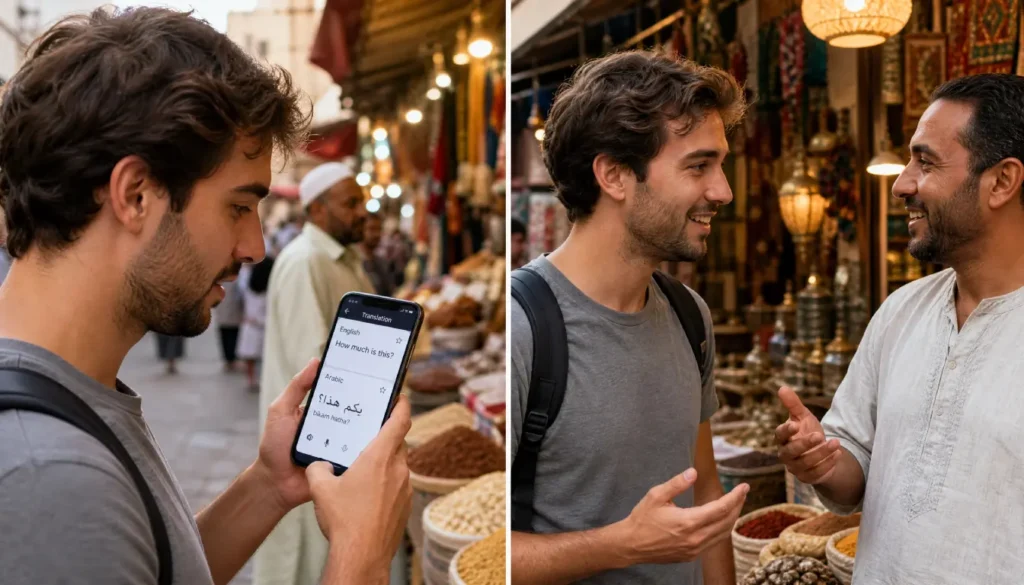
Translation apps and earbuds have gotten impressively good. So why bother learning anything yourself?
| Factor | AI Translation Tools | Learning Basic Phrases |
|---|---|---|
| Speed in emergencies | Needs battery, signal, app open | Instant, no tech required |
| Emotional connection with locals | Feels transactional | Feels personal and respectful |
| Learning curve | None | A few hours of practice |
| Reliability abroad | Fails without wifi or data | Works anywhere, anytime |
| Cultural impression | Neutral | Leaves a positive impression |
Translation tools are great backup. They’re not a replacement for a genuine “thank you” said in someone’s own language. The two work best together, not as substitutes for each other.
Phrases to Learn Based on Your Trip Type
Different trips call for different words. Tailor your list to what you’ll actually be doing.
For Foodie Travel
Learn phrases for ordering food, asking about ingredients, and requesting the check. This matters even more if you have allergies or dietary restrictions.
For Solo Travelers
Solo travelers, especially solo female travelers, benefit from safety-focused phrases. Learn how to ask for help, describe your location, and firmly say no.
For Business Travel
Business travel phrases should cover greetings, meeting basics, and polite small talk. First impressions matter in professional settings.
For Family Trips
Teaching kids a few travel phrases turns learning into a game before the trip even starts. Kids also tend to pick up pronunciation faster than adults.
For Religious or Spiritual Travel
If you’re visiting religious sites, learn respectful greetings and basic etiquette phrases. This shows respect for local customs in spaces that matter deeply to residents.
Common Mistakes to Avoid When Using Local Phrases
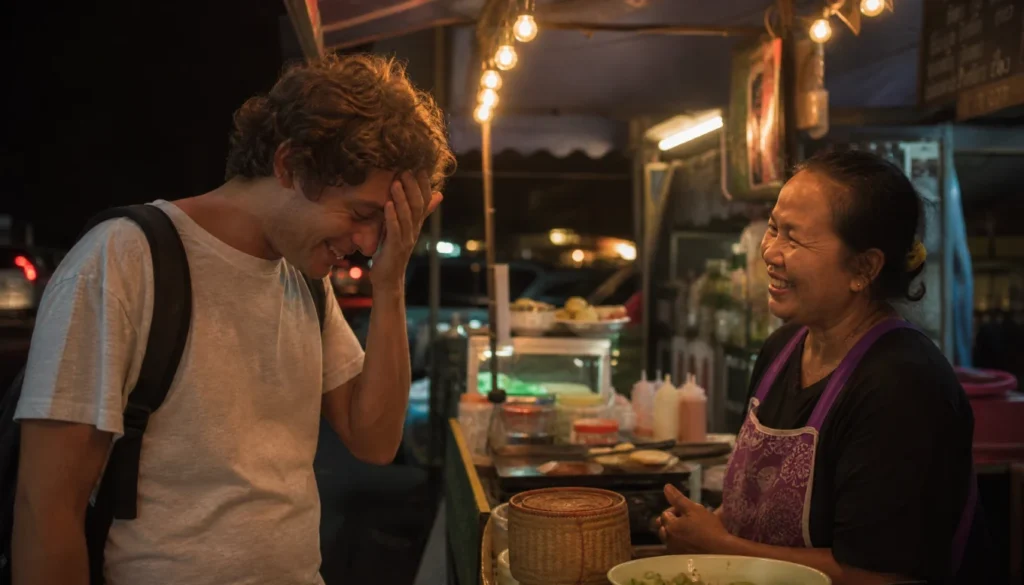
Even well-meaning travelers trip up here. Watch out for these:
- Mispronouncing words so badly the meaning changes entirely
- Relying only on formal phrases and sounding stiff
- Skipping practice and freezing up when it counts
- Assuming every region speaks the same dialect the same way
- Forgetting non-verbal communication matters just as much as words
A small mistake with a smile usually gets forgiven. A confident wrong word without warmth can land badly. Tone and body language carry as much weight as the words themselves.
Quick Tips for Remembering Phrases Under Pressure
- Write your top ten phrases on a small card and keep it in your pocket
- Practice ordering food out loud before your trip, even at home
- Learn the phrase for “I’m still learning, please be patient” first
- Use hand gestures alongside words when you blank
- Laugh at your mistakes. Locals usually laugh with you, not at you
Frequently Asked Questions
Do I need to learn the language to travel abroad?
No, but it helps. English works in many tourist areas, but learning even ten phrases makes your trip smoother and more respectful.
What happens if you don’t learn any phrases before traveling?
You’ll likely still get by using gestures and translation apps. You’ll miss out on smoother interactions and the warmth that comes from locals seeing you try.
Is it worth learning a few words for a weekend trip?
Yes. Even a short trip benefits from ten basic phrases. It takes less than an hour to learn them and pays off the moment you land.
How hard is it to learn basic phrases before a vacation?
Not hard at all. Most people can memorize ten to twenty practical phrases in a few days with short daily practice sessions.
Can you learn a language just for a vacation?
You won’t become fluent, and that’s fine. The goal isn’t fluency. The goal is enough words to navigate, connect, and show respect.
Final Thoughts
That bakery in Rome taught me more than any guidebook could. Learning basic phrases before traveling isn’t about sounding perfect. It’s about showing up with effort and respect.
Start with ten words. Add more as you go. You’ll notice the difference the moment a local smiles back at your attempt instead of your silence.
What phrase changed a trip for you? Drop it in the comments. I’d love to hear which words made your travels a little warmer.