

Have you ever opened a menu abroad and found meat in every single dish? You scan the page twice. Nothing changes. Your stomach growls and panic sets in.
This is exactly why you need a vegetarian survival guide for meat-heavy destinations. I built this guide after years of getting it wrong, then slowly getting it right. You’ll get language hacks, the right apps, hidden ingredients to watch for, a packing list, and real tips from countries where vegetarian food feels impossible to find.
No fluff. Just what actually works.
I remember my first night in rural Argentina. The menu might as well have been written in “steak.” Every dish listed carne, pollo, or jamón. I nearly cried into my bread basket. A decade of vegetarian travel later, I’ve turned that panic into a system. This guide hands you the whole thing.
Know What You’re Up Against: Hidden Meat Ingredients Worldwide
Meat hides in places you won’t expect. Fish sauce adds depth to Thai curries that look completely vegetarian. Lard shows up in Mexican beans. Chicken stock flavors “vegetable” soup in dozens of countries.
You need to learn the common culprits before you land, not after you order.
Here are the biggest offenders to watch for:
- Fish sauce and oyster sauce in Southeast Asian cooking
- Lard in refried beans, tortillas, and pastries across Latin America
- Chicken or beef stock in soups labeled “vegetable”
- Gelatin in candy, yogurt, and some desserts
- Bacon bits or pancetta tossed into salads without warning
When I tried ordering a simple green salad in southern France, I got one loaded with lardons. Nobody warned me. Now I ask about every hidden ingredient before I trust a menu, no exceptions.
Your Language Safety Net: Key Phrases and Translation Tools
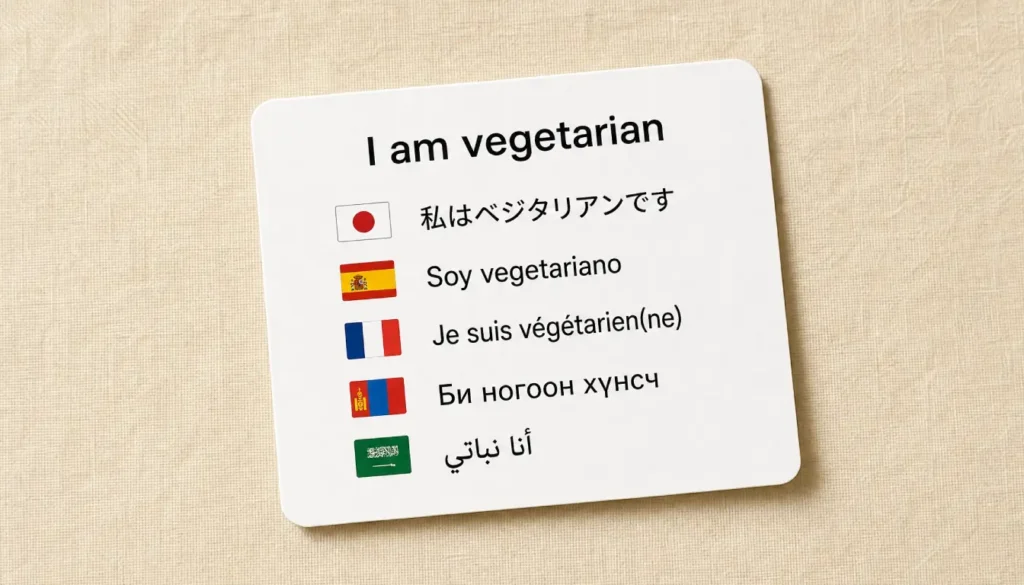
Words save meals. A short list of vegetarian phrases for travel translation can turn a stressful order into a five-minute win.
Learn how to say “I don’t eat meat, fish, or chicken” in the local language, not just “I’m vegetarian.” The word alone gets misunderstood more often than you’d think.
I personally faced blank stares trying to explain “no meat” at a tiny eatery in rural Japan. I tried showing a photo of a cow with an X over it. It failed. Then I downloaded a simple Japanese phrase card and practiced the pronunciation out loud. Five minutes later, I had a safe bowl of vegetable tempura and rice. That taught me something important: paper cards beat apps when you lose signal, and I never travel without one now.
Tech That Saves Dinner: Using Apps Like a Pro
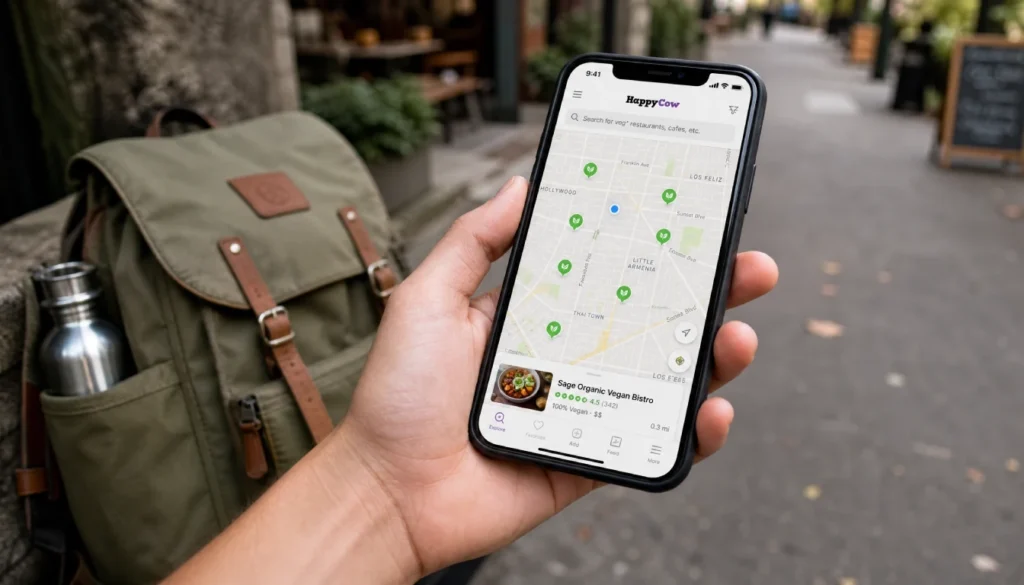
Knowing how to use the HappyCow app while traveling changes everything. It maps vegetarian and vegan restaurants near you, with reviews from other travelers who’ve actually eaten there.
Here’s how to get the most out of it:
- Download your city’s map before you land, while you still have Wi-Fi.
- Filter by “100% vegetarian” first, then widen the search if options run low.
- Read the two most recent reviews. Menus and owners change fast.
- Save your top three picks so you’re not scrambling when you’re hungry.
HappyCow turns an unfamiliar street into a list of safe meals. I’ve relied on it in cities where I didn’t speak a word of the local language, and it never left me stuck.
What to Pack in Your Just-in-Case Kit
Some nights you won’t find a single vegetarian option. A small backup kit keeps you fed without stress.
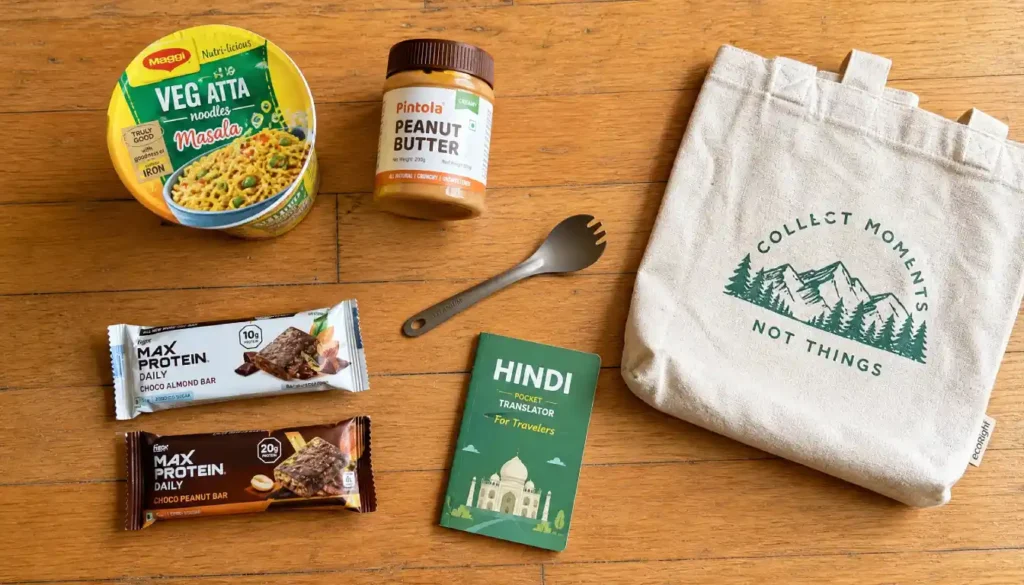
Pack these five items every trip:
- Instant noodle cups for a fast, filling backup meal
- A jar of peanut butter for protein when nothing else is safe
- Protein bars for flights, hikes, or long train rides
- A reusable spork so you’re never stuck without utensils
- A printed translation booklet as a backup to your phone
This tiny kit has saved me more times than I can count. One night in rural Mongolia, every restaurant served mutton and nothing else. My peanut butter and crackers became dinner, and I went to bed full instead of frustrated.
Eating Out Without the Stress: Restaurants, Street Food & Markets
Restaurants aren’t your only option, and sometimes they aren’t even your best one.
Local markets often beat restaurants for vegetarian travelers. You control exactly what goes into your food. Fresh fruit, bread, cheese, and vegetables make an easy meal with zero guesswork.
Street food works too, but ask first. Point at the dish, say your phrase, and watch the vendor’s reaction. A confused look means you should ask again or pick something else.
For sit-down restaurants, order dishes built around vegetables rather than asking a kitchen to remove meat from something. A stir-fry designed with meat in mind often still carries fish sauce or stock, even without visible meat on the plate.
Real-World Country Quick Guides (Start Here)
Spain
Tips for vegetarians traveling in Spain start with one rule: ham hides everywhere. Jamón shows up in salads, sandwiches, and even some “vegetable” tapas. Ask directly, every time. Tortilla española (potato omelet) is usually safe and widely available.
Japan
Dashi, a fish-based stock, flavors most miso soup and many sauces. Look for shojin ryori, traditional Buddhist vegetarian cuisine, in cities with temples. Convenience stores also sell reliable vegetarian onigiri if you check the label.
Mongolia
Meat sits at the center of nearly every traditional dish. Vegetarian options run thin outside the capital, Ulaanbaatar. Stock up on packaged snacks before heading to rural areas, and lean on your backup kit.
Handling Awkward Moments and Staying Sane
You will accidentally get served meat at some point. It happens to every vegetarian traveler eventually.
Stay calm and handle it directly:
- Politely explain the mix-up and ask for a replacement.
- Offer to pay for the dish anyway if the kitchen already made it. This keeps goodwill intact.
- Don’t make the server feel attacked. Most mistakes come from a language gap, not carelessness.
I’ve had meat show up on my plate more times than I’d like to admit. The trick is treating it as a quick fix, not a crisis. A calm request almost always gets a fast, friendly correction.
Your 3-Step Plan Before You Leave Home
If you’re feeling anxious about finding safe vegetarian food in meat-centered countries, follow these three steps before you even pack your bags:
Step 1: Build your translation safety net. Download offline phrases and print a small card with the key sentences.
Step 2: Load the right apps on your phone and pre-save maps for each city on your route.
Step 3: Pack a just-in-case food kit so you’re never stuck with zero options.
Once you land, use the eating-out strategies above to handle restaurants, markets, and street food with confidence.
Final Thoughts
Finding food shouldn’t be the hardest part of your trip. This vegetarian survival guide for meat-heavy destinations gives you the exact tools to stop guessing and start eating well, no matter where you land.
Learn your phrases, load your apps, pack your kit, and trust the process. That’s the whole system, and it works in Japan, Spain, Mongolia, or anywhere else meat dominates the menu.
Try this guide on your next trip and tell me how it goes in the comments. If you’ve got a country-specific tip that saved your trip, share it below. It might help the next nervous vegetarian traveler reading this exact post.