
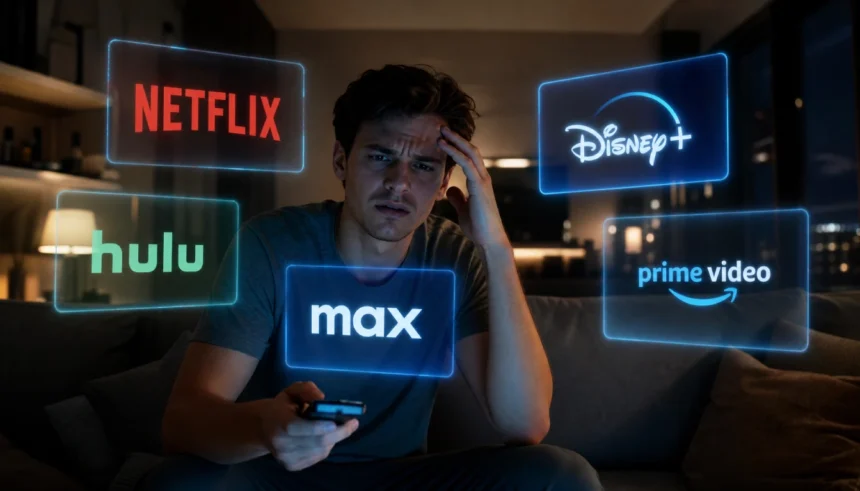
You finally sit down after a long day. You open Netflix, then Hulu, then Max. Thirty minutes later, you’re still scrolling, and now you’re too tired to watch anything. Sound familiar? That’s streaming fatigue, and you’re not alone. The good news: you can break this cycle with a few simple, psychology-backed shifts. Let’s walk through exactly how to overcome streaming fatigue, step by step.
What Is Streaming Fatigue, Really?
Streaming fatigue is the mental exhaustion that comes from having too many shows, too many platforms, and too many decisions to make every time you sit down to relax.
Psychologist Barry Schwartz described this problem decades ago in his research on the “paradox of choice.” He found that more options don’t make people happier. They make people anxious, indecisive, and ultimately less satisfied with whatever they pick.
That’s exactly what happens when you open a streaming app. You’re not just choosing a show. You’re managing a mental inventory of every show you’ve heard about, every recommendation you’ve half-remembered, and every genre you’re “in the mood for.” That’s a lot of cognitive work for something that’s supposed to be fun.
7 Signs You’re Dealing With Streaming Fatigue
Not sure if this describes you? Here are the clearest signs of streaming fatigue to watch for.
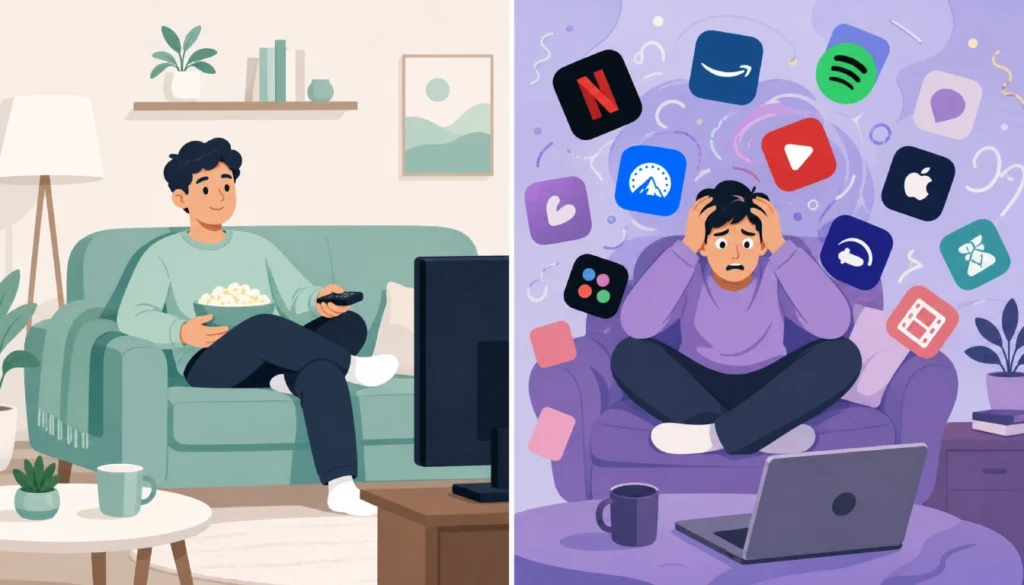
Emotional signs:
- You feel vaguely stressed when you open a streaming app, even though you’re trying to relax.
- You finish a show and feel nothing, just an urge to immediately find the next one.
- You resent the time you spent scrolling more than you enjoyed what you watched.
Behavioral signs:
- You’ve started the same show three times and never finished it.
- You spend more time choosing than watching.
- You fall back on rewatching things you’ve already seen because picking something new feels like too much effort.
Financial signs:
- You’re paying for four or more streaming services but actively use only one.
- You’ve forgotten you were even subscribed to something until the charge hit your bank account.
If you nodded at two or more of those, streaming fatigue has likely already set in.
The Main Causes of Streaming Fatigue
Understanding why this happens makes it easier to fix. There are three main causes of streaming fatigue worth knowing.
Too Many Subscriptions and Rising Costs
The average American household subscribes to around four streaming services. In 2023, that cost crossed $1,000 per year for many households. That’s not a small number, and the pressure to “get your money’s worth” from each service adds mental weight every time you log in.
Decision Paralysis From Endless Choice
Netflix alone adds hundreds of titles every month. Combine that with Max, Disney+, Peacock, and Apple TV+, and you’re looking at a catalog that no one person could watch in a lifetime. The result is streaming decision fatigue, a specific type of choice paralysis where your brain simply refuses to commit to anything because the cost of a “wrong” choice feels too high.
Algorithm Overload and Content Sameness
Recommendation algorithms are designed to keep you on the platform, not to help you find something you’ll genuinely love. They surface trending content, not necessarily relevant content. And because every major streamer has greenlit the same genres, many shows start to blur together. When nothing stands out, nothing gets picked.
Why Your Brain Freezes When You Try to Pick a Show
This is where streaming decision fatigue gets psychological.
Your brain uses a limited resource called “cognitive load” to make decisions. Every choice you evaluate, even a small one like “should I watch this?”, draws on that resource. By the time you’ve scrolled through 40 thumbnails, your brain is tired. It starts defaulting to avoidance, the mental equivalent of putting the remote down and staring at the ceiling.
Researchers call this “decision fatigue.” It’s the same reason judges give harsher rulings late in the day, and shoppers buy worse food toward the end of a grocery trip. Your decision-making muscle gets tired, and streaming apps burn through it fast.
The fix isn’t willpower. It’s a system that removes most of the decision-making before you even sit down.
How to Overcome Streaming Fatigue: 10 Practical Tips That Actually Work
Here’s a system that works. Follow these steps in order, and you’ll spend less time scrolling and more time actually watching.
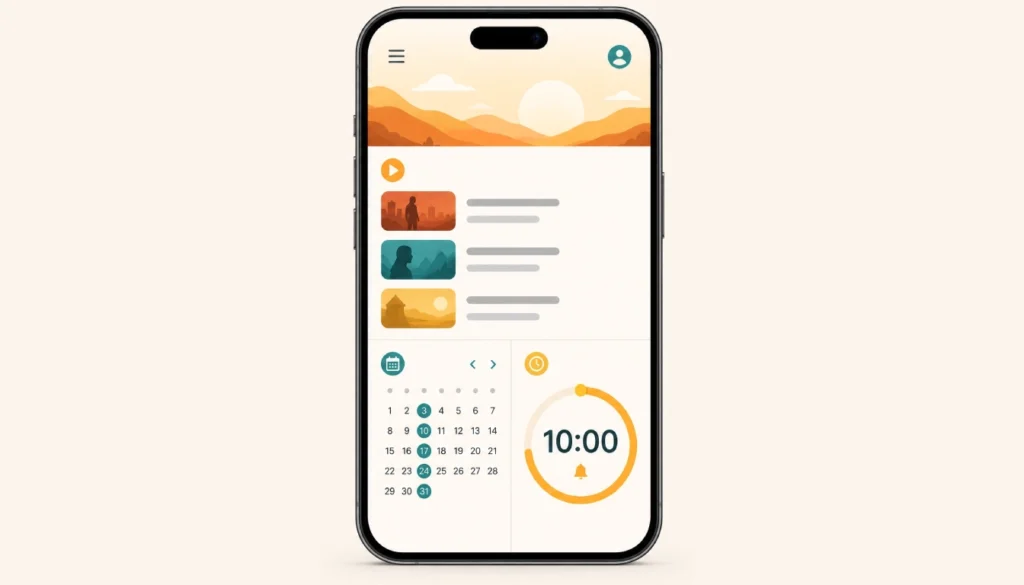
Step 1: Do a subscription audit and rotate. Log every streaming service you pay for. Cancel or pause anything you haven’t touched in 30 days. Keep only two active at a time. Rotate every 6 to 8 weeks. This alone can save $40 or more a month and immediately cuts your content options to a manageable number.
Step 2: Build a “Watch Next” list with exactly 3 titles. Use the watchlist feature on your streaming app, or write it on paper. Limit it to 3 titles. No additions until you finish one. This pre-commits your future self to a decision your rested self already made.
Step 3: Set a 10-minute decision timer. If you haven’t picked something within 10 minutes of opening a streaming app, stop browsing. Watch the first thing on your Watch Next list, no debate. This kills the scroll spiral before it starts.
4. Use a curation tool. JustWatch and Reelgood both let you search across all your services at once. You browse one interface instead of five, which dramatically cuts the mental overhead.
5. Match content to your energy level. If you’re exhausted, you don’t want a 10-episode drama. Keep a short list of “low-energy” picks (30-minute comedies, documentaries, stand-up specials) and a “high-energy” list (series, films). Pick your list before you pick your show.
6. Stop tracking everything. Apps like Letterboxd and TV Time are great for cinephiles, but if you feel pressure to “complete” your watchlist or rate every episode, they add stress. Take a break from them.
7. Designate TV-free nights. Two or three nights a week with no streaming removes the decision entirely. You’ll look forward to viewing nights more when they’re not every night.
8. Watch with someone else. Shared decisions are faster. You’re not negotiating a peace treaty; you’re picking a show. A two-person conversation cuts browsing time in half and makes watching more enjoyable.
9. Pick genres, not titles. Instead of hunting for a specific show, decide on a genre first. “We’re watching a thriller tonight.” Then pick whatever thriller is highest-rated on the service you have active. One filter, one decision.
10. Let something end. If you’re halfway through a series you don’t love, you have permission to stop. Watching out of obligation is a fast track back to fatigue.
My Personal Streaming Fatigue Recovery Routine
I personally faced a serious case of streaming paralysis last year. I had five active subscriptions, and every night I’d scroll for 40 minutes before giving up and putting on something I’d already seen. I wasn’t watching TV; I was managing a content backlog.
After trying a “subscription rotation” method, keeping only two services active per month, and pairing it with a physical notebook where I wrote down my “Next 3” picks, the difference showed up fast. My decision time dropped from 40 minutes to under 5. I saved $42 a month by pausing three services I rarely used. And I actually finished shows instead of abandoning them two episodes in.
The notebook sounds old-fashioned, but that’s the point. A paper list doesn’t have an algorithm. It doesn’t suggest 200 alternatives. It just shows you three things and asks which one you want tonight.

I’ve since talked to dozens of people who tried a version of this and reported similar results. The most common thing they said: “I forgot watching TV was supposed to be relaxing.”
Final Thoughts: Make Streaming Fun Again
Streaming fatigue isn’t a character flaw. It’s a design problem. These platforms are built to keep you browsing, not to help you pick quickly and watch happily. Once you understand that, the solution becomes clear: build your own system that does what the platforms won’t.
To recap the tips to reduce streaming fatigue that matter most:
- Audit your subscriptions and keep only two active.
- Build a “Watch Next” list and cap it at 3 titles.
- Use a 10-minute decision timer every time you browse.
- Match your content choice to your energy level, not to what’s trending.
That’s how to overcome streaming fatigue without giving up streaming entirely. You don’t need fewer options in the world. You just need fewer options in front of you tonight.
Try the 3-step system this week and let me know in the comments how much time you saved. Or share this with someone who spends more time scrolling than watching.