

I still remember the January when I decided to wake up at 5 AM every day, hit the gym, journal for 20 minutes, and drink two liters of water before noon.
Week one? I was unstoppable. I felt like a different person.
Week two? Still going, but something felt off. The alarm started to feel heavier. The gym felt less exciting. By day 14, I skipped one morning. Then two. By week three, the whole routine was gone.
Sound familiar?
If you keep losing motivation after 2 weeks every time you start something new, you are not lazy, and you are not broken. There is actual science behind why this happens, and there are real fixes that work. This article walks you through all of it.
Why the 2-Week Motivation Slump Is So Common
The 2-week motivation dip is not a personal failure. It is a pattern that happens to almost everyone, across fitness, studying, business, creative projects, and daily habits.
Research on habit formation shows that the brain responds strongly to new experiences. When you start something new, your brain releases dopamine, the chemical linked to reward and excitement. That rush feels great. It keeps you going during week one without much effort.
But dopamine is not built to last forever. After about 14 days, the novelty wears off. The brain no longer treats your new habit as exciting. That is when the 14-day motivation crash hits.
The Honeymoon Phase of Habits (And Why It Ends)
Every new routine starts with a honeymoon phase. You are energized, focused, and ready. This is the period where motivation feels automatic and effortless.
The problem is that the honeymoon phase of habits always ends. It is not a flaw in your character. It is just how the brain works. New things stop feeling new.
After the initial excitement fades, motivation alone is not enough to keep you going. That is the moment where most people mistake the motivation dip for a sign that the goal was wrong, the routine was too hard, or they simply are not the type of person who sticks with things.
None of that is true. You have just hit the 2-week motivation barrier.
What Is Actually Happening in Your Brain

Here is the psychology of motivation dip after 2 weeks in simple terms.
Your brain runs on a reward system. When you start a new habit, the anticipated reward feels big. That anticipation drives action. But once the habit becomes routine, the anticipation shrinks. The reward feels smaller. So motivation drops.
This is also linked to willpower depletion. Every decision you make during the day drains a small amount of mental energy. By the time the novelty of your routine is gone, maintaining it costs more energy than it did at the start.
On top of that, most people set outcome-based goals. They focus on the result, losing 10 kilos, finishing the novel, launching the business, rather than the process. When the result feels far away and the initial excitement is gone, the goal loses its pull.
7 Practical Ways to Fix Motivation Loss After 2 Weeks
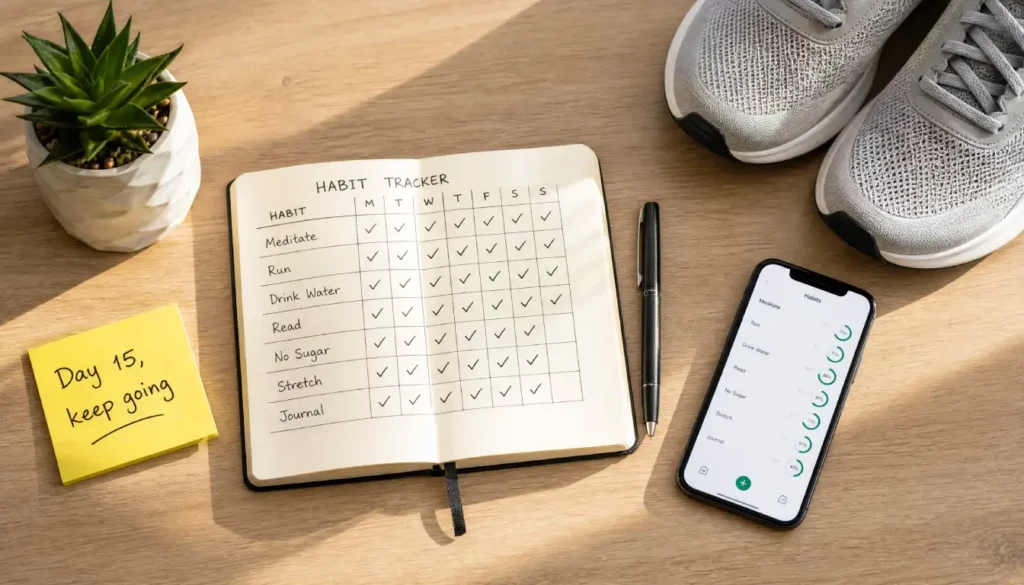
1. Expect the Dip Before It Hits
The best thing you can do is prepare for the 2-week motivation dip before it arrives. Know it is coming. Mark day 14 on your calendar and treat it like a checkpoint, not a finish line.
When you expect a dip, you are less likely to quit when it shows up.
2. Switch From Motivation to Discipline
Motivation vs discipline after 2 weeks is not even a close contest. Discipline wins every time.
Motivation is a feeling. Discipline is a decision. You do not wait to feel like going to the gym. You go because it is Tuesday, and Tuesday is gym day. Systems and schedules beat inspiration every single time.
3. Make the Habit Smaller
One of the main reasons new habits fail after 2 weeks is that people start too big. They try to meditate for 30 minutes, run 5 kilometers, and study for two hours all at once.
Cut the habit in half. Then cut it again. A 5-minute walk beats a skipped 45-minute run every single day of the week. Small wins build identity-based habits over time.
4. Change Your Environment
Environmental design for motivation is one of the most underrated tools available. Your surroundings shape your behavior more than your mindset does.
Put your running shoes by the door. Keep your journal on your pillow. Remove the apps that distract you from your goals. Make the right choice easier than the wrong one.
5. Track Progress Visually
When motivation drops, you need proof that you are moving forward. A simple habit tracker, a calendar you cross off, or a note in your phone showing your streak gives your brain a visible reward.
Seeing your consistency laid out in front of you often provides more motivation than any quote or video ever will.
6. Find an Accountability Partner
One of the most effective ways to push through the 2-week motivation barrier is having someone else involved. An accountability partner does not need to do the habit with you. They just need to check in.
Knowing someone else is aware of your commitment changes how seriously you take it.
7. Reconnect With Your Why
After the honeymoon phase ends, it helps to return to the reason you started. Write it down. Be specific. Not “I want to be healthier” but “I want to have energy to keep up with my kids without getting winded.”
A clear, personal reason keeps you going when feelings do not.
A Quick Look at Motivation vs. Discipline Over Time
| Stage | What Drives You | What Works |
|---|---|---|
| Days 1 to 7 | Excitement, novelty, dopamine | Ride the wave, start strong |
| Days 8 to 14 | Fading enthusiasm, habit forming | Shrink the habit, track progress |
| Days 15 to 30 | Discipline, identity, systems | Accountability, environment design |
| Day 30 and beyond | Identity, consistency, results | Reflect on progress, adjust goals |
Common Mistakes That Make the 2-Week Slump Worse

- Waiting to feel motivated before taking action
- Setting goals that are too big or too vague
- Measuring success only by final results, not daily effort
- Skipping one day and treating it as a total failure
- Comparing your progress to someone else’s timeline
Missing one day does not break a habit. Deciding that one missed day means you have failed does.
Frequently Asked Questions
Why do I always lose motivation after 2 weeks, no matter what I try?
Your brain is wired to respond strongly to new things. After 14 days, the novelty fades and dopamine drops. This is biology, not personal weakness. The fix is to build systems that work without motivation, not to search for more motivation.
Can you train yourself to stay motivated for more than 2 weeks?
Not exactly. Motivation will always fluctuate. What you can build is behavioral consistency through habits, routines, and environment changes. The goal is to need motivation less, not to have more of it.
What is the difference between temporary motivation and lasting discipline?
Motivation is an emotional state. It comes and goes based on how you feel. Discipline is a practiced behavior. It is the decision to act regardless of how you feel. Lasting results come from discipline, not from sustained motivation.
Why does my motivation crash exactly at the two-week mark?
Research suggests this is when the honeymoon phase of habits ends, and the brain stops treating the behavior as new and exciting. The reward signal weakens, and the habit now costs more mental energy than it did at the start.
How long does it actually take to build a habit?
The popular 21-day habit myth has been largely debunked. Studies suggest it takes anywhere from 18 to 254 days for a behavior to become automatic, with 66 days being the average. The 2-week mark is just the beginning of the process.
You Are Closer Than You Think
Losing motivation after 2 weeks is one of the most universal human experiences there is. You are not alone in this, and you are not uniquely bad at sticking to things.
The two-week mark is where most people quit. That also means it is where the real work begins for the people who follow through.
You do not need more motivation. You need a smaller habit, a better environment, and a reason strong enough to hold you on the days when the excitement is gone.
Start there. Stay there. The results will follow.
Have you ever hit the 2-week motivation wall? Tell me in the comments what helped you push through. I read every response and would love to hear your story.