

Have you turned on the shower and gotten a sad, uneven trickle instead of a full stream? That weak spray is almost always limescale blocking your shower head nozzles. Most cleaning guides tell you to soak it in vinegar. But if you hate that sharp smell, or you’ve heard vinegar can damage certain finishes, you need a better option. Here’s how to clean a shower head with citric acid: a natural, odorless descaler that dissolves calcium buildup completely, without fumes, without damage, and without that sour kitchen smell hanging in your bathroom.
What’s Wrong with Using Vinegar on Shower Heads?
Vinegar works. Nobody is going to lie to you about that. But it comes with real trade-offs that not enough people talk about.
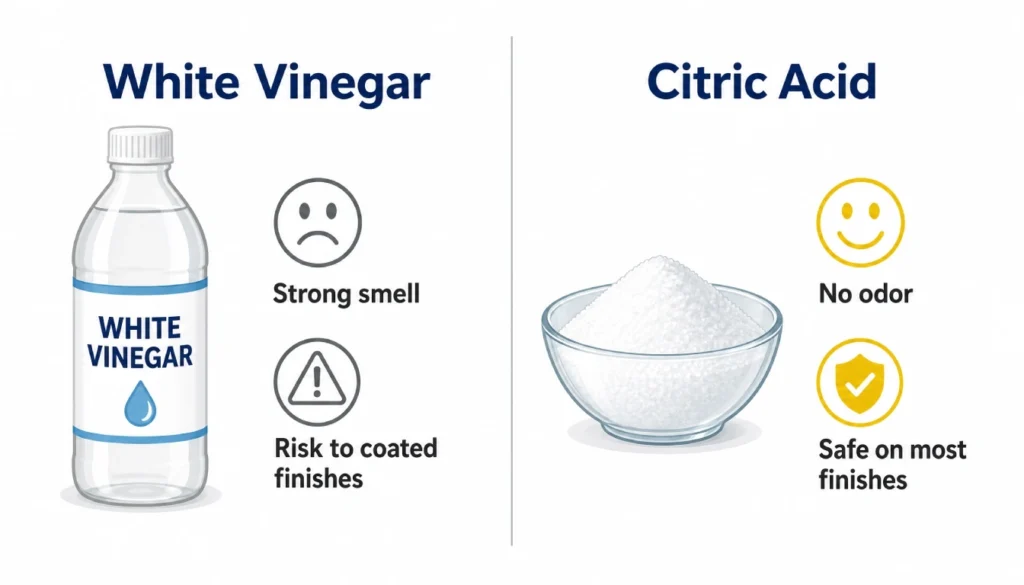
The smell is the big one. Acetic acid fumes spread fast in a closed bathroom. Even with the window open, that sharp vinegar odor can linger for hours. If you have kids, asthma, or just a sensitive nose, it makes the job miserable.
The finish risk is the second issue. Nickel-brushed, matte black, oil-rubbed bronze, and brass shower heads all carry manufacturer warnings against using acidic cleaners. Vinegar is acidic, and repeated exposure can strip protective coatings, cause discoloration, and void warranties. Chrome is generally fine, but many modern finishes are not.
And sometimes it just doesn’t cut through heavy buildup. In areas with very hard water, a white calcium crust builds up that vinegar takes a long time to dissolve. You end up leaving it soaking overnight, dealing with the smell the whole time.
If any of that sounds familiar, citric acid is the swap you’ve been looking for.
Why Citric Acid Is a Better Natural Shower Head Descaler
Citric acid is a weak organic acid found naturally in citrus fruits. It’s sold as a white powder and is widely used in food, cleaning products, and cosmetics.
Here’s what makes it ideal for limescale:
- It dissolves calcium carbonate. Limescale is calcium carbonate. Citric acid reacts with it chemically and breaks it apart. The process is the same as vinegar, but citric acid is more concentrated by weight, which means a smaller amount does more work.
- It has no odor. Dissolved in water, citric acid solution smells like nothing. You can work with it in a closed bathroom without any irritation.
- It’s safe on most finishes. At the dilution you’ll use for cleaning, citric acid is much gentler on coated finishes than undiluted white vinegar. That said, always check your shower head manufacturer’s guide before soaking any specialty finish.
- It’s cheap and easy to find. A bag of food-grade citric acid costs a few dollars and lasts for dozens of cleaning sessions. You can find it in grocery stores (usually near canning supplies), home stores, or online.
I switched to citric acid two years ago after a vinegar soak left our guest bathroom smelling like a chip shop for a full day. I’ve used it on every shower head in the house since, and I’ve never gone back.
The Exact Citric Acid Shower Head Cleaner Recipe
You don’t need much. The ratio is simple, and it works consistently.
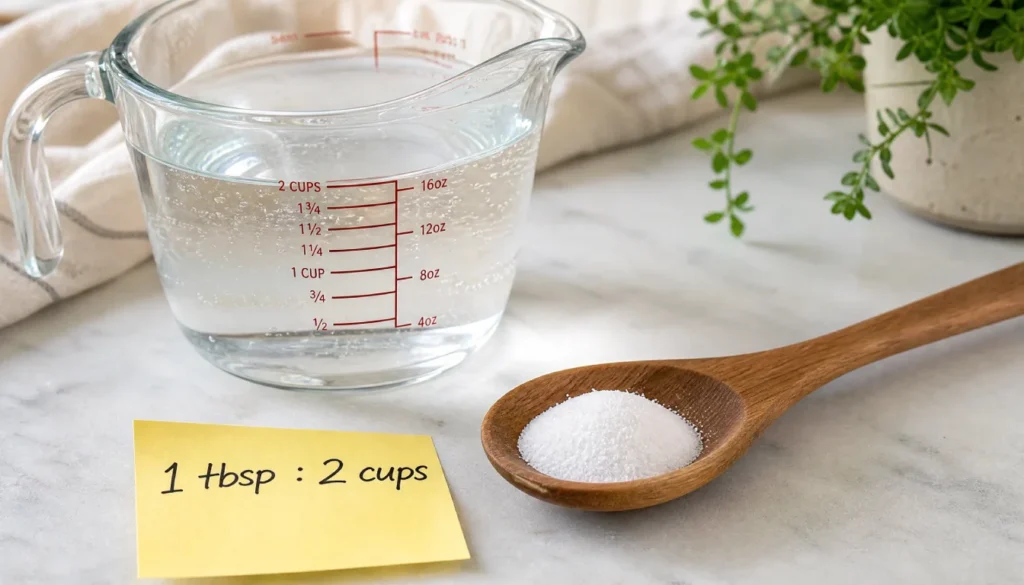
Citric Acid Shower Head Cleaner Recipe:
- 1 tablespoon of citric acid powder
- 2 cups of warm water
Stir until the powder is fully dissolved. That’s it. You don’t need to heat it past warm, and you don’t need to add anything else. This concentration is strong enough to break down limescale but gentle enough to use safely.
For a heavily clogged shower head with years of buildup, you can go up to 2 tablespoons per 2 cups of water. Don’t go stronger than that; you won’t need it.
How to Soak a Shower Head with Citric Acid (The Bag Method, Step by Step)
This method works whether your shower head is fixed to the wall or removable. If it’s removable, you can unscrew it and submerge it directly in a bowl. If it’s fixed, use the bag method below.
What you need:
- Your citric acid solution (from the recipe above)
- A sturdy zip-lock bag or produce bag
- Two or three thick rubber bands
- A soft cloth or old toothbrush
Step 1: Mix your solution. Dissolve 1 tablespoon of citric acid powder in 2 cups of warm water. Stir until clear.
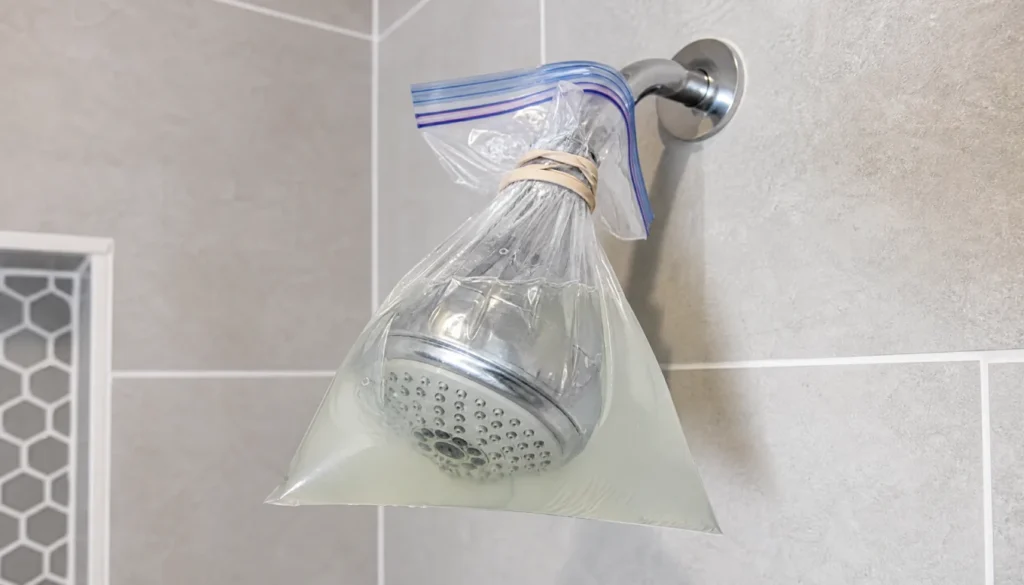
Step 2: Fill the bag and attach it. Pour the solution into the bag. Submerge the shower head face-down into the liquid. Pull the bag up around the neck of the shower arm and secure it tightly with rubber bands. You want the nozzle face fully submerged, with no liquid leaking out.
Step 3: Soak for 30 to 60 minutes. Set a timer. For light buildup, 30 minutes is enough. For heavy limescale, go the full 60 minutes. You’ll often see the water in the bag turn cloudy and slightly brown as the scale dissolves. That’s exactly what you want.
Step 4: Remove the bag and flush. Carefully untie or cut the rubber bands and remove the bag. Turn the shower on hot and let it run for 30 seconds. This flushes any loosened scale out through the nozzles.
Step 5: Wipe and check. Use a soft cloth or old toothbrush to gently scrub the nozzle face. If any stubborn spots remain, a quick rub is usually enough to clear them. Turn the shower back on and check the spray pattern.
When I did this on our master bathroom shower head, which had been clogging progressively over about three months due to hard water, every single nozzle opened up after a 45-minute soak. The spray went from an embarrassing drizzle to the full, even coverage it had when new. There was no smell, no residue, and no scrubbing required.
Citric Acid vs Vinegar: Quick Comparison
Both work. But they’re not equal for every situation. Here’s a straight comparison to help you decide.
| Factor | Citric Acid | White Vinegar |
|---|---|---|
| Smell | None | Strong, lingers for hours |
| Descaling power | High (more concentrated) | Moderate to high |
| Safe on coated finishes | Generally, yes (diluted) | Risk at full strength |
| Cost | Low (powder, lasts long) | Low (liquid, single use) |
| Where to buy | Grocery store, online | Everywhere |
| Drying/residue | None | Slight smell residue |
The bottom line: If smell is your issue, or you have a brushed or specialty finish, use citric acid. If you already have vinegar at home and your shower head is plain chrome, vinegar will get the job done in a pinch. But for a reliable, odor-free clean shower head without vinegar as part of your routine, citric acid is the better choice.
How to Keep Your Shower Head from Clogging Again
Cleaning a badly blocked shower head is satisfying. Preventing it from getting bad again is smarter.
Run a light soak every 4 to 6 weeks. You don’t need to wait for visible clogging. A quick 20-minute soak once a month keeps limescale from building up in the first place. Use half a tablespoon of citric acid powder in 2 cups of water; that’s plenty for maintenance.
Wipe the nozzle face after each use. A 10-second wipe with a dry cloth removes surface mineral deposits before they harden. It takes almost no time and makes your monthly soak much easier.
Check your water hardness. If you’re in a hard water area, you might need to clean every 3 weeks instead of every 6. You can buy simple water hardness test strips online for a few dollars.
Consider a shower head filter. Inline shower head filters that reduce calcium and magnesium are available for under $30. They slow mineral buildup significantly, which means less frequent cleaning.
Don’t ignore low pressure. The moment you notice the spray weakening, that’s your cue to clean. Waiting makes the buildup harder to dissolve and puts more strain on your shower arm connection.
Your Citric Acid Shower Head Questions, Answered
Can I use lemon juice instead of citric acid powder? Lemon juice contains citric acid, but the concentration is inconsistent, and it leaves a sticky residue. The powder is far more reliable and cheaper per use.
How long can I leave the citric acid solution on? 60 minutes is enough for even heavy buildup. Don’t go longer than 2 hours on specialty finishes. For plain chrome, a longer soak won’t cause damage, but it also won’t do extra work.
Is citric acid safe for septic systems? Yes. Citric acid biodegrades quickly and is safe for septic systems and most wastewater setups.
Where do I buy citric acid powder? Look in the canning or baking aisle of a grocery store. It’s also sold in bulk at homebrewing shops and easily found online. Search for “food-grade citric acid powder.”
Can I use this method to remove limescale from a shower head made of plastic? Yes. Citric acid at this dilution is safe for plastic shower heads. Avoid strong concentrations or very long soaks on plastic, as with any acidic cleaner.
Will it fix a shower head that’s been clogged for years? Possibly. For very old, thick limescale, you may need two rounds of soaking. Do the first soak, flush, and then repeat if the pressure hasn’t fully returned. In extreme cases, you might need to remove the shower head and soak it submerged in a larger bowl.
Ready to Try It?
Cleaning a shower head with citric acid takes under an hour, costs almost nothing, and leaves zero smell. Mix the solution, hang the bag, set a timer. That’s the whole job.
If your shower has been giving you a weak, uneven spray, try a 45-minute soak this weekend. The results are immediate and obvious: a full, even stream and a bathroom that smells like absolutely nothing.
Got questions about your specific shower head finish or water situation? Drop them in the comments below.