
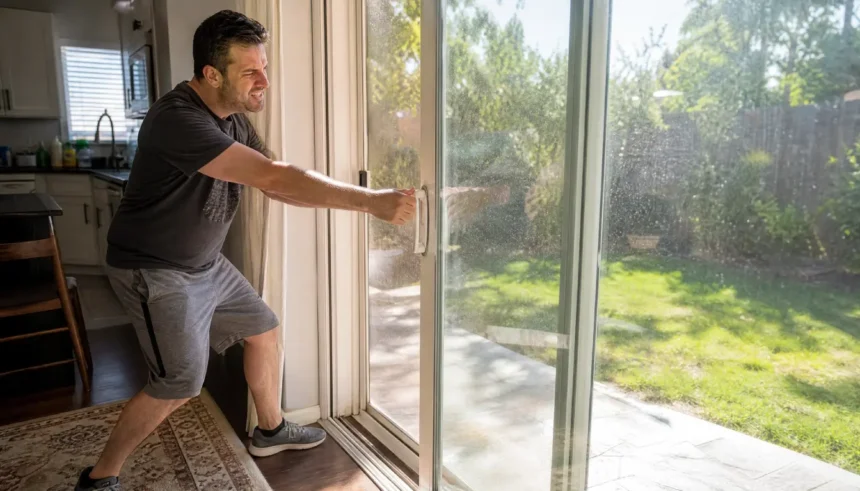
By a homeowner who spent 45 minutes wrestling with a door before finally figuring it out.
My Sliding Glass Door Almost Won
Last summer, I invited friends over for a backyard cookout. The food was ready, the weather was perfect, and I walked to my patio door carrying a full tray of burgers.
The door would not budge.
I pushed harder. Nothing. I set the tray down, grabbed the handle with both hands, and yanked. It scraped open about six inches, groaned loudly, and stopped.
My friends watched from the other side, trying not to laugh.
That embarrassing moment sent me on a deep dive into sliding glass door adjustment. What I found surprised me. The fix was not complicated, and I did not need to call anyone or spend a dime on professional help.
In this guide, I will walk you through exactly what causes a sliding glass door to stick, how to adjust sliding glass door rollers, and how to keep your door gliding smoothly all year long.
Why Your Sliding Glass Door Is Sticking
Before you reach for any tools, it helps to understand what you are actually dealing with.
Most sliding glass doors move on a set of rollers underneath the door panel. Those rollers roll along a metal track. When something throws that system off, the door gets hard to open and close.
Here are the most common reasons a sliding door sticks:
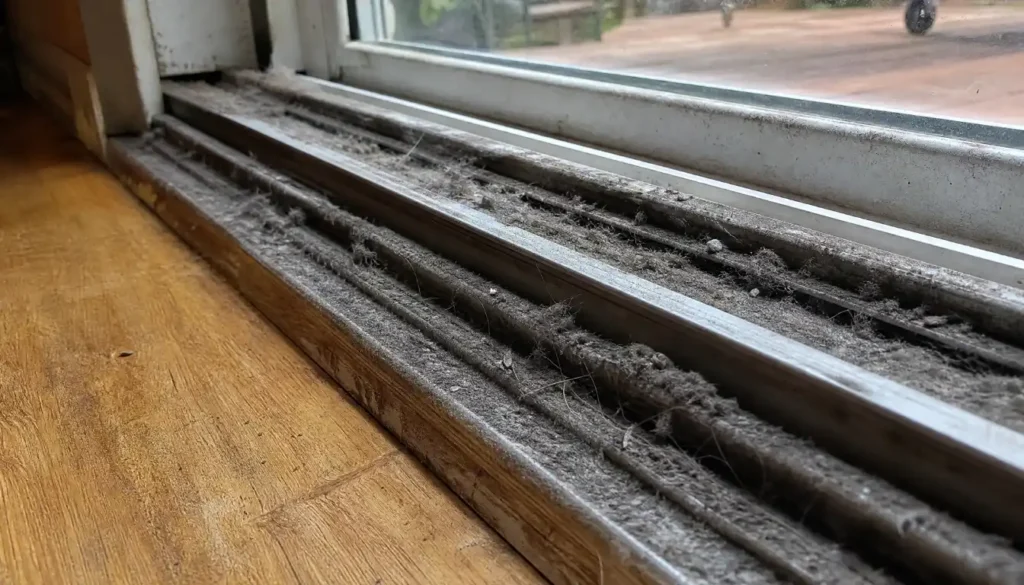
- Dirty or clogged track. Dirt, hair, pet fur, and debris build up over time and create friction.
- Worn or broken rollers. The small wheels under your door take a lot of wear. They can flatten, crack, or seize up.
- Misaligned door. The door may have shifted out of level, causing it to drag against the frame or track.
- Weather changes. Sliding glass doors stuck after rain is a real issue. Humidity can cause frames to expand slightly.
- Old or missing lubrication. Without regular maintenance, metal grinds against metal.
The good news? Most of these are totally fixable without replacing your door.
What You Need Before You Start
You do not need a big tool kit. Here is what to gather:
- Flathead screwdriver
- Phillips screwdriver
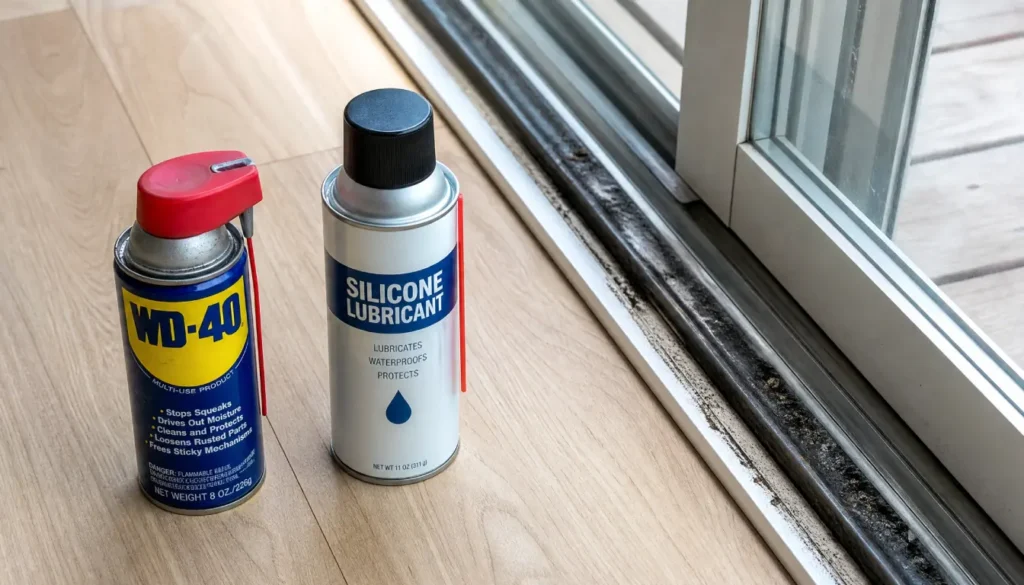
- Silicone lubricant spray (avoid WD-40, it attracts more dirt)
- Track cleaning brush or stiff-bristle brush
- Vacuum
- Flashlight
- Mild dish soap and water
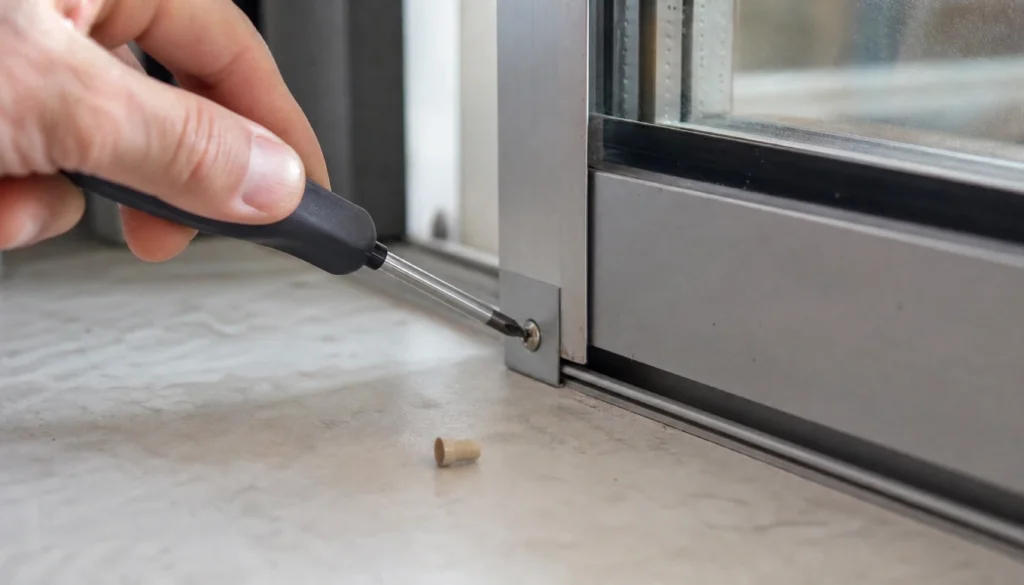
Some sliding door adjustment screws are hidden behind small plastic plugs. Have a thin flathead ready to pop those out.
Step-by-Step Sliding Glass Door Roller Adjustment
This is the part most people skip straight to. Do not skip the cleaning step first. Cleaning the track takes five minutes and sometimes solves the whole problem on its own.
Step 1: Clean the Track Thoroughly
Use your vacuum to pull out loose debris. Then scrub the track with a stiff brush dipped in soapy water. Wipe it dry.
If your sliding door sticks even after cleaning, move to the next step.
Step 2: Find the Roller Adjustment Screws
Look at the bottom of your sliding glass door panel. On each end, you will find a small hole or a plastic plug. Behind that plug sits the adjustment screw.
Pop out the plug with a flathead screwdriver. Most doors have two screws, one on each side.
Step 3: Adjust the Door Height
Insert your Phillips screwdriver into the adjustment hole.
- Turn clockwise to raise the door (rollers push down, lifting the panel).
- Turn counterclockwise to lower the door.
You want the door to sit parallel to the frame. If your sliding glass door is hard to close on one side, that side likely needs to be raised slightly.
Make small turns (half a turn at a time) and test the door as you go.
Step 4: Check the Door Alignment
Slide the door fully open and fully closed a few times. Look at the gap between the door and the frame at the top, bottom, and sides.
The gap should be even all the way around. If one corner is tighter than the others, go back and adjust that side.
Step 5: Lubricate the Track and Rollers
Once the door slides smoothly, spray a thin layer of silicone lubricant along the track. Slide the door back and forth a few times to spread it evenly.
Do not over-apply. A little goes a long way, and excess lubricant can attract more dirt.
Quick Comparison: Adjusting vs. Replacing Rollers
| Situation | What to Do |
|---|---|
| Door drags, but rollers look intact | Adjust the roller height screws |
| The door has visible wobble when sliding | Check alignment and re-adjust |
| Rollers are cracked, flat, or seized | Replace the roller assembly |
| The door sticks only after rain | Adjust height, check weatherstripping |
| The door jumps off the track repeatedly | Inspect the track for bends; it may need replacement |
How to Tell If Rollers Need Replacing (Not Just Adjusting)
Sometimes adjustment is not enough. Here is how to know if you are dealing with a roller problem versus an alignment problem.
Lift the bottom of the door slightly while it is in the track. If it lifts easily but barely rolls when you push it, the rollers are likely seized or worn flat.
Also look for:
- Grinding or scraping sounds even on a clean track
- The door is visibly tilting or leaning as it moves
- No change in smoothness after adjusting the screws
If that is the case, you can buy a sliding door roller replacement kit at most hardware stores for $15 to $40. Search by your door brand (Andersen, Pella, Milgard, Jeld-Wen) for the right fit.
Mistakes to Avoid When Adjusting a Sliding Glass Door
People make a few common errors that either do not fix the problem or make it worse.
Using WD-40 on the track. It works short-term but leaves a sticky residue that collects dirt fast. Use silicone spray instead.
Over-tightening the adjustment screws. You can lift the door too high, which causes it to bind against the top frame. Small adjustments, then test.
Skipping the cleaning step. A track packed with debris will fight every adjustment you make.
Adjusting only one side. If your patio door sticks when opening, both roller screws need to work together. Adjust both sides gradually rather than maxing out one side.
Seasonal Maintenance Tips to Keep Your Door Sliding Easily
Once your door is fixed, keep it that way with a quick seasonal routine.
Every 3 months:
- Vacuum and wipe down the track
- Test the door for smooth movement
Every 6 months:
- Re-apply silicone lubricant
- Check roller adjustment screws
- Inspect weatherstripping for wear or compression
Before winter, this is especially important. Cold temperatures can cause metal tracks to contract slightly, making a door that was fine in summer suddenly feel stiff.
Frequently Asked Questions
Why does my sliding glass door stick when it’s hot or humid outside?
Humidity causes wood and some frame materials to expand. If you have an older door with a wood frame, this is common. Try adjusting the rollers slightly higher. If the door has a vinyl or aluminum frame and it still sticks after rain, the track may need cleaning.
Can I adjust my sliding glass door without removing it?
Yes. For most roller adjustments, you only need access to the adjustment screws at the bottom of the door. You do not need to remove the panel at all. Removing the door is only necessary if you are replacing the rollers or inspecting the track underneath.
How do I know what size screwdriver to use for the adjustment screws?
Most sliding glass doors use a standard Phillips screwdriver. Some older aluminum doors use a flathead. Check the screw head before forcing anything.
My door sticks only in the middle. What does that mean?
This usually points to a bent track or a low point in the floor track. Clean the track first. If you can see a visible dip or bend, you may need to gently press the track flat with a wood block and rubber mallet, or replace that section.
How much does it cost to fix a sticking sliding glass door?
If it is just an adjustment, the cost is zero. A can of silicone lubricant runs $6 to $12. Replacement rollers run $15 to $40 depending on your door brand. Calling a handyman typically costs $75 to $150 for the same work you can do yourself in 30 minutes.
You Can Handle This
Fixing a sticking sliding glass door is one of those home repairs that sounds complicated but really is not. Once you understand what is causing the friction, the solution is usually a screwdriver and twenty minutes.
Start with a clean track. Then adjust the roller screws a little at a time. Lubricate with silicone spray. Test as you go.
You will be surprised how much better a properly adjusted door feels. Smooth, quiet, and effortless. It is a small thing, but it makes your home feel more put-together every single day.
If you tried this guide and ran into something unexpected, drop a question in the comments. And if your door is sliding like new again, share this with someone else who has been fighting their patio door all season. They will thank you for it.