

You’ve got a list of five dream cities, a flight search open in eight tabs, and a creeping fear you’ll spend your whole trip traveling instead of exploring. I’ve been there. Learning how to plan a multi-city trip without going crazy came down to one thing for me: a system, not a spreadsheet full of guesses.
This guide walks you through that system, step by step. No fluff, no filler. Just the exact process I use before every multi-city trip, plus the mistakes I made so you don’t have to repeat them.
Step 1: Start With Your Travel Style, Not a Destination List
Most people start planning by picking cities. That’s backward. Start with how you actually like to travel.
Ask yourself three questions:
- Do you want a packed schedule or slow mornings with room to wander?
- Do you prefer trains, budget flights, or driving between stops?
- Is this trip about seeing landmarks, eating well, or just resetting?
Your answers shape everything else. A trip built around slow mornings and good food looks nothing like a trip built around checking off landmarks. Neither is wrong. But mixing the two without deciding first is how people end up exhausted by day four.
I used to plan trips purely by looking at a map and connecting dots. It felt efficient. It wasn’t. I’d land in a city, realize I had six hours before the next train, and spend that time stressed instead of present.
Step 2: Pick the Right Number of Cities (The “Less Is More” Rule)
Here’s a number worth remembering: one city per four to five days of total trip length. A two-week trip means three, maybe four cities. Not six.
This feels restrictive at first. It isn’t. Every extra city adds a travel day, a new place to get lost in, and a new bed to adjust to. Those add up fast.
I once tried to fit six cities into ten days across Europe. I thought I’d feel like a savvy jetsetter. Instead, I had a mini meltdown at Munich station because I couldn’t find my platform and hadn’t eaten a proper meal in two days. That trip taught me this rule the hard way. Now I stick to it, and my trips actually feel like trips.
Cut your city list in half. Then cut it again if you’re not sure. You can always come back.
Step 3: Nail Down How Many Days per City (Use the 3-2-1 Formula)
Once you know your cities, decide how long to stay in each. This is where the 3-2-1 formula earns its keep:
- 3 days for your main city, the one with the most to see or the reason you booked the trip.
- 2 days for medium-priority cities you want to enjoy without rushing.
- 1 day for a quick stop, a place you’re curious about but don’t need to fully explore.
Then add one buffer day somewhere in the middle of the trip. No plans, no train to catch. Just a day to rest, do laundry, or wander without an agenda.
This formula stops itinerary planning from becoming a guessing game. It also gives you a clear answer when you’re staring at a map wondering if four days in Rome is too much or too little.
Step 4: Book Transportation the Smart Way (Multi-City Flights, Trains and Buses)
Transportation between cities is where budgets and schedules break down. A few rules that save both:
- Compare trains and budget flights before booking either. In Europe and parts of Asia, trains often beat flights once you factor in airport time. In other regions, a short flight saves a full day of travel.
- Book your longest or most popular route first. High-demand routes sell out or spike in price closer to the date.
- Leave a buffer between arrival and your next commitment. Delays happen. A tight connection turns a minor delay into a missed booking.
- Use one multi-city search tool to compare the whole route, not city by city. This shows you cheaper combinations you’d miss booking one leg at a time.
I’ve helped friends plan over a dozen multi-city trips, and the most common mistake is booking each leg in isolation. That’s how you end up with a flight that lands at 11pm before a 7am train the next morning. Book the full route at once, then adjust.
Step 5: Pack Light for Multiple Stops – Carry-On Only Strategies
Every city you add means packing and unpacking again. A single carry-on bag makes that painless. A large suitcase makes it a chore.
Here’s what actually works for two to three weeks on the road:
- A capsule wardrobe of 6-8 pieces that mix and match. Stick to two or three colors.
- Packing cubes to separate categories. One for tops, one for bottoms, one for everything else.
- One pair of shoes you’d wear every day, plus one backup. Not three pairs “just in case.”
- A phone charger and adapter you keep in the same pocket every time. You will need it at 6 am in a rush.

I once packed three pairs of heels for a trip through Italy. I wore one pair once. Never again. Pack for the trip you’re actually taking, not the one you’re imagining.
Step 6: Build a Flexible Day-by-Day Plan (With Built-In Downtime)
A good itinerary has structure without being rigid. For each city, plan:
- One or two must-see spots you’d regret skipping.
- One meal or neighborhood you’re genuinely excited about.
- Open blocks of unplanned time, at least half a day per stop.
These multi-city itinerary tips work because they give you direction without locking you into a schedule you’ll resent by day three. If you find a café you love, you can stay. If a museum runs long, you’re not late for the next thing.
Write your plan in a shared doc or notes app you can edit on the go. Plans change. Your itinerary should be able to change with them.
Step 7: How to Avoid Burnout on a Multi-City Trip (Mindset and Practical Tips)
Burnout on a multi-city trip rarely comes from one bad day. It builds from small things stacking up: skipped meals, disrupted sleep, constant decision-making about where to eat or how to get somewhere.
A few practical fixes:
- Eat real meals at regular times, even on travel days. Skipping meals to “save time” costs you more energy than it saves.
- Protect your sleep in the first city, even if it means an early night. Jet lag compounds if you start behind.
- Limit big decisions to once a day. Decide dinner in the morning, not while standing hungry on a street corner.
- Permit yourself to skip something. Missing one attraction won’t ruin the trip. Missing sleep for a week might.
This is stress-free multi-city travel in practice, not theory. It’s less about willpower and more about removing the small frictions that pile up over two weeks.
Your Multi-City Trip Checklist and Final Pep Talk
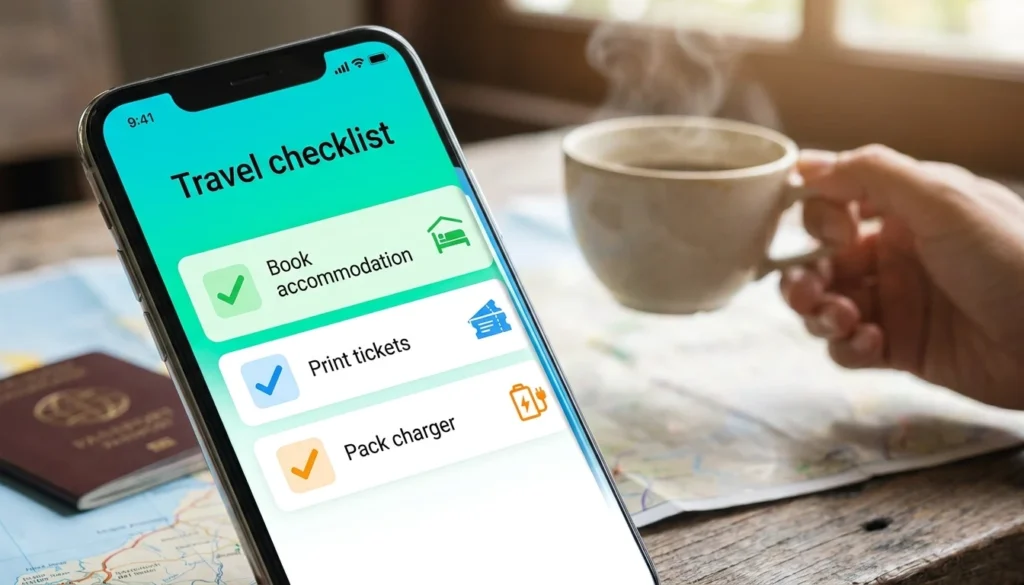
Before you go, run through this multi-city trip checklist:
- [ ] Cities chosen using the less-is-more rule
- [ ] Days per city set with the 3-2-1 formula
- [ ] Full route transportation booked, with buffer time between legs
- [ ] Carry-on packed with a capsule wardrobe
- [ ] Rough day-by-day plan written, with open blocks left in
- [ ] At least one full buffer day scheduled
- [ ] Chargers, adapters, and documents in one easy-to-reach spot
Knowing how to plan a multi-city trip without going crazy comes down to fewer cities, clearer days, smarter bookings, and a bag you can actually carry. Follow the steps in order and the trip plans themselves instead of taking over your life for two months beforehand.
If you’ve read this far, you’re already ahead of where I was on my first attempt. Save this guide, run through the checklist before your next trip, and let me know in the comments which city is topping your list.