I remember sitting through a viewing of Cast Away with my family and suddenly noticing something. Tom Hanks doesn’t just crash on an island. He crashes with a FedEx plane, clings to FedEx packages, and basically becomes a brand ambassador for the company while talking to a volleyball. I laughed out loud, turned to my sister, and said, “Did they just make a two-hour FedEx commercial?”
That was the moment I started seeing movies differently. Once you notice hidden advertising in movies, you cannot stop. It becomes a game. A very entertaining, slightly cynical, completely addictive game.
If you’ve ever sat in a dark theater wondering whether that Pepsi logo on screen was paid for, this guide is for you. You’re about to learn how to spot product placement in films, understand why brands pay millions for a few seconds of screen time, and turn your next movie night into a brand-spotting challenge your whole group will love.
What Is Product Placement in Movies, Exactly?
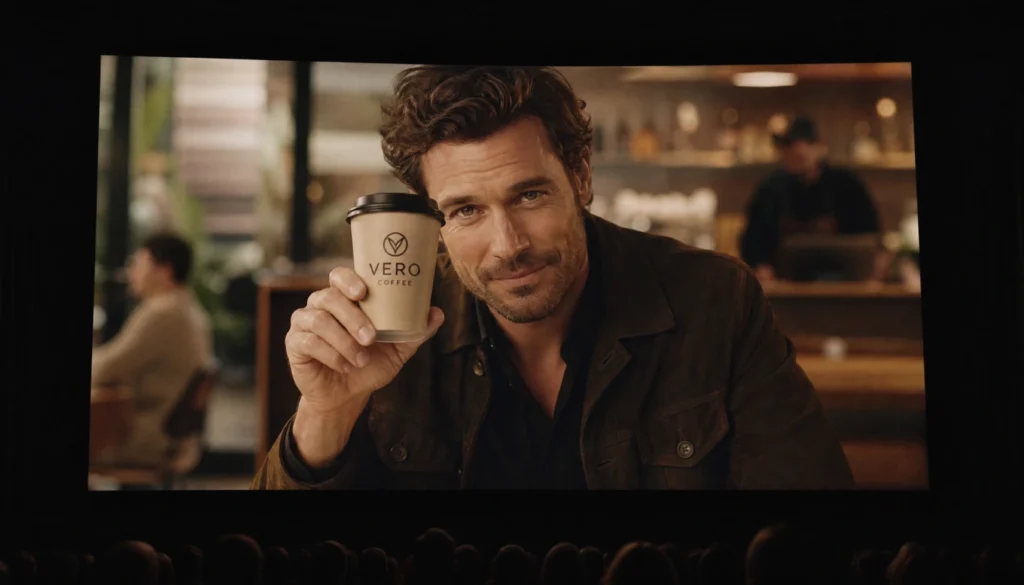
Product placement is when a brand pays to have its product shown in a film. It’s a form of embedded marketing, meaning the ad is baked right into the story. You don’t see a traditional commercial. You see a character drinking a specific soda, driving a specific car, or using a specific phone.
There are two main types: diegetic product placement, where the character actually interacts with the product (they drink it, drive it, use it), and non-diegetic brand placement, where a logo just appears in the background.
Diegetic placement is harder to ignore. Non-diegetic is sneakier.
Both are paid. Both are intentional.
Why Do Movies Use Product Placement?
Simple. Money.
A single product placement deal can bring in anywhere from $50,000 to over $50 million, depending on how prominent the brand appears. Studios use that money to offset production costs. Brands get in front of a massive audience without paying for a traditional ad slot.
It’s also about association. When James Bond drives an Aston Martin, the brand picks up some of that cool-factor by being near a beloved character. That’s the strategy.
Product placement has been around since the 1800s in print fiction, but it exploded in film after the famous Reese’s Pieces moment in E.T. (1982). Sales of Reese’s Pieces reportedly jumped 65% after that film. Brands took notice. Hollywood has never looked back.
How to Spot Product Placement Like a Pro
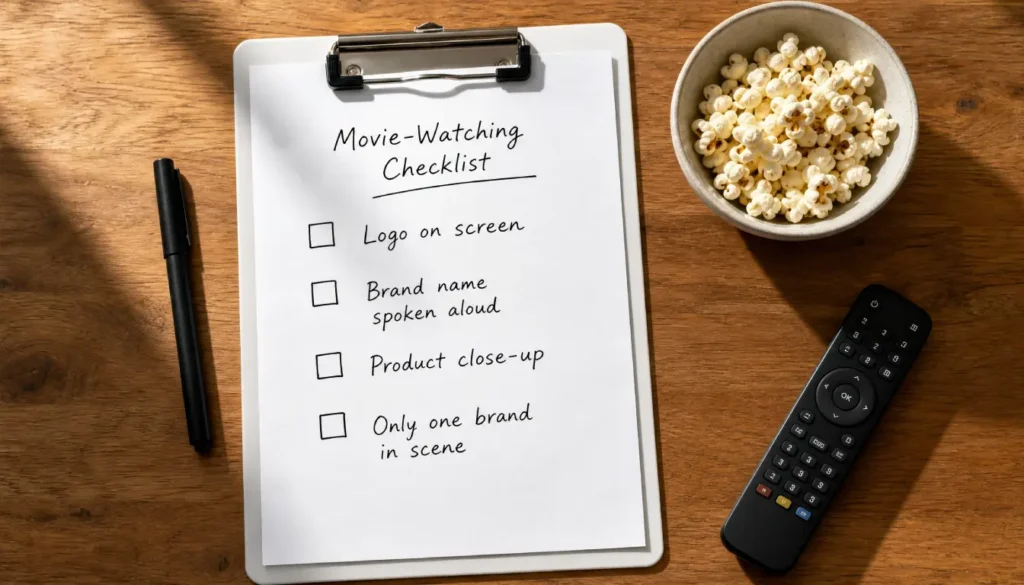
Here are the signs to watch for during any movie.
1. The Camera Lingers on a Logo
Normal storytelling doesn’t need a three-second close-up of a coffee cup. If the camera holds on a brand name long enough for you to read it clearly, that’s almost certainly a paid placement.
Watch for logos on phones, laptops, cars, food packaging, clothing, and drinks. If the logo faces the camera and stays in frame, it’s deliberate.
2. A Character Mentions the Brand by Name
Props don’t need names. If a character says “I love my Ray-Bans” instead of just wearing sunglasses, that’s in-film advertising. The script has been written to include the brand name.
This one is obvious once you train yourself to hear it.
3. The Product Gets an Unrealistic Moment of Glory
In Top Gun, Ray-Ban saw a massive sales boost after Tom Cruise wore their Aviators. The film didn’t just show the glasses. It showed them beautifully, heroically, and constantly.
If a product looks almost too good on screen, styled and lit to perfection, it’s probably sponsored.
4. Apple Products Appear Everywhere
Apple is legendary for product placement in Hollywood. You’ll spot MacBooks, iPhones, and iPads in film after film. What’s interesting is that Apple reportedly does not pay for placements; they loan products. But the visibility is still enormous.
Pay attention to how many characters in any modern film use Apple devices. The number is rarely random.
5. The Brand Feels Out of Place
Wayne’s World made fun of this brilliantly. In one scene, the characters hold products directly to the camera and read promotional copy with zero subtlety. It’s satire. But it works because the joke is real. Sometimes product placement genuinely does not fit the scene.
If you watch a movie and a specific brand feels oddly out of place, like a character going out of their way to buy from one store when any store would do, that’s a signal.
Famous Product Placement Examples Worth Knowing
These are some of the most well-known cases in film history.
| Movie | Brand | What Happened |
|---|---|---|
| E.T. (1982) | Reese’s Pieces | Sales jumped 65% after release |
| Top Gun (1986) | Ray-Ban Aviators | Sales rose by 40% |
| Cast Away (2000) | FedEx | The entire plot revolves around FedEx packages |
| Back to the Future (1989) | Nike | Nike Mag sneakers became collector items |
| James Bond Series | Aston Martin | Long-running deal worth hundreds of millions |
How to Tell the Difference Between a Prop and a Paid Placement
This is where it gets interesting. Not every product you see on screen is paid for. Some are just props. So how do you tell the difference?
Ask yourself these questions.
- Does the camera focus on the product specifically, or is it just part of the scene?
- Does a character reference the brand by name out loud?
- Does the product seem styled and lit differently than the rest of the scene?
- Does the product appear multiple times across the film?
If the answer to any of these is yes, it’s likely a paid placement. If the product is just sitting on a counter and nobody cares, it might just be a prop.
One quick tip: look at competitor products. If only one brand of a product category exists in the entire film (only one phone brand, only one car brand), that’s almost always a sign of a sponsorship deal.
Turn Movie Night Into a Brand-Spotting Game
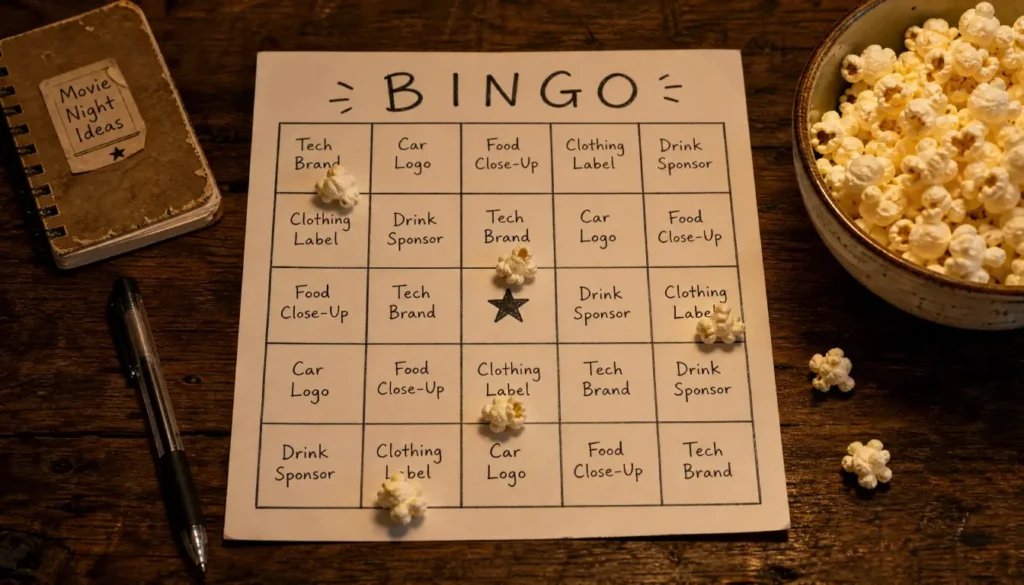
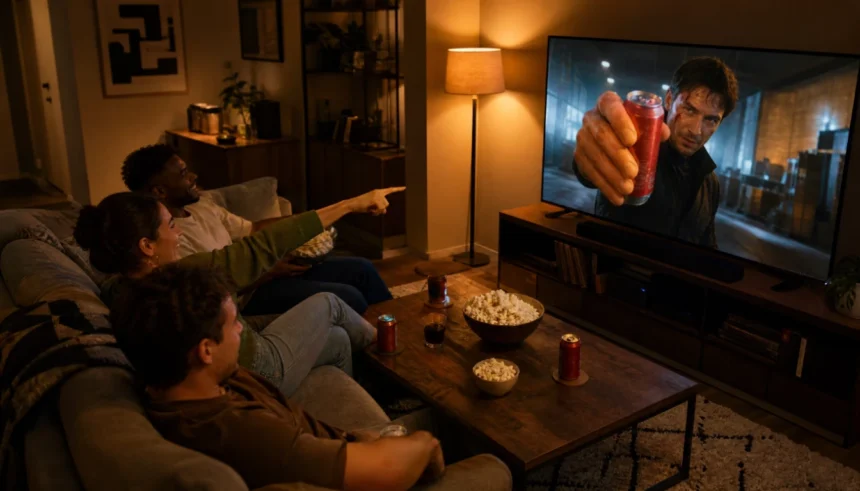
Here’s a fun way to watch movies with friends or family. Create a simple product placement scorecard before you press play.
How to Play:
- Each person picks a category to track: food, tech, cars, clothing, or drinks.
- Every time a branded product appears in your category, note it down.
- Award one point for a background logo, two points for a close-up, and three points for a character mentioning the brand by name.
- Whoever spots the most at the end wins.
You can also try product placement bingo. Write brand names on a bingo card before the movie starts and cross them off as they appear. It works especially well with franchise films, superhero movies, and action blockbusters.
Best movies to try this with: any James Bond film, the Mission: Impossible series, any Marvel movie, and virtually any summer blockbuster from the past 20 years.
Mistakes People Make When Spotting Product Placement
A few things to avoid.
- Assuming every brand is paid for. Sometimes props are just props.
- Missing subtle logo placements because you’re watching the dialogue.
- Forgetting to watch the background. A lot of brand placements happen in the background of scenes, not in the center frame.
- Ignoring clothing brands. Clothing is one of the most common and overlooked placement categories.
Frequently Asked Questions
What is the most famous product placement in movie history?
The Reese’s Pieces scene in E.T. (1982) is widely considered the most influential product placement ever. It helped prove that in-film advertising could drive real consumer sales.
Do actors get paid for product placement?
Actors themselves generally do not receive separate payment for product placement. The deal is between the studio and the brand. Actors simply use the products as directed.
Is product placement effective?
Yes. Studies consistently show that audiences remember brands seen in films more than they remember traditional ads. The emotional connection to a beloved film carries over to the product.
What are the rules around product placement disclosure?
The FTC has product placement disclosure rules for sponsored content in some media. However, film has traditionally been less regulated than TV and social media. Many films include a small acknowledgment in the credits.
Can product placement be too obvious?
Absolutely. When a product placement breaks the flow of a scene, audiences notice and often react negatively. It’s a fine line between useful funding and distracting the viewer.
Final Thoughts
Spotting brands in movies is one of those skills that sounds small but genuinely changes how you watch films. You start to see the business side of storytelling. You notice choices that used to feel invisible. And honestly, it makes you a sharper viewer.
You don’t need to feel cynical about it. Product placement funds a lot of great cinema. But knowing it’s there gives you a more complete picture of what you’re watching and why certain choices were made.
So next time you settle in for movie night, keep one eye on the story and one eye on the logos. Pick a category, grab your scorecard, and see what you find.
What’s the most obvious product placement you’ve ever caught in a film? Drop it in the comments. I’d love to compare notes.