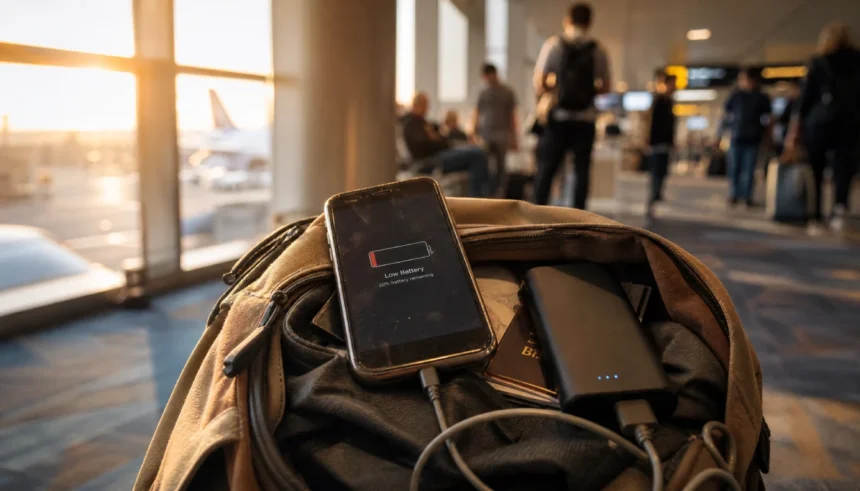
Last summer I stood in the Lisbon airport with 4% battery, no idea where my gate was, and a boarding pass I couldn’t screenshot fast enough. My phone died mid-search. I had to ask a stranger for directions like it was 1998.
If you travel even a little, you know this feeling. Your phone is your map, your camera, your boarding pass, and your only way to call home. When it dies, you feel stuck and a little panicked.
This guide covers how to keep your phone charged while traveling, no matter where you go. Flights, road trips, hikes, festivals, other countries. You’ll find real tips that actually work, not just “turn down your brightness” advice you’ve heard a hundred times.
Why Your Phone Battery Drains Faster When You Travel
Your phone works overtime when you travel. It searches for signal in new places, runs GPS nonstop, and takes way more photos than usual. Add cold weather or a hot car, and the battery drains even quicker.
Airports, hotels, and new cities all mean your phone is pinging towers, apps, and satellites constantly. This is normal. It’s also fixable once you know what’s causing it.
1. Pack the Right Portable Charger
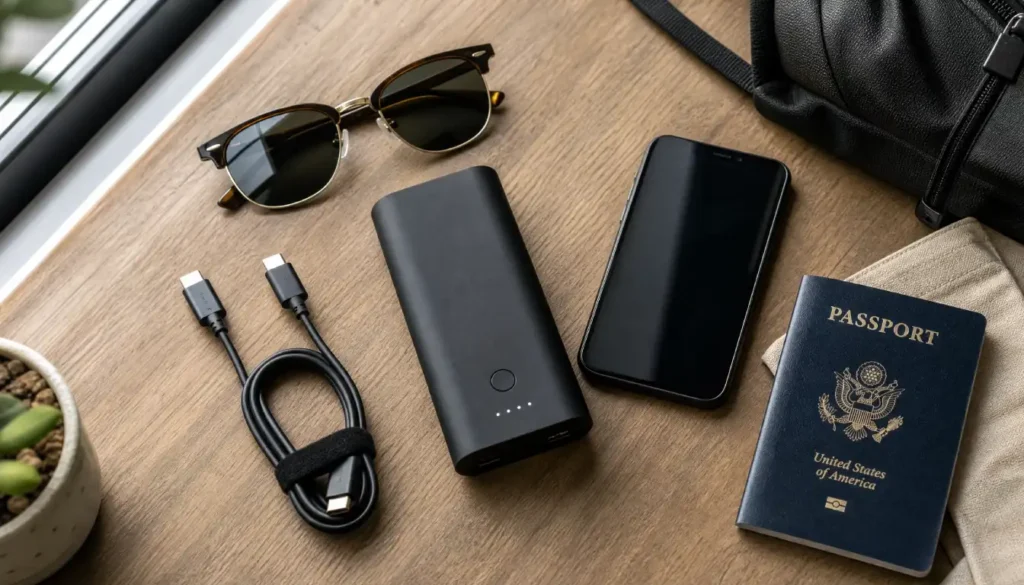
A good portable charger for travel is the single best thing you can buy. It’s the difference between a stressful trip and a smooth one.
Look for these features:
- At least 10,000mAh for a full day of backup power
- USB-C fast charging support
- Under 7 ounces so it doesn’t weigh down your bag
- Pass-through charging, so you can charge the bank and your phone at once
Quick tip: if you’re a heavy phone user, get a 20,000mAh power bank. It’ll charge your phone three to four times before it needs a recharge itself.
Power Bank Size Comparison
| Power Bank Size | Charges Per Trip | Best For |
|---|---|---|
| 5,000mAh | 1 full charge | Short day trips |
| 10,000mAh | 2 full charges | Weekend travel, flights |
| 20,000mAh | 3-4 full charges | Long trips, backpacking |
| 30,000mAh+ | 5+ full charges | Multi-day camping, no outlets |
2. Know the TSA Power Bank Rules Before You Fly
Airlines have real rules about power banks, and they matter. Most airlines allow power banks under 100Wh in your carry-on, but they can’t go in checked luggage.
Anything between 100Wh and 160Wh usually needs airline approval first. Anything over that gets rejected. Check your airline’s website before you pack, since rules can shift.
Mistake to avoid: don’t pack your power bank in checked luggage. Airlines ban this because of fire risk, and you could lose your charger for the whole trip.
3. Turn On Battery Saver Mode Before You Even Land
Your phone has a power-saving setting built right in. Turn it on the moment you land somewhere new. It slows background app activity and dims your screen just enough to matter.
Here’s what actually helps:
- Turn off background app refresh for apps you’re not using
- Lower your screen brightness by 20-30%
- Close apps you’re not actively using instead of letting them run in the background
- Turn off push notifications for apps you don’t need that day
Airplane mode also saves battery, even without flying. If you’re somewhere with weak signal, your phone burns extra power searching for a connection. Airplane mode stops that search.
4. Use Offline Maps to Save Battery on GPS
GPS is one of the biggest battery drains while traveling. Constantly pulling directions in a new city adds up fast.
Download offline maps before you go. Google Maps and Maps.me both let you save entire cities to your phone. You get directions without your GPS working overtime or burning through data.
This trick alone can save you a couple hours of battery life on a full day of sightseeing.
5. Charge Smart, Not Just Often
Topping off your phone the right way protects your battery long term and keeps it charged when you need it most.
Try this simple routine:
- Charge your phone to 80%, not 100%, when you can
- Avoid letting it drop below 20% if possible
- Charge overnight at your hotel so you start each day full
- Keep your phone out of direct sun and hot cars, since heat wears down batteries fast
Charging in a hot car is one of the most common travel mistakes. Heat damages lithium-ion batteries over time, so a phone left on a dashboard in summer pays for it later.
6. Solutions for International Travel
Charging in another country brings its own problems. Different plugs, different voltage, and sometimes no compatible outlet at all.
Get a universal travel adapter with built-in USB ports. This one item solves plug shape issues in almost every country. Look for one rated for dual voltage, so it works whether you’re in Europe, Asia, or anywhere else.
Helpful note: most modern phone chargers already handle different voltages automatically. Check the fine print on your charger. If it says “100-240V,” you’re fine with just an adapter, no converter needed.
7. Charging Without Electricity: Camping and Outdoor Travel
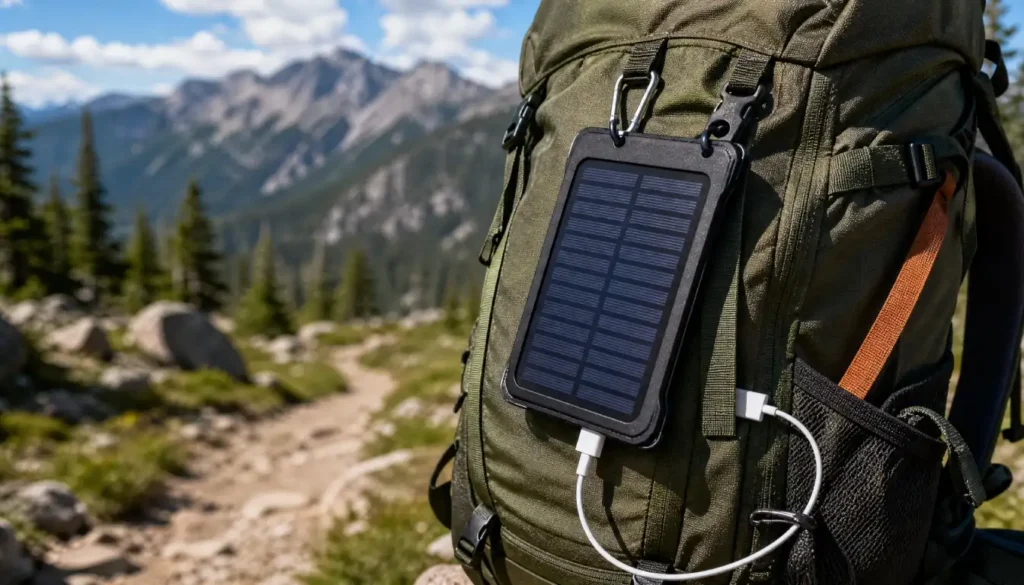
If you’re camping, hiking, or somewhere off the grid, a regular power bank still helps, but a solar charger gives you backup power that never runs out.
Solar chargers work best clipped to your backpack while you hike, soaking up sun throughout the day. They’re slower than wall outlets, so don’t expect a full charge in an hour. Plan to leave them charging for several hours.
For longer trips, a portable power station works even better. These larger battery packs can charge phones, cameras, and even small devices like a mini fan or headlamp.
Quick tips for camping trips:
- Charge your power bank fully before you leave home
- Keep your phone in airplane mode when you’re not using it
- Use a hand crank charger as backup in case your solar charger has a cloudy day
- Turn off location services when you don’t need them
8. Everyday Habits That Quietly Drain Your Battery
Some habits eat battery without you noticing. Fixing these adds up to real savings over a full day of travel.
- Taking photos and videos back to back without giving your phone a break
- Streaming music or podcasts over weak signal, which forces your phone to work harder
- Leaving Bluetooth on when you’re not using headphones
- Keeping your screen brightness on auto in bright sunlight, which cranks it up higher than needed
None of these are big mistakes on their own. Together, they can drain half your battery before lunch.
FAQs
Can I bring a power bank on a plane?
Yes. Most airlines allow power banks under 100Wh in your carry-on bag. Keep it out of checked luggage, since that’s where most airlines draw the line.
Does airplane mode really save battery?
Yes, it does. Your phone stops searching for a signal, which is one of the biggest battery drains, especially in areas with weak coverage.
What’s the best portable charger for international travel?
Look for a power bank with USB-C fast charging and dual voltage support. Pair it with a universal travel adapter so you’re covered no matter which country you’re in.
Is it safe to charge my phone in public USB ports?
Not always. Public ports at airports or cafes can carry security risks. A portable charger or your own wall adapter is a safer choice when you’re unsure.
How do I keep my phone charged during a long flight without a USB port?
Bring a fully charged power bank and put your phone in airplane mode for most of the flight. This combination can easily get you through a ten-hour flight with battery to spare.
Final Thoughts
Keeping your phone charged while traveling comes down to a few simple habits. Pack the right charger, know your airline’s rules, use offline maps, and give your battery a break from unnecessary drains.
You don’t need to obsess over every percentage point. Just build a few of these habits into your routine, and you’ll stop feeling that panic when your battery hits red.
Next time you’re packing for a trip, drop a comment and let me know which tip you’re trying first. And if you’ve got a charging hack that’s saved you on the road, I’d genuinely love to hear it. Safe travels, and may your battery always stay above 20%.