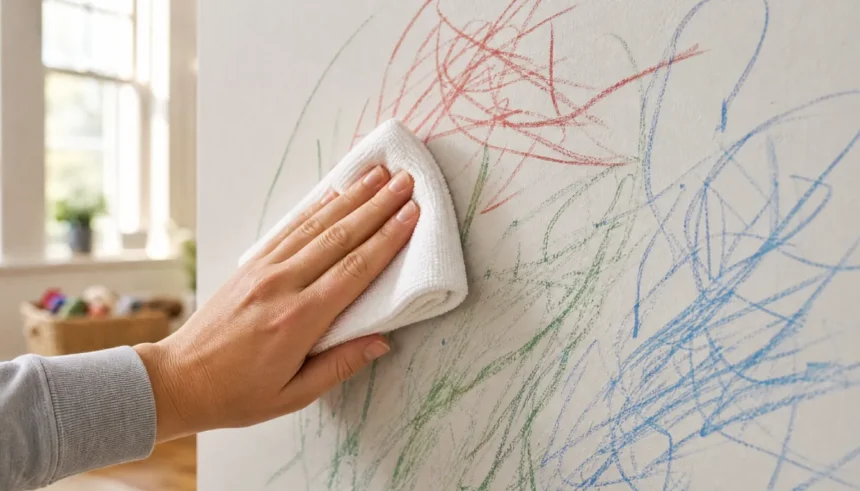
Your kid just turned the hallway into an art gallery. You’re staring at a waxy streak of red and green crayon on your freshly painted wall, and you have exactly fifteen minutes before guests arrive. The last thing you want to do is scrub.
I’ve been there. Turns out, you can remove crayon from painted walls without scrubbing, using three everyday items you probably already have at home. No harsh chemicals. No damaged paint. Here are the 3 no-scrub methods I’ve tested myself, ranked from easiest to most surprising.
Why You Should Never Scrub Crayon Off Painted Walls
It feels like the obvious move. You see the mark, you grab a rough sponge, and you scrub. But here’s what actually happens.
Crayon is wax. Scrubbing pushes that wax deeper into the paint surface instead of lifting it. On flat or eggshell finishes, scrubbing removes the paint itself, leaving a dull, patchy spot that looks worse than the original mark. You trade one problem for another.
The goal is to lift the wax, not push it in. That’s exactly what these three no-scrub methods do. Each one works with the wax instead of against it.
Before You Start: Quick Paint Check and What You’ll Need
Before you pick a method, take ten seconds to identify your paint finish. It matters.
- Flat or matte paint: Very porous, absorbs crayon easily. Go straight to Method 1 (baking soda paste). Skip heat.
- Eggshell paint: A step above flat. Baking soda paste works well. The hair dryer method can work too, on low heat.
- Satin or semi-gloss: More durable. All three methods work. Heat is especially effective here.
What you’ll need (grab these before you start):
- A soft microfiber cloth (or two)
- Baking soda and water (for Method 1)
- A hair dryer (for Method 2)
- Plain mayonnaise (for Method 3)
- A small bowl and spoon
- Paper towels for blotting
One more thing: always spot test in a hidden corner first. This takes 30 seconds and saves your paint.
Method 1: Baking Soda Paste (Gentle and Almost Instant)
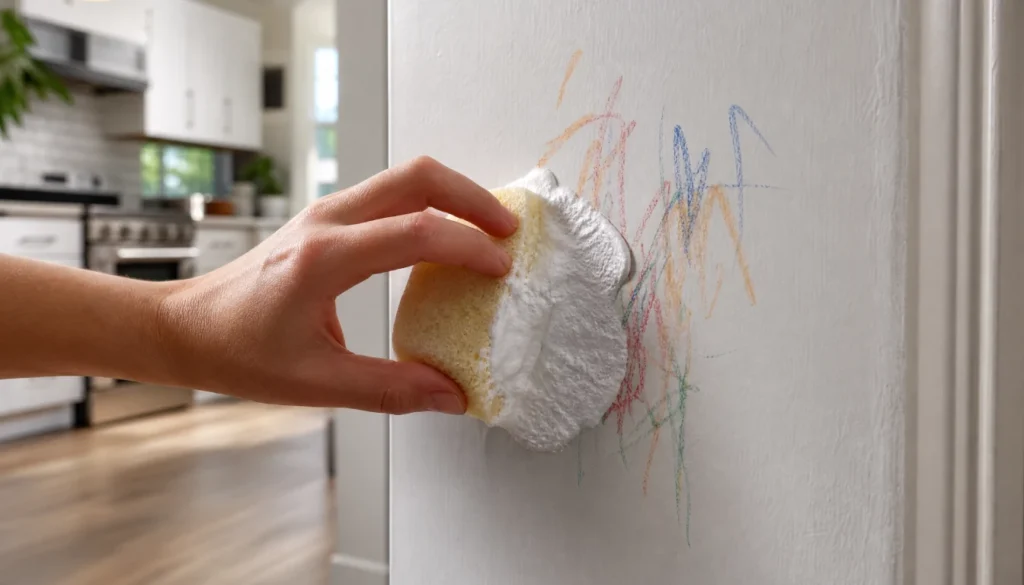
This is the method I reach for first every single time. When my son drew a green streak across our flat-paint hallway wall right before a dinner party, baking soda paste lifted it completely in under five minutes. The paint looked untouched.
Why it works: Baking soda is a mild abrasive, but because you’re dabbing instead of scrubbing, it lifts the wax without cutting into the paint surface.
Best for: Flat, matte, and eggshell paints. Fresh marks respond especially fast.
Step 1: Mix two tablespoons of baking soda with just enough water to form a thick paste. It should look like toothpaste.
Step 2: Apply a small amount of paste directly onto the crayon mark using your fingertip or a soft cloth. Do not rub.
Step 3: Let the paste sit on the mark for 60 to 90 seconds.
Step 4: Using a damp microfiber cloth, dab the area gently. Lift the cloth straight off the wall rather than wiping side to side.
Step 5: Wipe the residue away with a clean damp cloth. Repeat once if any marks remain.
Method 2: The Hair Dryer Heat Trick
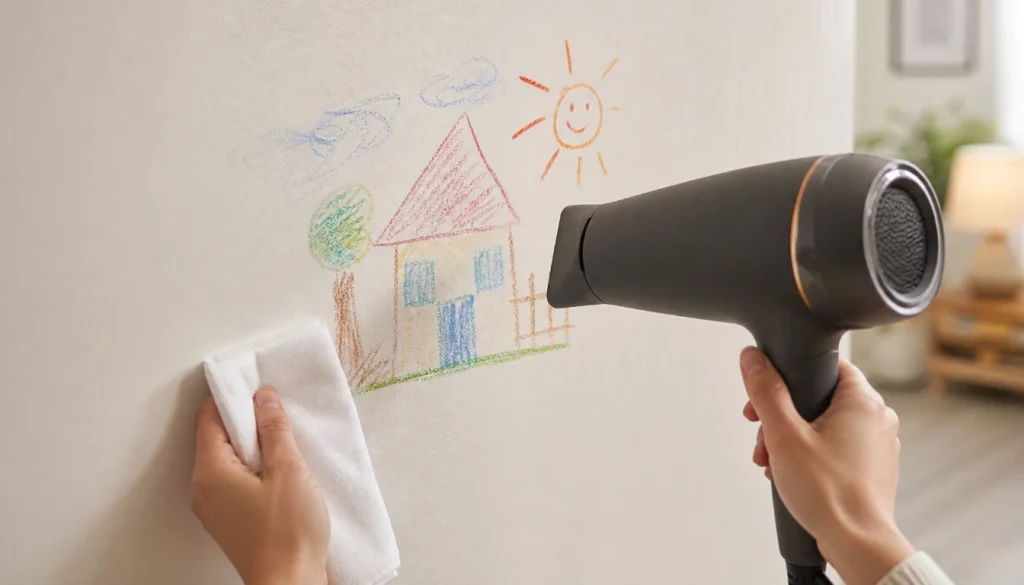
This one surprised me the first time I tried it. My daughter had pressed hard with a dark blue crayon on a semi-gloss bedroom wall, and the mark had been sitting there for three days. The baking soda paste barely touched it. The hair dryer had it gone in two minutes.
Why it works: Heat softens wax. When you warm the crayon mark, the wax rises to the surface instead of gripping the paint. A gentle wipe pulls it away cleanly.
Best for: Semi-gloss and satin paints. Older, set-in marks that resisted other methods.
Step 1: Set your hair dryer to medium heat. Never use maximum heat on painted walls.
Step 2: Hold the dryer about 4 to 6 inches from the crayon mark. Keep it moving in small circles. Do not hold it in one spot.
Step 3: After 15 to 20 seconds, the crayon will look slightly shiny or melted. That’s your cue.
Step 4: Press a clean microfiber cloth gently against the mark. Lift straight off. Don’t wipe.
Step 5: Repeat the heat cycle once or twice if needed, always blotting after each round.
One caution: if you notice the paint bubbling, stop immediately and let the wall cool. This is rare on interior walls, but worth watching for.
Method 3: Mayonnaise (Yes, Really)
I’ll admit I was skeptical the first time I read about this. Putting mayonnaise on my wall felt wrong. But the oil in mayo actually breaks down crayon wax at a molecular level, and it’s gentle enough for most paint finishes.
This is the method you reach for when you want something slow and passive. Apply it, walk away, and come back to clean walls.
Why it works: The oils in mayonnaise dissolve the wax binder in crayon. No heat, no abrasion required.
Best for: Any paint finish. Especially good for tricky angles or walls where holding a hair dryer is awkward.
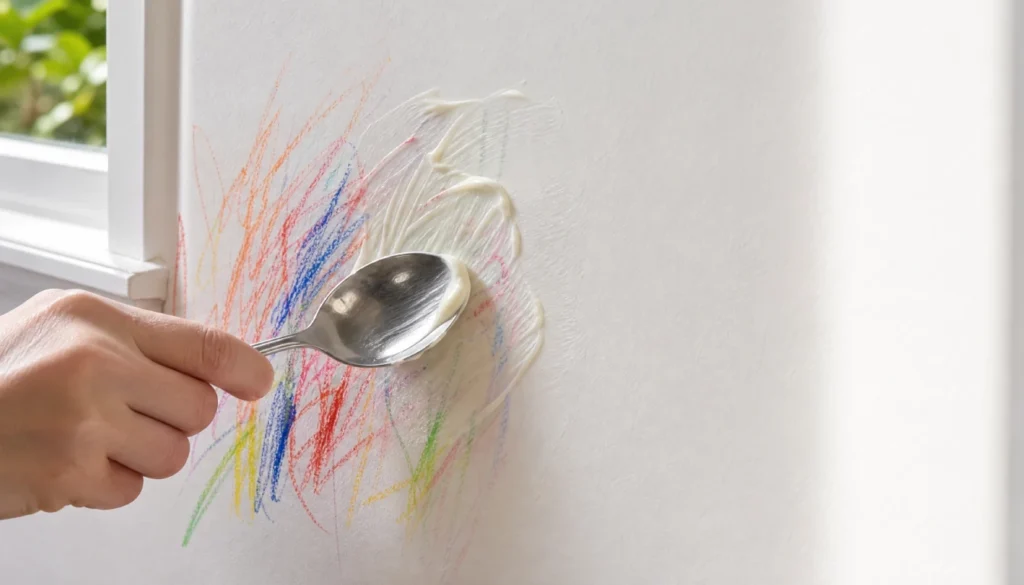
Step 1: Apply a thin layer of plain mayonnaise directly over the crayon mark using a spoon or your finger.
Step 2: Let it sit for 8 to 10 minutes. Don’t rush this step.
Step 3: Wipe the mayo away with a clean damp microfiber cloth. Lift rather than wipe.
Step 4: Clean the area with a fresh damp cloth to remove any oily residue.
Step 5: Inspect the wall. If a faint mark remains, apply a second thin layer and wait another 5 minutes.
Important: spot test this method first if you have flat paint. Oils can leave a slight sheen on very porous finishes if left too long.
Which Method Should You Use? (Simple Decision Guide)
Not sure which one to grab first? Use this quick guide.
| Your situation | Best method |
|---|---|
| Flat or matte paint, fresh mark | Method 1: Baking soda paste |
| Eggshell paint, light mark | Method 1: Baking soda paste |
| Semi-gloss or satin, any mark | Method 2: Hair dryer |
| Old, set-in mark on any finish | Method 2: Hair dryer |
| You want hands-off removal | Method 3: Mayonnaise |
| Awkward spot or corner | Method 3: Mayonnaise |
| Method 1 didn’t fully work | Method 2 or 3 as a follow-up |
You can also combine methods. Start with the hair dryer to soften the wax, then follow with baking soda paste to clean the residue. This combo handles the toughest marks.
Bottom line:
- Flat or eggshell paint: start with baking soda paste.
- Semi-gloss or satin: go straight to the hair dryer.
- Mayonnaise works on everything as a no-effort backup.
Keeping Walls Crayon-Free (And What to Do When It Happens Again)
Prevention isn’t always possible. Kids move fast, and crayons end up in unexpected places. But a few simple habits reduce how often you’re cleaning walls.
Switch to washable crayons. Brands like Crayola make washable versions that wipe off most surfaces with a damp cloth. They cost the same and save you a lot of stress.
Set up a dedicated drawing zone. A low table with a large paper pad gives kids a clear space to work. It won’t stop every incident, but it cuts down the frequency.
Keep a microfiber cloth nearby. Fresh crayon marks are always easier to remove than old ones. If you catch it within a few hours, baking soda paste alone will handle it in 60 seconds.
Do a quick paint check once a year. If your walls are more than five years old or repainted with flat paint, test your removal method in a hidden corner. Paint durability changes over time.
Next time you spot a fresh scribble, you’ll know exactly what to do. No scrubbing, no stress, and no damaged walls.
Summary
Removing crayon from painted walls without scrubbing comes down to understanding how wax behaves. Heat softens it, oil dissolves it, and mild abrasion lifts it gently. Here’s the short version:
- Method 1 (Baking soda paste): Best for flat and eggshell paint. Fast and paint-safe.
- Method 2 (Hair dryer): Best for glossy finishes and old marks. Works in under 2 minutes.
- Method 3 (Mayonnaise): Works on all finishes. Hands-off and surprisingly effective.
Always spot test before starting, dab instead of wiping, and never use rough sponges on painted walls.
If you found this helpful, share it with a fellow parent or save it for the next time your kid picks up a crayon near a wall. And if you’ve tried one of these methods yourself, drop a comment below and tell me which one worked best for you.