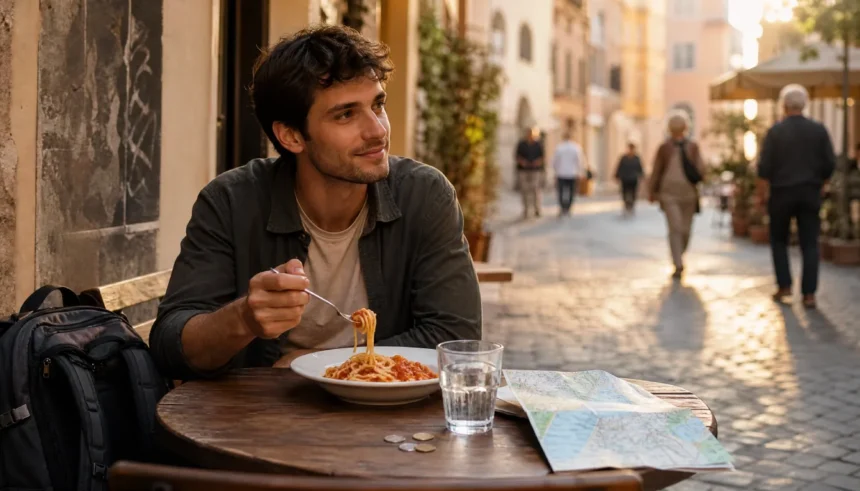
I still think about a dinner I had in Rome. A tiny place near the Pantheon, no English menu, locals packed around plastic tables. I paid six euros for the best pasta of my life.
Two nights earlier, I had paid thirty euros for a mediocre pizza at a tourist-facing restaurant right on the main square.
Same city. Same budget. Completely different experience.
That gap taught me everything I needed to know about eating well on the road without draining my account. And it had nothing to do with deprivation. It had everything to do with a few simple habits.
If you are tired of watching your food budget explode every time you travel, this guide is for you. These 15 tips will help you eat cheaply on vacation, discover better food, and stop falling for the traps that cost travelers the most money.
1. Set a Daily Food Budget Before You Leave
Before your trip, figure out your food cost per day travel average for your destination. Southeast Asia runs around $10 to $15 per day. Western Europe can push $40 to $60 if you are not careful.
Set a number. Write it down. Check it each night. Having a target keeps you honest and makes every meal a real choice instead of a default.
2. Book Hotels With Free Breakfast
Free breakfast hotel hacks for budget travelers are seriously underrated. A full breakfast can cost $10 to $20 in many destinations. If your hotel includes it, that is money you never spend.
When comparing accommodation prices, always factor in breakfast. A hotel that costs $15 more per night but includes breakfast can actually save you money overall.
3. Eat Where Locals Eat
This is the single most effective food spending tip for tourists. Walk two or three blocks away from the main square or tourist strip, and prices often drop by 40 to 60 percent.
Look for restaurants with handwritten menus, no photos on the walls, and tables full of people who live there. You will eat better and spend far less.
4. Hit the Supermarket First
Grocery shopping tips for travelers on a budget start here: visit a local supermarket within your first hour of arriving somewhere new.
Pick up snacks, fruit, water, and ingredients for simple meals. Supermarket deli meals for travel are a genuine secret weapon. Deli sections in European grocery stores often sell roasted chicken, fresh salads, and hot dishes for a fraction of restaurant prices.
5. Use Hotel Kitchenettes and Hostel Kitchens
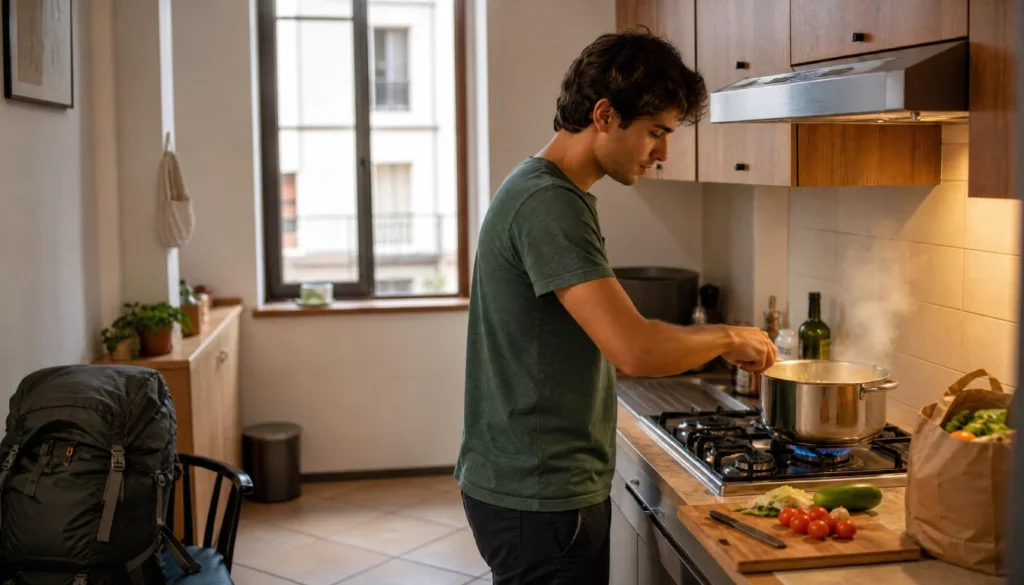
If you know how to cook your own meals while staying in hostels, you can slash your food budget by a third or more. Most hostels have full kitchens. Many Airbnbs have stoves.
Buy ingredients at a local market, cook a simple meal, and pocket the difference. It takes 20 minutes and saves you $15 to $25 per meal.
Grocery delivery to Airbnb for budget meals is even easier now. Apps like Gorillas or local delivery services drop groceries straight to your door in many cities.
6. Eat Street Food Confidently
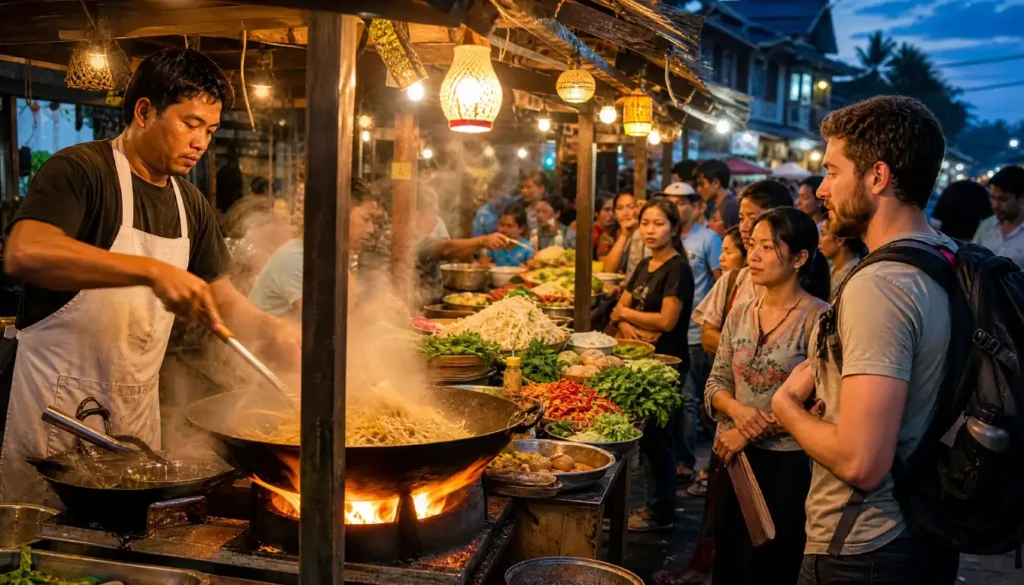
Street food vs restaurants for budget travel is not even a close comparison. Street food wins on price every time, and in many countries, it also wins on flavor.
In Thailand, Vietnam, Mexico, and Morocco, street food is the real local cuisine. A meal at a street stall costs $1 to $3 and is often better than anything you will find in a sit-down restaurant nearby.
A few basic rules for street food safety and savings: look for busy stalls with high turnover, watch the food being cooked fresh, and trust the crowds.
7. Find the Lunch Special
Lunch specials while traveling are one of the most reliable ways to eat at good restaurants without the dinner price tag.
Many restaurants in Europe, Latin America, and Asia offer a set lunch menu for half the price of dinner. You get the same kitchen, the same quality, and a smaller bill. Make lunch your main meal and keep dinner light and cheap.
8. Take Advantage of Happy Hour Food Deals
Happy hour food deals for travel are common in many cities, especially in the US, UK, and parts of Latin America.
Bars and restaurants often offer discounted drinks and free or cheap bar snacks from 4 PM to 7 PM. In cities like Madrid and Barcelona, some bars still bring out free tapas with every drink you order. Timing your snack break right can save $10 to $20 per day.
9. Carry a Reusable Water Bottle
Buying bottled water while sightseeing adds up fast. In many destinations, tourists spend $3 to $5 per day just on drinks. A water filter bottle to avoid buying bottled water pays for itself in two days.
Reusable water bottle savings for travel is real math. $4 per day, 14 days, two people = $112 back in your pocket.
The same logic applies to travel coffee. A travel coffee maker’s money-saving approach works well for digital nomads and road trippers. Making your own morning coffee instead of buying it daily can save $5 to $7 per person every single day.
10. Pack Smart Snacks for Day Trips
Bulk snack packing for day trips keeps you from paying tourist prices when hunger hits mid-afternoon. Grab nuts, dried fruit, crackers, and a piece of fruit from the grocery store each morning.
This is especially useful in theme parks, airports, and popular tourist sites where food prices are often two to three times higher than normal. Travel food container ideas to save money on takeout include collapsible bowls and leakproof containers you can refill from market stalls.
11. Visit Public Markets Early
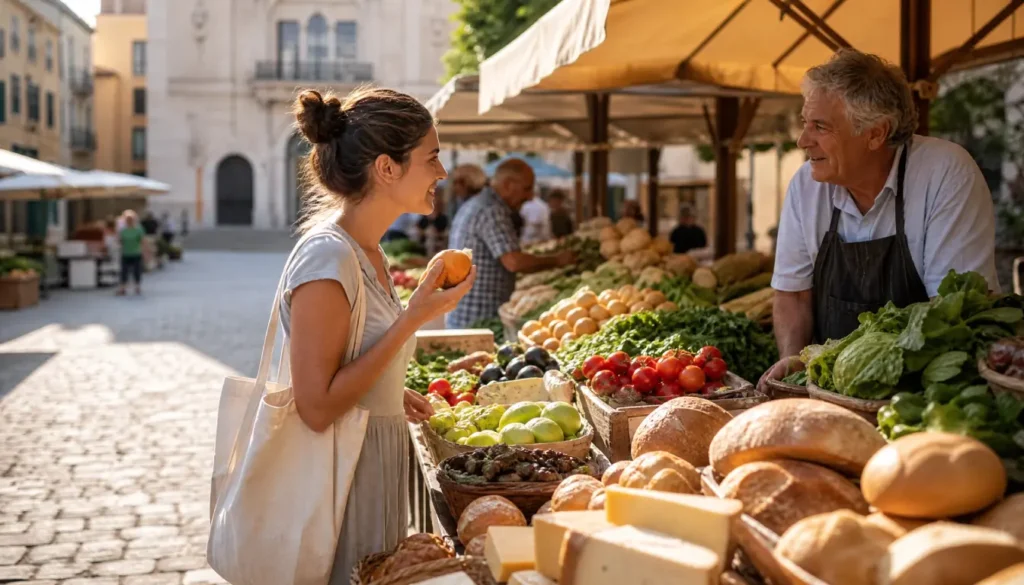
Using public markets to eat cheaply while traveling is one of the best experiences you can have on the road, and it costs almost nothing.
Public food markets are where locals shop. You will find fresh produce, prepared foods, local specialties, and real prices. Show up early for the best selection. Many vendors reduce prices in the last hour before closing, too.
Picnic travel ideas work perfectly here. Buy cheese, bread, olives, and fruit at a market and eat in a nearby park. It costs $5 to $8 and often beats any restaurant meal nearby.
12. Use Apps to Find Cheap Eats
The best apps to find cheap eats while traveling include:
- Yelp and Google Maps: Filter by price point and sort by distance
- TheFork: Restaurant discounts in Europe
- HappyCow: Best for vegetarian and vegan budget spots
- Olio: Free food from locals in some cities
- Too Good To Go: Surplus restaurant meals at 50 to 70 percent off
Best travel apps for restaurant deals and discounts keep improving. Check what is available in your specific destination before you arrive.
13. Choose Self-Catering Accommodation When It Makes Sense
If you are traveling for more than a week, an all-inclusive vs self-catering family food budget is worth calculating carefully.
Self-catering with a kitchen gives you control. You buy what you want, cook what you like, and spend what you choose. For families especially, this often saves $40 to $80 per day compared to eating every meal out.
For digital nomads doing slow travel, the monthly food budget for digital nomads in places like Chiang Mai or Lisbon stays very manageable when you cook at home most nights and eat out for lunch.
14. Avoid Obvious Tourist Traps
How to avoid tourist trap restaurants and save money starts with pattern recognition. If the restaurant has:
- A menu with photos of every dish
- A person standing outside calling you in
- A prime location right next to a landmark
- Prices that feel oddly round and familiar
Walk away. These places charge two to three times the local rate for food that is rarely worth it.
Saving money on breakfast while traveling is especially easy once you stop eating at hotel cafes on the main strip. A local bakery or corner cafe near a residential street will charge half the price.
15. Use Credit Cards With Dining Rewards
Credit cards with dining rewards for travelers are worth carrying even if you spend carefully. Some cards give 3 to 5 percent cashback on restaurant spending abroad with no foreign transaction fees.
Over a two-week trip with moderate food spending, that adds up. Pair this with discounted gift cards for chain restaurants while traveling in the US, and you extend your budget further with very little effort.
Quick Comparison: Eating Out vs. Self-Catering
| Meal Type | Average Cost (Per Person) | Savings Potential |
|---|---|---|
| Tourist restaurant | $20 to $35 | Low |
| Local restaurant | $8 to $15 | Medium |
| Street food | $2 to $6 | High |
| Supermarket meal | $4 to $8 | High |
| Self-cooked hostel meal | $3 to $6 | Very high |
FAQs
How much should I budget for food while traveling?
A reasonable daily food budget depends on your destination. Budget $10 to $20 per day in Southeast Asia, $20 to $35 in Latin America and Eastern Europe, and $40 to $60 in Western Europe or North America if you are eating out for most meals. Cooking your own meals can cut these numbers by 40 to 60 percent.
Is it cheaper to eat street food or cook while traveling?
Both are budget-friendly, but street food usually wins for convenience and experience. Cooking your own meals saves the most money over longer trips. The best approach combines both: street food for lunch, self-cooked meals for breakfast and dinner.
What food should I pack for a long trip to save money?
Pack non-perishable snacks like nuts, protein bars, dried fruit, crackers, and instant oats. These cover you during travel days, delays, and moments when cheap food is hard to find. A reusable water bottle and small travel coffee setup add meaningful savings on top.
Can you save money by booking hotels with free breakfast?
Yes, if the breakfast is substantial. A hotel that includes a full breakfast can save you $10 to $20 per person per day. Always factor breakfast value into your accommodation comparisons, not just the room rate.
How do I find cheap local restaurants when traveling?
Walk away from tourist areas. Use Google Maps to search neighborhoods where locals live. Look for restaurants without English signs, with handwritten menus, or with no photos. Read recent reviews from locals if possible. Lunch is almost always cheaper than dinner at the same restaurant.
Final Thoughts
Eating on a travel budget does not mean eating badly. Some of the best meals I have ever had cost less than a coffee back home.
The real skill is learning to shop where locals shop, eat when and where locals eat, and stop paying a tourist premium for the same food at the wrong address.
Start with one or two of these tips on your next trip. Build the habit of checking prices, carrying snacks, and finding the lunch special. You will be surprised how quickly your food budget shrinks without any of the enjoyment disappearing with it.
Which of these tips are you planning to try first? Drop a comment below and share what has worked for you on the road. If someone in your life is planning a trip, share this article with them. It might save them more than they expect.