
You want to earn your own money and build real skills, but you don’t know where to start. Between classes, assignments, and a tight budget, freelancing can feel out of reach without a portfolio or connections.
You’re not alone. Most students worry about getting scammed, not knowing what to charge, or thinking no one will hire someone still in school.
Here’s the truth. If you want to know how to start a freelance business as a college student with no experience, you don’t need a resume full of clients. You need a laptop, a few free hours a week, and a plan that actually works.
I started exactly where you are. Zero experience, one laptop, and a couple of open evenings between classes. Within two months, I made my first $500. Below is the exact system I used, broken into five steps you can follow this week.
Step 1: Pick a Freelance Skill You Already Have (or Can Learn in a Weekend)
You don’t need years of training to start freelancing in college. You need one skill that solves a problem for someone else.
Look at what you already do well. Are you the friend who edits everyone’s essays? Do you make decent Instagram graphics for your club? Can you write a clear paragraph without much effort? These are marketable skills.
If nothing comes to mind, pick one of these and learn the basics in a weekend:
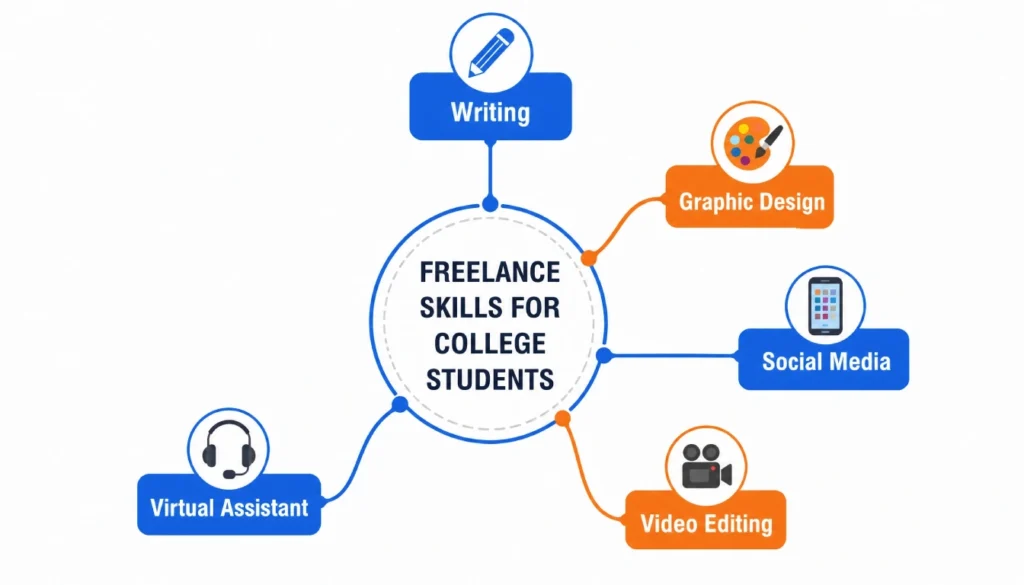
- Writing (blog posts, product descriptions, social captions)
- Graphic design (Canva templates, logos, simple branding)
- Social media management (scheduling posts, writing captions)
- Video editing (short-form content for Reels and TikTok)
- Virtual assistant work (inbox management, data entry, scheduling)
Free YouTube tutorials and Canva’s built-in guides can get you from zero to “good enough to get paid” in a few days. You’re not aiming for perfect. You’re aiming for useful.
Step 2: Build a Portfolio That Lands Clients, Even With Zero Experience
Here’s what stopped me for weeks. I had no portfolio, so I felt like I had nothing to show. That belief was wrong.
A portfolio doesn’t need real clients. It needs proof you can do the work.
When I needed my first writing sample but had no clients yet, I wrote a 500-word post on Medium about a topic I loved. I linked it in my proposal and landed a $50 order within a week. A portfolio can be one published piece. You just need to show you can execute.
Try this instead of waiting for a client:
- Writers: publish two or three sample articles on Medium or a free WordPress blog.
- Designers: create three mock projects for a fake or real brand you admire.
- Video editors: edit a short clip from public domain footage or your own phone videos.
- Social media managers: build a sample content calendar for a local business you like.
Put these in a free Notion page or Google Drive folder. That’s your portfolio. Update it every time you land real work.
Step 3: Set Beginner Rates That Don’t Undersell You (But Still Get Hired)
Pricing overwhelms almost every new freelancer. Charge too much and no one bites. Charge too little and you burn out for pennies.
Here’s a simple starting range for common student gigs:
- Writing: $15 to $25 per 500-word article
- Graphic design: $10 to $20 per social media graphic
- Video editing: $20 to $40 per short-form video
- Virtual assistant work: $10 to $15 per hour
Start at the lower end of your category for your first three to five clients. Once you have testimonials, raise your rate by 10 to 20 percent every few projects. Your first client review is worth more than a higher price tag right now.
If you’re stuck in pricing overwhelm, do these three things today:
- Pick one service and one starting price from the ranges above.
- Write it down somewhere visible, like a sticky note on your laptop.
- Quote that exact number to your first three inquiries without changing it.
Consistency builds confidence faster than second-guessing every quote.
Step 4: Where and How to Find Your First Paying Clients as a Student
This is the part that scares most students. You’re not doing cold outreach to strangers first. You’re starting with people who already trust students like you.
If you’re stuck in “no one will hire a student” mode, follow these three steps today:
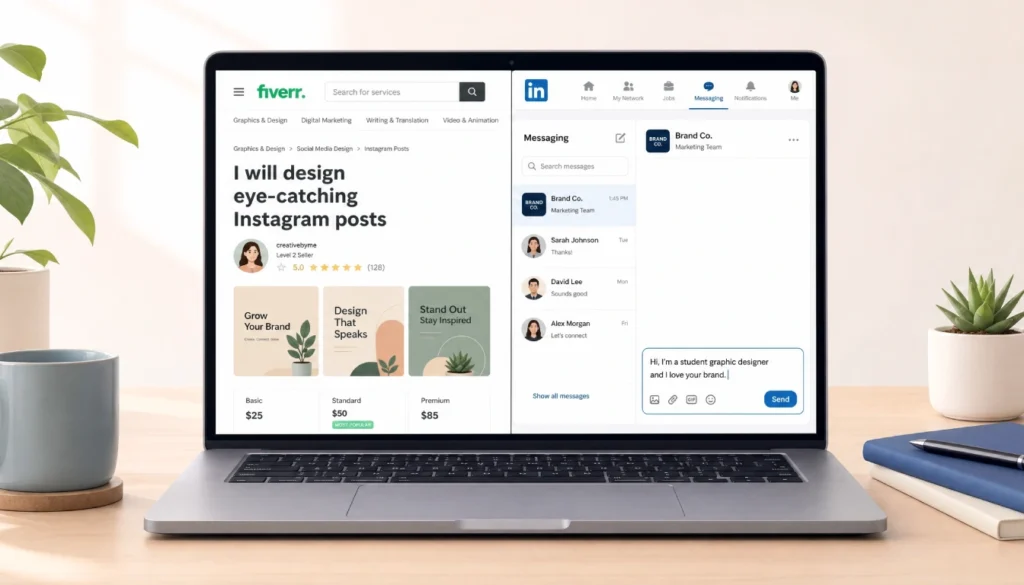
- Create a focused Fiverr gig with a specific title, like “I will design 3 Instagram story templates for your brand.”
- Check your university’s Facebook groups or LinkedIn, find three small businesses run by alumni, and send a short, personalized message offering a free sample.
- Deliver that sample within 48 hours and ask for a short testimonial. One good review changes everything.
Other places to look for your first clients:
- Fiverr and Upwork for beginner-friendly gigs
- Your university’s alumni LinkedIn group
- Local small business Facebook groups in your college town
- Classmates and professors who run side projects
- Discord communities built around your specific skill
Small, local, and student-friendly clients are far more forgiving than big brands. Start there.
Step 5: The Study-Freelance Balance, Time Management Hacks for Real Students
Freelancing while studying only works if your grades don’t suffer. I learned this the hard way during midterms week, when I accepted three projects and almost missed a deadline for a client and an exam on the same day.
Here’s what fixed it:
- Block two set days a week for client work, not every evening.
- Use your syllabus to plan freelance deadlines around exam weeks in advance.
- Turn down projects that need same-day turnaround during finals.
- Keep one shared calendar for classes, assignments, and client deadlines.
What I wish I knew in my first semester: I only had two free hours on Tuesday and Thursday, and I still made it work by saying no to rush jobs. Dorm Wi-Fi crashed twice during client calls, so I switched to messaging clients instead of video calls whenever possible. Protecting two hours consistently beat squeezing in random hours everywhere.
Treat those two hours like a class you can’t skip. Clients respect clear availability more than constant “yes.”
5 Costly Mistakes College Student Freelancers Make (and How to Dodge Them)
Mistake 1: Underpricing to seem competitive. This attracts clients who don’t respect your time. Set a fair starting rate and hold it.
Mistake 2: Skipping a written agreement. Even a simple email confirming scope and price protects you. Always get terms in writing before starting work.
Mistake 3: Overcommitting during exam season. Turning down one project is better than delivering late work to two clients.
Mistake 4: Ignoring niche focus. “I do everything” gets ignored. “I design Instagram templates for coffee shops” gets booked.
Mistake 5: Ghosting clients when school gets busy. A short heads-up email about a delay keeps the relationship intact. Silence ends it.
FAQs
Do I need a business license to freelance in college?
In most countries, you can freelance as an individual without registering a formal business at first. Check your local rules once you’re earning consistently, since requirements vary by location.
How many hours a week should I freelance while studying?
Start with 3 to 5 hours a week. This is enough to land your first few clients without affecting your grades. Increase only once you’ve proven you can balance both.
Can I freelance with no laptop or expensive software?
Yes. Google Docs, Canva’s free plan, and CapCut cover writing, design, and video editing without any paid tools. Upgrade only once you’re earning enough to justify it.
What if a client doesn’t pay me?
Use platforms like Fiverr or Upwork for your first clients, since they hold payment in escrow. This protects you from unpaid work while you’re still building trust with direct clients.
Is freelancing while studying worth it if I only make a little money?
Yes. Beyond the income, you’re building a portfolio, references, and real client experience before graduation. That head start matters more than the first few paychecks.
Final Thoughts
Learning how to start a freelance business as a college student with no experience comes down to five steps: pick a skill, build proof of work, price fairly, find your first clients where trust already exists, and protect your study time.
You don’t need a business degree or a stacked resume. You need one weekend to learn a skill, one sample project, and one small client willing to give you a shot.
Start today. Pick your skill, write down your starting rate, and send one outreach message before you close this tab. Then come back and tell us in the comments which step you’re on. We read every one.