

You know you should exercise. But the thought of a gym makes you cringe. Crowded rooms, confusing machines, people who seem to know exactly what they’re doing while you stand there guessing.
Here’s the good news. If you want to learn how to start walking for exercise when you hate the gym, you don’t need a membership, equipment, or a single ounce of Lycra. You just need your front door and a bit of a plan.
This guide gives you that plan. A simple first week, a 4-week beginner schedule, and real ways to make walking something you look forward to instead of something you dread.
Why You Don’t Need a Gym to Get Healthier (Science Says So)
Walking is exercise. Full stop. The CDC recommends 150 minutes of moderate activity a week, and brisk walking checks that box completely.
You don’t need to sprint or sweat through your shirt for a workout to count. Your heart doesn’t know the difference between a treadmill and a sidewalk. It just knows you’re moving.
Research on walking consistently links it to lower blood pressure, better mood, improved sleep, and stronger joints. None of that requires a squat rack or a spin class.
Key takeaway: Your body responds to movement, not to the building you do it in.
The “I Hate Exercise” Mindset, and How to Flip It Before You Take a Single Step
I personally hated the gym so much I’d cancel memberships after two visits. I felt out of place, self-conscious, and honestly a little judged. Every machine looked like a puzzle I hadn’t solved yet.
Then, after a health scare, I started walking. Just five minutes to the mailbox and back. No plan, no gear, no goal beyond getting outside.
That tiny act, repeated daily, turned into a 30-minute morning habit. Two years later, I’m 25 pounds lighter, my anxiety is calmer, and I still haven’t set foot in a gym. If I could do it in ratty sneakers, you can do it too.
The mindset shift starts with one idea: exercise doesn’t have to hurt to count. A short, easy walk is still a win.
Your First Week: How to Start Walking When You’re Really Out of Shape
If you’re very out of shape, forget about pace or distance for now. Your only job this week is to build the habit.
Step 1: Redefine “exercise.” A five-minute stroll counts. Give yourself full permission to start small.
Step 2: Separate movement from gym trauma. Walk somewhere that feels safe and pleasant. Your street, a nearby park, even laps around your living room. No changing rooms. No stares.
Step 3: Stack the habit. Attach your walk to something you already do. After your morning coffee, walk for five minutes. Make it automatic enough that you stop negotiating with yourself.
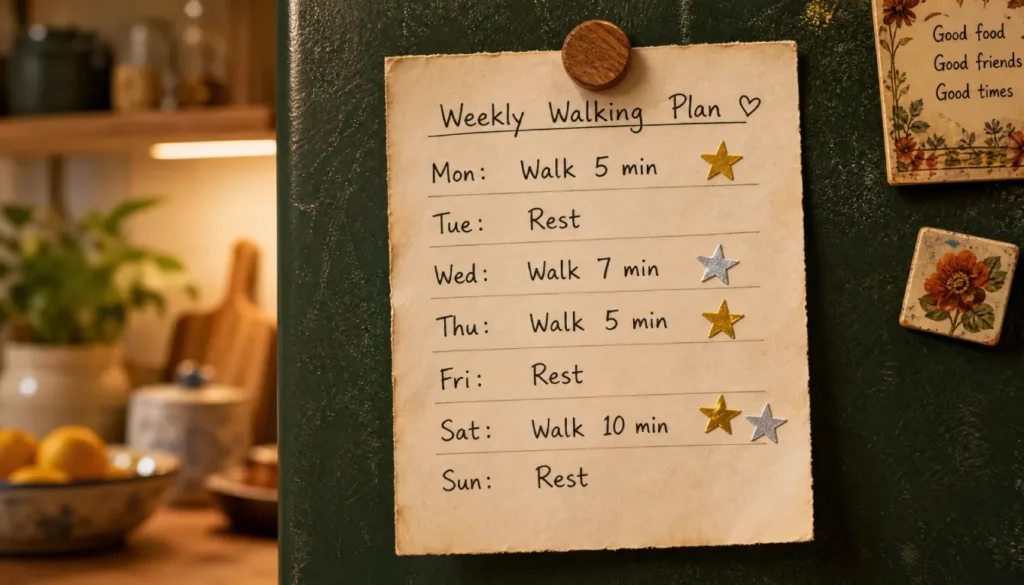
Try this for seven days straight:
- Day 1 to 3: Walk 5 minutes at an easy pace
- Day 4 to 5: Walk 7 minutes
- Day 6: Rest, or stretch for 5 minutes
- Day 7: Walk 10 minutes and notice how it feels compared to Day 1

A 4-Week Walking Plan for Absolute Beginners (No Gym, No Pressure)
This beginner walking plan builds slowly so your body adjusts without burning you out. No gym, no pressure, just consistent short walks that grow over time.
Week 1: Walk 5 to 10 minutes, five days a week, at a comfortable pace.
Week 2: Walk 10 to 15 minutes, five days a week. Add a small hill or incline once if you can.
Week 3: Walk 15 to 20 minutes, five to six days a week. Try picking up your pace for one minute out of every five.
Week 4: Walk 20 to 25 minutes, six days a week. Aim for a pace where talking is easy but singing is hard.
Rest days matter as much as walking days. They let your muscles adapt and lower the risk of burnout before the habit even sticks.
7 Ways to Actually Enjoy Walking (Even If You Usually Hate Every Minute)
I’ve worked with plenty of people who told me walking was boring within the first block. Almost every time, the fix was pairing the walk with something they already loved.
Here’s how to make walking fun when you hate exercise in general:
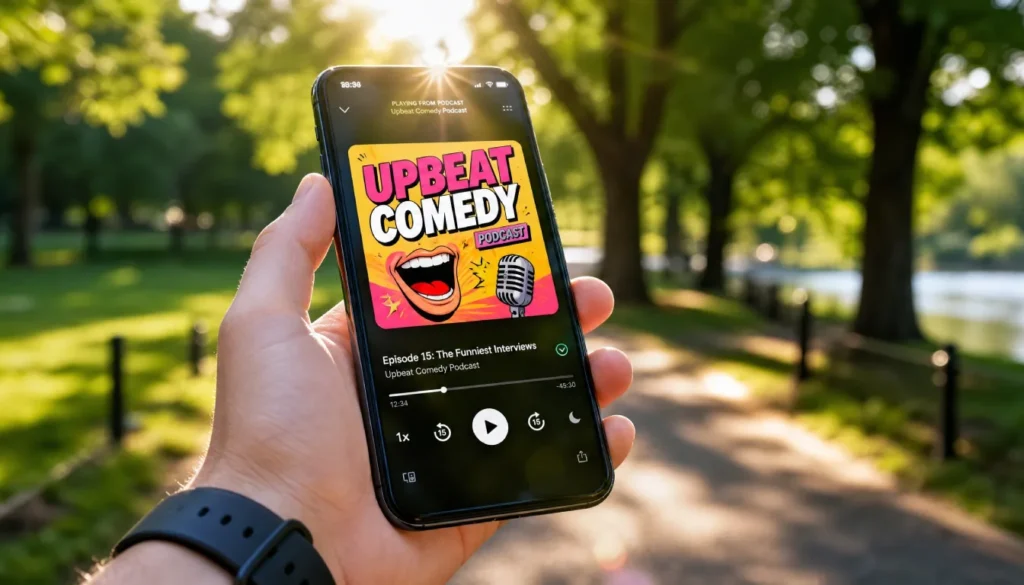
- Play a podcast or audiobook. Save your favorite show for walks only, so you start craving the walk to hear more.
- Build a fast-paced playlist. Upbeat music naturally speeds up your steps without effort.
- Bring a friend or a dog. Company turns a chore into a conversation.
- Explore a new street each week. New scenery keeps your brain engaged instead of counting minutes.
- Set a mini challenge. Beat yesterday’s step count by just 200 steps.
- Walk somewhere with a reward. End at a coffee shop or a park bench with a good view.
- Track your streak, not your speed. A simple checkmark on a calendar builds motivation fast.
What About Weight Loss? Realistic Talk and a Simple Calorie-Burning Strategy
Can Walking Really Help with Weight Loss? (No Gym Needed)
Walking for weight loss without a gym works, but it takes consistency, not intensity. A 30-minute brisk walk burns roughly 150 to 200 calories, depending on your weight and pace.
That number alone won’t melt away pounds overnight. Paired with steady habits and a reasonable diet, though, it adds up fast over weeks and months.
Here’s a simple strategy that works:
- Walk daily instead of occasionally. Consistency beats intensity every time.
- Add 10 minutes to your walk each week once it starts feeling easy.
- Take the stairs, park farther away, and treat every extra step as a bonus.
- Track your walks so progress feels real, not invisible.
Key takeaway: Small, steady steps beat sporadic hard efforts for long-term weight loss.
How to Keep Going When Motivation Disappears
Motivation fades. Everyone’s does. The people who keep walking long-term rely on systems, not willpower.
Here’s what worked for me and for the clients I’ve coached through this exact slump:
- Lower the bar on hard days. A 5-minute walk still keeps the streak alive.
- Walk at the same time daily. Habits stick better with a fixed schedule.
- Give yourself credit for showing up, not for hitting a perfect pace or distance.
- Revisit your reason. Whether it’s energy, mood, or health, write it somewhere you’ll see it.
If you’ve tried and failed before, I see you. Most people don’t fail because walking doesn’t work. They fail because they expect too much, too fast.
Frequently Asked Questions from Fellow Gym-Haters
Do I need special shoes to start walking?
No. Any comfortable, supportive sneakers you already own will work for your first few weeks. Once walking becomes a habit, a proper pair of walking shoes helps prevent soreness.
How long before I see results from walking?
Most people notice better mood and sleep within one to two weeks. Physical changes like weight loss or improved stamina usually take four to eight weeks of consistent walking.
Is walking enough, or do I need strength training too?
Walking alone improves heart health, mood, and endurance. Adding light strength training later helps with muscle tone and bone density, but it’s not required to start.
What if I miss a day on my walking schedule for absolute beginners?
Skip it and pick up the plan the next day. One missed day doesn’t undo progress. Missing a week in a row from guilt does more damage than the missed day itself.
Can I walk indoors if the weather is bad?
Yes. Laps around your home, a hallway, or an indoor mall all count. The goal is movement, not location.
Your Next Step: Grab the Printable Plan and Lace Up
Learning how to start walking for exercise when you hate the gym comes down to one idea: start small, stay consistent, and make it enjoyable. You don’t need equipment, memberships, or motivation you don’t have yet.
Follow the 4-week plan, pair your walks with something you love, and give yourself credit for every step. That’s the whole system.
If this guide helped, save the printable plan, share it with someone who dreads the gym as much as you used to, and drop a comment below with your Day 1 walk time. Your future self will thank you for starting today.