
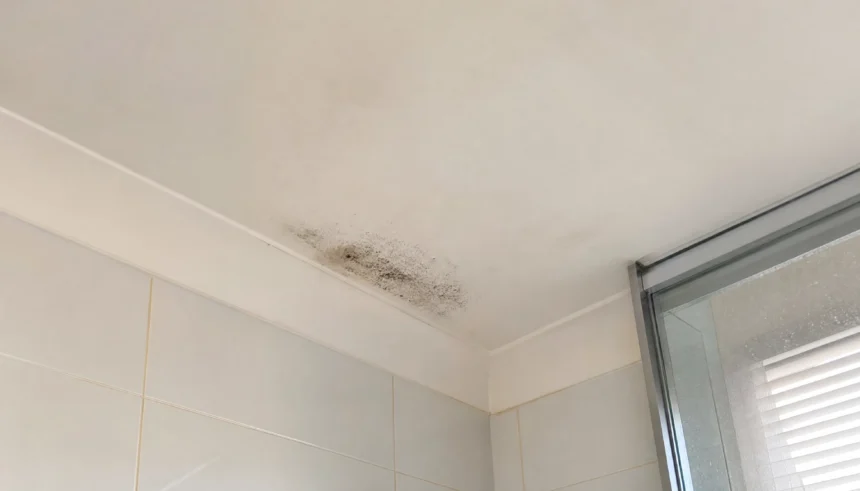
I still remember the morning I looked up while brushing my teeth and saw it. A dark, fuzzy patch spreading across the corner of my bathroom ceiling. Not huge, but definitely there. And definitely mold.
My first reaction? Embarrassment. Like somehow I had failed at basic adulting.
But here’s what I didn’t know then: bathroom ceiling mold is one of the most common household problems out there. It happens in clean homes. It happens in new homes. It happens even when you have an exhaust fan running.
The good news? You can usually fix it for under $10. This article explains exactly why mold keeps showing up on your bathroom ceiling and, more importantly, how to stop it without spending a fortune.
Why Does Mold Grow on Bathroom Ceilings?
Before you grab the bleach, it helps to understand what you’re dealing with.
Mold needs three things to grow: moisture, warmth, and a surface to attach to. Your bathroom ceiling provides all three, every single time you take a hot shower.
When steam rises and hits a cooler ceiling, it turns into condensation. That moisture sits there, soaks into paint or drywall, and gives mold spores the perfect home to settle in. It’s not a hygiene issue. It’s a physics issue.
The Real Causes of Bathroom Ceiling Mold
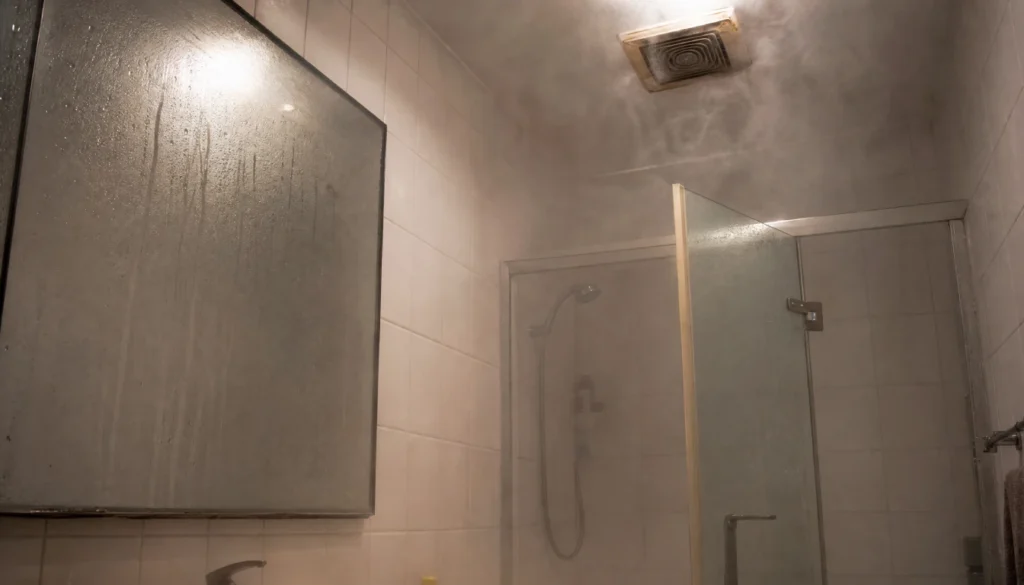
1. Poor Bathroom Ventilation
This is the number one cause. If your bathroom doesn’t have a working exhaust fan, or if the fan is too weak for the room size, moisture has nowhere to go.
Steam just hangs in the air, settles on surfaces, and the mold moves in. Even a fan that technically works may not move enough air to make a real difference.
2. Condensation on the Ceiling
Hot shower water creates steam. Steam rises. Cold ceiling surfaces cause that steam to condense into tiny water droplets. Those droplets sit there long after you’ve dried off and left the room.
Over time, repeated exposure to that moisture is what causes mold spots on bathroom ceilings, especially in corners where air barely circulates.
3. Cold Seasons and Poor Insulation
Mold on bathroom ceilings gets worse in winter. Your ceiling gets colder, so condensation forms faster and dries slower. If the ceiling has poor insulation behind it, this problem compounds quickly.
This is a very common reason why bathroom ceiling mold appears even with a fan running. The fan helps, but the thermal difference between the air and the ceiling surface is the real issue.
4. No Window and No Airflow
Windowless bathrooms trap moisture with no escape route. There’s no cross-ventilation, no natural airflow, nothing to help dry out the room after a shower.
If this is your situation, you’re at higher risk for mold growing on your bathroom ceiling. But the fix is still cheap and doable.
5. Long, Hot Showers
Longer and hotter showers generate more steam. More steam means more condensation. More condensation means more mold. There’s a direct relationship between shower habits and ceiling mold.
Is Bathroom Ceiling Mold Dangerous?
Short answer: it depends on the type.
Most bathroom ceiling mold is mildew or common surface mold. It’s unsightly and musty-smelling, but not immediately dangerous for healthy adults.
Black mold on bathroom ceilings is a different story. True black mold (Stachybotrys chartarum) can cause respiratory symptoms, headaches, and other health issues, especially for children, elderly people, or anyone with allergies.
If the mold covers a large area, keeps coming back fast, or smells extremely strong, it’s worth getting a professional opinion. For small patches, a DIY fix works well.
How to Remove Mold from Bathroom Ceiling Cheaply
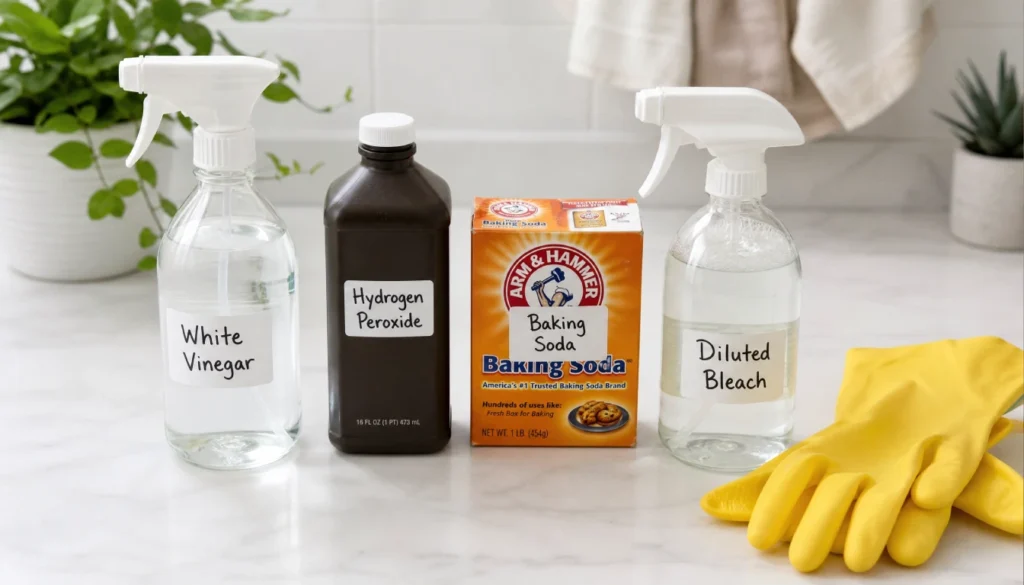
Here’s what actually works, all for under $10.
Option 1: White Vinegar Spray White vinegar kills around 82% of mold species. Pour undiluted white vinegar into a spray bottle, spray the moldy area, wait an hour, then wipe clean. A large bottle costs around $2 at most grocery stores.
Option 2: Hydrogen Peroxide A bottle of 3% hydrogen peroxide from the pharmacy costs about $1.50. Spray it on the mold, let it sit for 10 minutes, and scrub gently with a soft brush. It works well on painted ceilings without damaging the surface.
Option 3: Baking Soda Paste Mix baking soda with a small amount of water to make a thick paste. Apply it to the mold, let it dry, then wipe away. Baking soda also deodorizes, which helps with that musty smell.
Option 4: Diluted Bleach Mix one part bleach with ten parts water. Apply carefully with a sponge or spray bottle. Bleach does kill mold on bathroom ceilings, but it doesn’t prevent regrowth. Use it as a starting point, not a permanent fix.
Quick tip: Always open a window or run the fan while cleaning mold. Wear gloves and keep the area ventilated.
How to Stop Mold on Bathroom Ceiling for $10
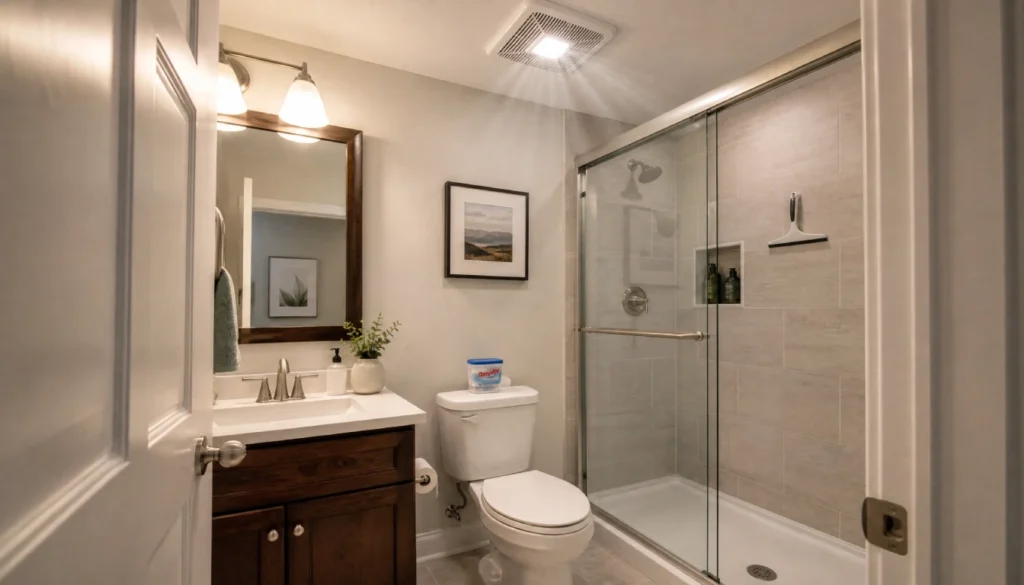
Removing the mold is step one. Keeping it from coming back is what most people miss.
Here are the most effective and budget-friendly prevention methods:
Run your exhaust fan longer. Turn it on before your shower and leave it running for 20 to 30 minutes after you finish. This one habit alone makes a significant difference in bathroom moisture levels.
Buy a moisture absorber. Products like DampRid or a small container of silica gel moisture absorbers cost around $3 to $6 and pull excess humidity out of the air. Place one on a shelf or the back of the toilet.
Squeegee the walls after showering. A small squeegee costs about $3. Wiping down shower walls removes excess water before it turns into steam and rises to the ceiling.
Leave the bathroom door open after showering. This simple, free habit lets moist air escape into the rest of the home rather than settling on your ceiling.
Use anti-mold paint or mold-resistant primer. If you’re already planning to repaint, choose a mold-resistant primer for the ceiling. A small quart can often runs under $10 and significantly reduces future mold growth.
Comparison: Cheap Mold Solutions at a Glance
| Method | Cost | Kills Mold | Prevents Regrowth |
|---|---|---|---|
| White vinegar spray | ~$2 | Yes | Somewhat |
| Hydrogen peroxide | ~$1.50 | Yes | Somewhat |
| Diluted bleach | ~$2 | Yes | No |
| Moisture absorber | ~$4–6 | No | Yes |
| Mold-resistant primer | ~$8–10 | No | Yes |
| Exhaust fan (longer use) | Free | No | Yes |
Special Situations Worth Knowing
Renters: If the mold is extensive and caused by poor ventilation built into the property, your landlord may be responsible for fixing it. Document the issue with photos and request the repair in writing.
Popcorn or textured ceilings: Be gentle when cleaning. Scrubbing too hard can damage the texture. Spray and blot rather than rubbing.
Mold keeps coming back fast: If it returns within days, the moisture source may be more serious. Check for a plumbing leak above the ceiling, or consider getting the ventilation system assessed.
Frequently Asked Questions
Why does mold grow on my bathroom ceiling even with an exhaust fan?
Your fan may be too small for the room, too old to work efficiently, or not running long enough after a shower. Try running it for 30 minutes after you finish and see if that helps.
Does bleach permanently kill mold on bathroom ceilings?
Bleach kills surface mold but doesn’t address the moisture causing it. Without fixing the ventilation or humidity issue, mold will return.
Can I paint over mold on my bathroom ceiling?
You should not paint directly over mold. Clean and dry the surface first, then use a mold-resistant primer before painting. Painting over mold traps it and the problem gets worse underneath.
What household items kill mold on bathroom ceilings?
White vinegar, hydrogen peroxide, and baking soda all work. Vinegar and hydrogen peroxide are the most effective of the three for killing mold spores.
Is mold on a bathroom ceiling dangerous?
Small patches of surface mold or mildew are generally not dangerous for healthy adults. If the mold is extensive, covers a wide area, or you suspect it is black mold, consult a professional.
You Can Tackle This Today
Bathroom ceiling mold feels like a big deal when you first notice it. But once you understand what causes it, the fix is surprisingly simple.
Moisture is the enemy. Cut off the moisture, and the mold has nowhere to go.
Start with a $2 bottle of white vinegar to clean what’s there. Pick up a small moisture absorber while you’re at it. Run your fan longer after every shower. Those three steps alone will make a noticeable difference within a week or two.
You don’t need expensive products or a professional service for most bathroom ceiling mold situations. You just need to address the root cause, which is humidity, and stay consistent.
If you’ve tried any of these fixes or have a trick that works in your bathroom, share it in the comments. Someone else is probably dealing with the same thing and would love to know what worked for you.