
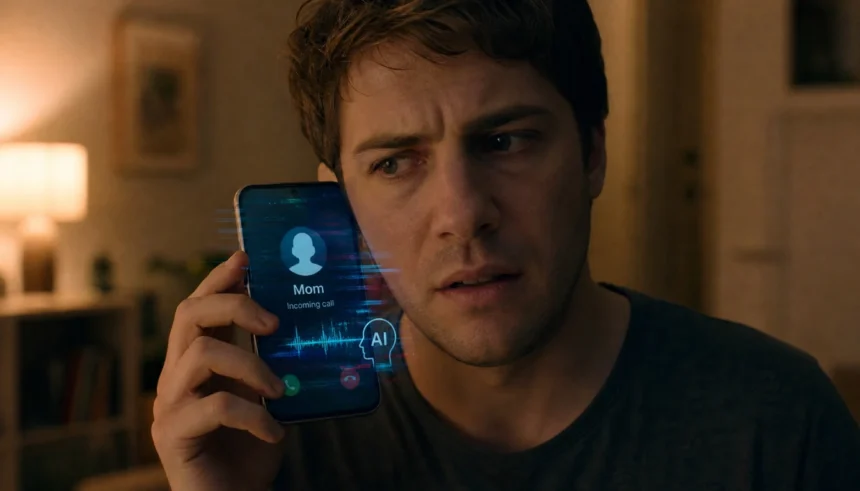
Imagine your phone rings. You pick up and hear your mom’s voice, panicked and crying. She says she’s been in a car accident and needs you to send money right now. You feel your heart drop. You wire the cash immediately.
Then your real mom calls five minutes later to say hello.
That scenario is not from a sci-fi movie. It has happened to real people, in real homes, in 2024 and 2025. And it starts with something called a deepfake voice call.
This article covers exactly what deepfake voice calls are, how scammers use them, and the practical steps you can take to detect and avoid them. Whether you are protecting yourself, your parents, or your business, you need to know this.
What is a Deepfake Voice Call?
A deepfake voice call is a phone call where the caller’s voice has been cloned or artificially generated using AI. The voice sounds like a real person, often someone you know, but it is completely fake.
The term “deepfake” originally referred to fake videos. Now it covers audio too. Deepfake audio calls are sometimes harder to catch because you are relying only on your ears, and your brain is wired to trust a familiar voice.
Here is how it works: scammers collect short audio samples of a target’s voice from social media, YouTube videos, or voicemails. Then they feed those samples into an AI voice cloning tool. Within minutes, they can generate a fake version of that person’s voice and use it live on a call.
This is not some distant future threat. The tools that make this possible are publicly available right now.
Why Deepfake Voice Calls Are So Dangerous
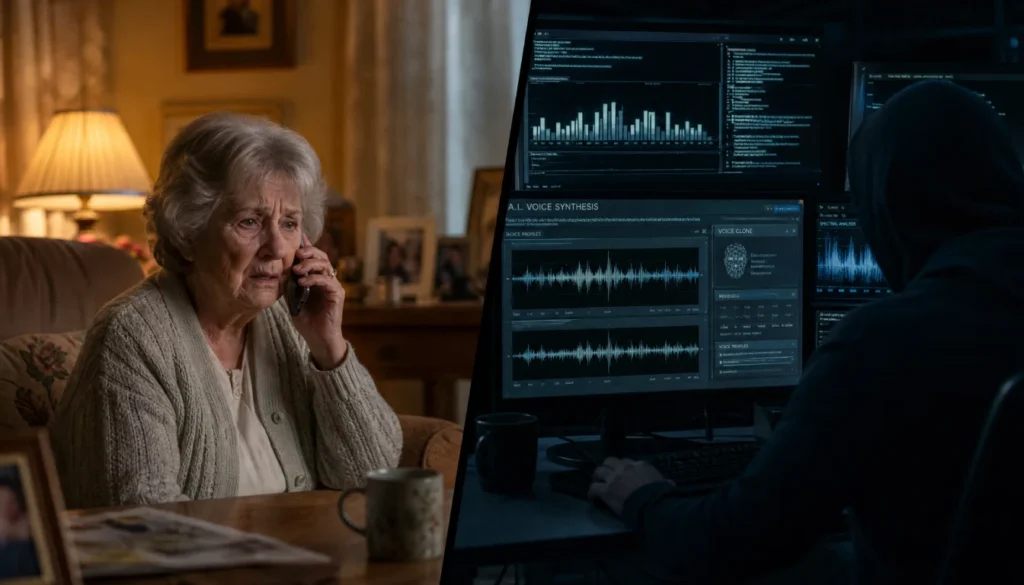
AI voice scams work because they exploit trust. You are not verifying a stranger; you are hearing someone you love or someone in authority.
Research from McAfee found that 77% of voice fraud victims lost money. And with AI voice cloning technology improving every month, even careful people get caught off guard.
Here are the most common deepfake voice call scams right now:
- Family emergency scam. A cloned voice of a loved one calls claiming they are hurt, arrested, or stranded and need cash fast.
- CEO fraud / executive impersonation. A fake voice of a company executive calls a finance team member and requests an urgent wire transfer.
- Bank fraud. A voice that sounds like your bank’s representative asks you to confirm sensitive account details.
- Grandparent scam. Elderly people receive a call from what sounds like a grandchild in trouble. This one is particularly cruel.
- Romance scam deepfake calls. Scammers build emotional relationships online, then use cloned voices to deepen the deception.
The FBI has issued warnings about AI voice cloning calls. These are not rare events. They are rising fast.
How to Detect a Deepfake Voice Call
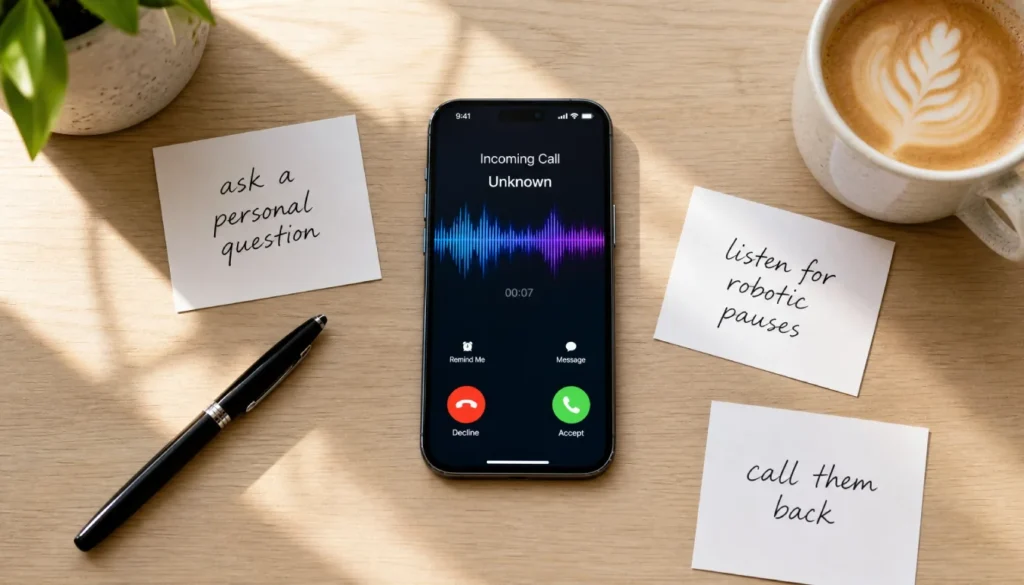
This is the part most people need most. Knowing the signs of a deepfake phone call can save you from a very bad day.
1. Notice Unnatural Pauses or Robotic Rhythm
Cloned voices often have slightly off timing. You might hear a half-second delay before answers, a flat emotional tone, or sentences that sound slightly robotic. Real human speech has natural rhythm, breath, and variation. AI-generated voice calls can miss those tiny details.
Trust that instinct if something feels “off” about how someone sounds.
2. Listen for Background Audio Inconsistencies
Real calls have real background noise. A genuine emergency call would have ambient sounds, shaky breath, or environmental noise that matches the situation. A deepfake call often has either no background noise or audio that does not match what the caller claims to be happening.
3. Ask a Question Only That Person Would Know
This is one of the best deepfake call detection techniques available to you right now, and it costs nothing.
Set up a safe word or a specific question with family members ahead of time. Ask something only that person would know. A cloned voice cannot answer personal questions your family member hasn’t made public.
Examples:
- “What did we name your childhood dog?”
- “What did Mom give you for your last birthday?”
- “What’s our emergency code word?”
4. Watch for Extreme Urgency and Emotional Pressure
Deepfake scam calls almost always push you to act fast. They want you panicked and moving before you think clearly. Legitimate emergencies allow you to verify. If a caller is pressuring you to send money immediately, hang up and call back the person directly on their known number.
Urgency is the scammer’s best tool. Slow down.
5. Call Back on a Number You Already Have
Never trust a number that called you. If you receive a suspicious call from someone claiming to be your bank, your boss, or a family member, hang up and call them back on a number you have saved yourself. A deepfake caller cannot redirect a call you initiate.
Deepfake Voice Detection Tools You Can Use
Technology is catching up, and there are some tools and apps emerging to help detect AI-generated voice calls.
| Tool / Method | What It Does | Best For |
|---|---|---|
| Hiya, Truecaller | Flags suspicious calls in real time | Everyday phone users |
| Pindrop | Analyzes voice authenticity for enterprises | Banks, call centers |
| AI deepfake voice detectors (online) | Upload a recording for analysis | Post-call verification |
| Spectrogram analysis | Examines voice frequency patterns | Researchers, IT professionals |
For most people, the low-tech solutions (safe words, callbacks, slowing down) are the most practical. The apps above help, but human awareness is still your strongest defense.
Quick Tips to Protect Yourself from Deepfake Voice Scams
Keep these in mind and share them with people you care about:
- Set a family code word for emergencies. Everyone in your household should know it.
- Limit voice content on public social media. Scammers harvest audio from videos and voice notes.
- Never send money based on a phone call alone, no matter how convincing.
- Tell elderly relatives about deepfake voice scams targeting seniors. They are the most targeted group.
- If a call feels wrong, trust that feeling and hang up.
- Report deepfake voice calls to the FTC at reportfraud.ftc.gov or your local cybercrime authority.
For Businesses: Protecting Your Team

If you run a company, deepfake vishing protection for enterprises needs to be part of your security training.
The CEO deepfake fraud problem is real. Scammers impersonate executives and push employees to transfer large sums. In one well-documented case, a company lost $25 million after employees received a deepfake video call from what appeared to be the CFO.
Steps your business should take:
- Train employees to verify all financial requests through a second channel.
- Require verbal password confirmation for sensitive transfers.
- Use enterprise-grade voice authentication tools for high-risk communications.
- Run deepfake social engineering training at least once a year.
Frequently Asked Questions
What does a deepfake voice call actually sound like?
Most sound surprisingly natural. Minor giveaways include slight robotic rhythm, unnatural pauses, or a voice that matches someone you know but feels slightly flat emotionally. Modern AI voice cloning is advanced enough that short calls can fool most people.
Can deepfake voice be detected during a live call?
It is difficult in real time without specialized tools. Your best protection is behavioral awareness: slow down, ask verification questions, and call back on a trusted number.
Are deepfake voice calls illegal?
Using a cloned voice to commit fraud is illegal in most countries. However, simply creating a deepfake voice is often a legal gray area depending on jurisdiction. Laws are evolving to address this, but enforcement lags behind the technology.
Is there a free app to detect deepfake voice calls?
Some tools like Truecaller flag suspicious numbers. For recording analysis, a few free deepfake voice detector tools exist online. None are perfect, and awareness is still your best tool.
How do I report a deepfake voice call?
In the US, report it to the FTC at reportfraud.ftc.gov and the FBI’s Internet Crime Complaint Center at ic3.gov. Save any voicemails or recordings as evidence.
You Are More Prepared Than You Think
Deepfake voice technology is advancing fast. That is real, and it is worth taking seriously. But knowing that it exists already puts you ahead of most people.
You now know what a deepfake voice call is, how AI voice scams work, and what to do when something feels off. You have practical steps you can use today, tools you can explore, and a checklist you can share with family.
Set up that code word this week. Have a five-minute conversation with your parents or your team. It takes almost no time, and it could prevent a very costly mistake.
If this article helped you, share it with someone who needs it. And if you have ever received a suspicious call or have questions about deepfake call detection, drop them in the comments. Conversations like these are how we all stay one step ahead.