
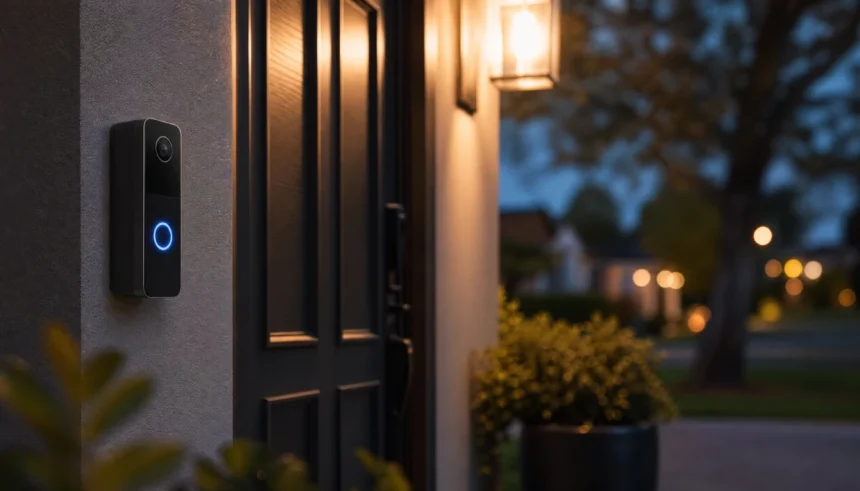
A few months ago, my smart doorbell caught a package thief in real time and sent me an alert before he even reached my porch. No delay. No spinning loading icon. Just instant recognition.
I got curious. How did a tiny camera process video that fast without sending it to some far-away server first? That question sent me down a rabbit hole, and at the bottom of it was a term I kept running into: edge AI.
If you have ever wondered how your phone unlocks with your face in a split second, or how a factory robot catches a defect before a human even blinks, you have already met edge AI. You just did not know its name yet.
This guide breaks it down in plain language. No jargon. No confusing tech talk. Just a clear explanation of what edge AI is, how it works, why it matters, and where you will find it in your everyday life.
What Is Edge AI, Really?
Edge AI is artificial intelligence that runs directly on a device instead of a distant data center. Think of your phone, your car, your smartwatch, or a security camera. The AI lives right there, on the device itself.
This is different from traditional cloud AI, which sends your data to a remote server, waits for it to process, then sends the answer back. That trip takes time. Edge AI skips the trip entirely.
In simple words, edge AI means the “thinking” happens close to where the data is created. The device does not need to ask permission from a server far away. It just processes and responds.
How Edge AI Works, Step by Step
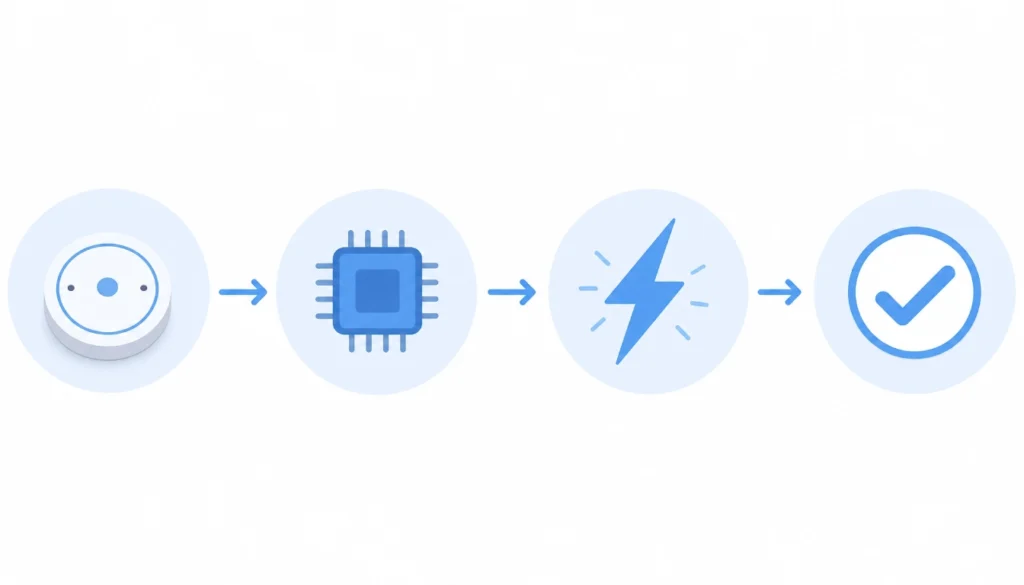
Understanding how edge AI works does not require an engineering degree. Here is the basic process, broken into simple steps.
- Data gets collected. A sensor, camera, or microphone picks up information nearby.
- The device processes it locally. A small chip built for AI tasks runs the calculations right there on the device.
- A decision gets made instantly. No waiting for a server response.
- Action happens in real time. Your phone unlocks, the alert fires, the machine stops.
This local processing is possible because of specialized edge AI chips and lightweight AI models. These models are trained to be small and fast, so they fit on compact hardware without needing massive computing power.
Edge AI vs Cloud AI: What’s the Difference?

This is probably the most common question beginners ask. Let’s clear it up with a simple comparison.
| Feature | Edge AI | Cloud AI |
|---|---|---|
| Where processing happens | On the device | On a remote server |
| Speed | Instant, low latency | Slower, depends on internet speed |
| Internet required | Often works offline | Needs a stable connection |
| Privacy | Data stays local | Data travels to servers |
| Power use | Optimized for small devices | Uses large-scale computing power |
| Best for | Real-time tasks, sensitive data | Heavy tasks needing lots of computing |
Neither one is better across the board. They serve different purposes. Many modern systems actually use both together, letting the edge handle quick decisions while the cloud manages deeper analysis.
Why Edge AI Matters for Everyday People
You might be thinking, “This sounds technical, but why should I care?” Fair question. Here is why edge AI actually affects your daily life more than you realize.
It protects your privacy. Since your data does not need to leave your device, there is less risk of it being intercepted or stored somewhere you cannot control. Your face scan, your voice command, your health data. It stays with you.
It works without internet. Ever notice how your phone camera can still recognize faces or objects with no signal? That is edge AI doing its job offline.
It responds instantly. A self-driving car cannot wait two seconds for a cloud server to confirm there is a pedestrian ahead. Edge AI reacts immediately, which can genuinely save lives.
It saves battery and bandwidth. Local processing often uses less energy than constantly streaming data back and forth to a server.
Real World Examples of Edge AI in Action
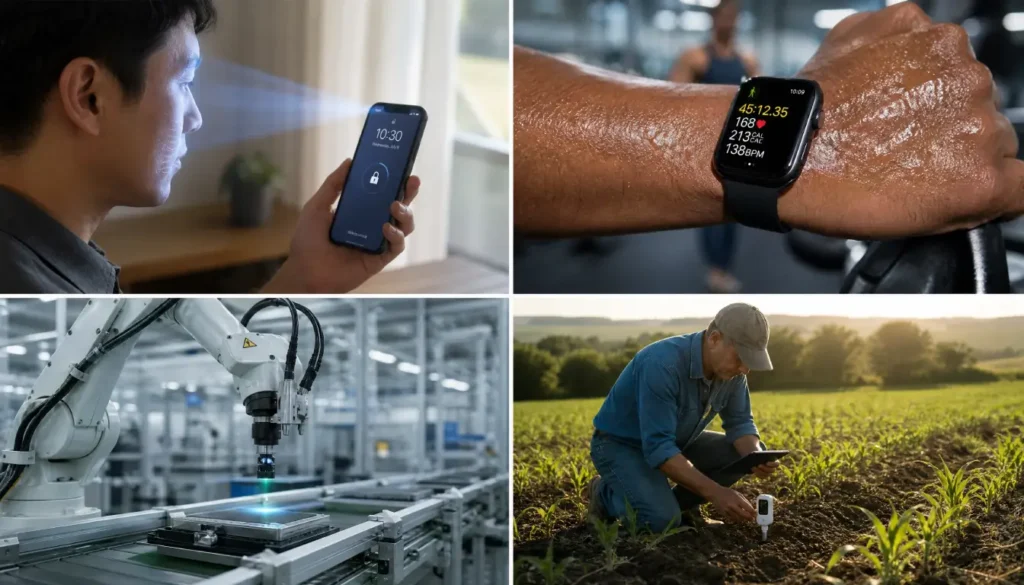
Edge AI is not some future concept. It is already woven into products you probably use today.
- Smartphones: Face unlock, voice assistants, and photo enhancement all use on-device AI processing.
- Smart home devices: Doorbell cameras and smart speakers detect motion or respond to voice commands without cloud delay.
- Healthcare wearables: Fitness trackers and smartwatches monitor heart rate and detect irregular patterns in real time.
- Manufacturing: Machine vision systems on factory floors catch product defects the instant they appear.
- Autonomous vehicles: Self-driving cars use edge AI to detect obstacles, read signs, and make split-second decisions.
- Retail stores: Some stores use edge AI for inventory tracking and understanding customer foot traffic patterns.
- Agriculture: Farmers use edge AI sensors to monitor soil conditions and detect crop issues early, right in the field.
Key Technologies Behind Edge AI
If you want to sound like you know your stuff, here are a few terms worth knowing.
TinyML: A field focused on building extremely small, efficient AI models that can run on tiny devices with limited memory and power.
Edge inference: The process of an AI model making predictions or decisions using data collected right there on the device.
Neuromorphic computing: A newer approach that designs chips to mimic how the human brain processes information, making them faster and more efficient for certain AI tasks.
Federated learning: A method where multiple devices learn from local data and share only improvements, not raw data, helping protect privacy while still improving AI models over time.
You do not need to memorize these. Just knowing they exist gives you a solid foundation as you explore edge AI further.
Common Mistakes Beginners Make When Learning About Edge AI
I made a few of these mistakes myself when I first started reading about this topic. Save yourself the confusion.
- Assuming edge AI replaces cloud AI entirely. It does not. They often work together.
- Thinking edge AI requires expensive hardware. Affordable options like Raspberry Pi and Google Coral make it accessible for hobbyists too.
- Believing edge AI is only for tech experts. Beginner-friendly kits and tutorials exist for anyone curious enough to try.
- Ignoring the privacy benefits. Many people overlook this, but it is one of the strongest reasons edge AI matters right now.
Quick Tips for Getting Started With Edge AI
If this topic has you curious enough to explore further, here are a few practical next steps.
- Start with a Raspberry Pi or Arduino kit designed for beginner AI projects.
- Look into free tutorials on platforms like YouTube that walk through simple edge AI setups.
- Try a small object detection project using an affordable camera module.
- Join an online community focused on edge computing to ask questions as you learn.
- Read case studies from industries like healthcare or agriculture to see edge AI applied in real settings.
Frequently Asked Questions
What is edge AI in simple words?
Edge AI is artificial intelligence that runs directly on a device, like a phone or camera, instead of relying on a distant server to process information.
Is edge AI the same as edge computing?
Not exactly. Edge computing refers to processing data closer to where it is generated. Edge AI specifically applies artificial intelligence within that local processing setup.
Can edge AI work without internet?
Yes. One of its biggest advantages is that it can function offline since the processing happens on the device itself.
What are the main benefits of edge AI?
Faster response times, stronger privacy protection, reduced bandwidth use, and the ability to function without a constant internet connection.
What devices commonly use edge AI?
Smartphones, smart home cameras, wearables, industrial sensors, and autonomous vehicles all rely on edge AI to function quickly and reliably.
Final Thoughts on Understanding Edge AI
Edge AI might sound technical at first, but once you break it down, it is simply about bringing intelligence closer to where you actually need it. Faster decisions. Better privacy. Less dependence on a constant internet connection.
You do not need to become an engineer to appreciate what is happening inside your devices every day. Just knowing the basics puts you ahead of most people who use this technology without ever asking how it works.
If you found this guide helpful, I would love to hear your thoughts. Have you noticed edge AI at work in your own devices? Drop a comment, share this with someone who is curious about tech, or try one of the beginner projects mentioned above. You might surprise yourself with what you can build.