You pick up your phone. You call your mom. You talk for ten minutes about dinner plans and the neighbor’s dog. And then, before you hang up, you say some version of “okay, talk soon, bye bye bye.”
That is just how phone calls work.
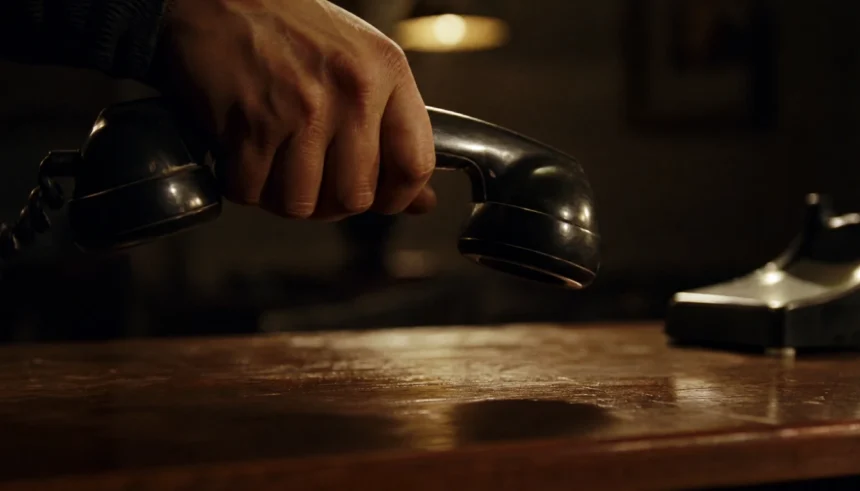
But watch any movie or TV show, and something weird happens. A character gets shocking news over the phone, goes completely silent, and then just… puts the phone down. No goodbye. No “thanks.” Not even a quick “okay.” The scene cuts away like the conversation never needed an ending.
I noticed this years ago and honestly could not stop thinking about it. Once you see it, you see it everywhere. And it turns out there are some genuinely fascinating reasons behind this quirky film convention.
This article breaks down why movie characters never say goodbye on the phone, what screenwriters and directors are actually doing, and why this small trick makes movies feel so much better, even when it seems so unrealistic.
The Movie Phone Call No Goodbye Trope Is Everywhere
This is one of those film clichés that hides in plain sight.
Think about the last thriller you watched. The hero gets a call from the villain. There is tension, a threat, maybe a clue. And then the hero just lowers the phone. Scene over. No pleasantries, no sign-off, nothing.
Or a romantic comedy. She gets called by her love interest, they flirt a little, and she hangs up smiling. No goodbye. Just a grin and a cut.
It shows up in dramas, action films, horror movies, and prestige TV. Characters hang up without saying goodbye in the cinema constantly, and most of us barely register it because we have been trained to accept it.
Why Screenwriters Cut Hellos and Goodbyes
Here is the honest answer: goodbyes waste time.
In real life, phone calls have a lot of social padding. You say hello, you ask how someone is doing, you wrap up slowly, you say goodbye three times before actually hanging up. That is normal and human and completely boring to watch.
Screenwriters are always thinking about narrative economy. Every line of dialogue has to earn its place. If a scene exists to deliver information or create emotion, the “okay, talk to you later” at the end adds nothing. It just delays the next moment.
So they cut it. Simple as that.
The screenwriting rule of no hellos and no goodbyes has been around for decades. It is one of those craft principles you learn early, right alongside “enter scenes late and leave early.” The idea is to drop the audience straight into the middle of what matters and get them out before things go flat.
It Is Really About Pacing and Dramatic Tension
There is another reason this trick works so well, and it goes beyond just saving time.
When a character hangs up abruptly, it creates a small jolt. Your brain notices the missing social ritual even if you do not consciously think about it. That absence creates a feeling. Maybe unease, maybe urgency, maybe emotional weight.
A character who just heard that their father is in the hospital does not need to say “okay, bye, thanks for letting me know.” The goodbye would actually deflate the moment. Cutting away right after the news lands keeps that emotion raw and present.
Editing for pacing is a huge part of this. Directors and editors know that ending a phone scene too cleanly can make it feel resolved too early. The abrupt hang-up leaves the scene slightly open, which pulls the audience forward.
Suspension of Disbelief and Why We Accept It
You might wonder, if this is so unrealistic, why do we not find it annoying?
The answer is suspension of disbelief, and movies train us to use it constantly.
We accept that car chases never end in traffic. We accept that characters always find parking right in front of where they need to go. We accept that people in period dramas have perfect teeth. These are all small unrealities that cinema has normalized because they serve the story.
The movie phone call with no goodbye is in the same category. It is movie logic we have absorbed so thoroughly that it only becomes visible when someone points it out.
After that, you cannot unsee it. Sorry about that.
What This Tells Us About Film Storytelling
There is something bigger going on here, too. This convention reveals a core truth about how movies handle time.
Real conversations have rhythm, repetition, and a lot of filler. Film dialogue, especially in phone scenes, is compressed and purposeful. Cinematic time compression is a tool that makes a 90-minute movie feel complete even though it supposedly covers days, months, or years of someone’s life.
Cutting goodbyes is one small piece of that. Missing goodbyes in film phone scenes are not accidents or lazy writing. They are deliberate choices that prioritize emotional truth over conversational realism.
The scene does not need to feel like a real phone call. It needs to feel true to the character and the story. Those are two very different things.
Do Any Movie Characters Actually Say Goodbye on the Phone?
Yes, sometimes. And when they do, it usually means something.
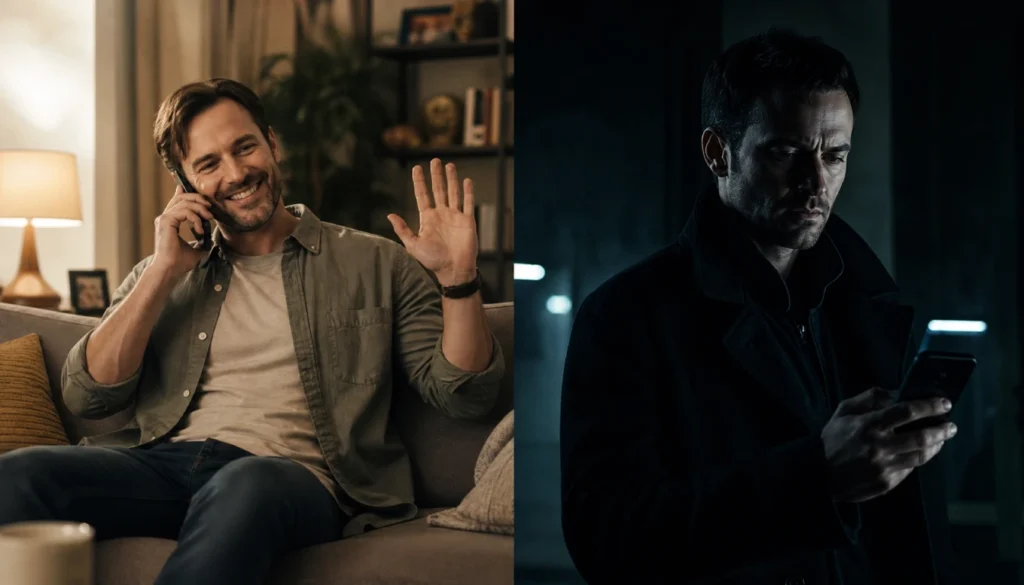
If a character in a film actually wraps up a call properly, saying “okay, love you, bye,” it often signals that the relationship is warm, safe, and normal. Or the director is setting up a contrast, showing you what “ordinary” looks and sounds like before things fall apart.
Some directors use the goodbye deliberately to create irony. A character says a cheerful “talk soon!” to someone about to die. The normal phone etiquette makes the tragedy hit harder because it felt so routine.
So the presence or absence of a goodbye in film phone calls can actually carry meaning. It is one of those tiny directorial details that quietly shape how you feel about a scene.
A Quick Comparison: Real Calls vs. Movie Calls
| What Happens in Real Life | What Happens in Movies |
|---|---|
| “Hello? Oh, hey, how are you?” | Starts mid-conversation |
| Lots of small talk and filler | Only relevant information |
| “Okay, talk soon, bye, bye, bye” | Character just lowers the phone |
| Awkward pauses while someone starts to leave | Scene cuts immediately |
| The call takes however long it takes | Call ends exactly when the story needs it to |
Tips for Spotting This Trope in the Wild
Once you know what to look for, this becomes a genuinely fun thing to track.
- Watch for characters who get big news over the phone and then immediately act on it without any wrap-up.
- Notice how rarely anyone says “hello” at the start of a movie call, either. The scene usually joins the conversation already in progress.
- Pay attention to how quickly the camera cuts away after the emotional peak of a phone scene. That cut is doing a lot of work.
- Notice if a goodbye does appear in a film. Ask yourself why the director included it. There is almost always a reason.
FAQs
Why do characters in movies never say goodbye on phone calls?
It is mostly a screenwriting and editing technique. Phone call pleasantries slow scenes down without adding story value. Cutting hellos and goodbyes keeps pacing tight and emotional moments sharp.
Is there a name for the movie trope where people do not say goodbye on the phone?
It is often called the “no goodbye on the phone” trope or discussed under the broader category of narrative economy and cinematic time compression. Some people refer to it as the “abrupt phone hang-up” convention in screenwriting circles.
Why do TV shows skip saying goodbye during phone calls?
TV has even less time per scene than film. With commercial breaks, shorter episode runtimes, and high episode counts per season, TV writers are trained to cut every non-essential moment. Goodbyes are almost always the first to go.
Are movie phone calls realistic at all?
Not really, and not on purpose. They are written to feel emotionally true rather than conversationally accurate. Real phone call realism would bog down dialogue and kill pacing.
Do directors ever include the goodbye on purpose?
Yes. A proper goodbye in a film phone scene often signals normalcy, warmth, or is used for ironic contrast. If you notice a character saying a full farewell, pay attention. The director probably wants you to feel that moment.
The Goodbye You Never Heard
Here is what I think is the most interesting part of all this.
The missing goodbye is a small lie that serves a bigger truth. Real conversations wander and repeat and take their time. Movie conversations are compressed versions of life, shaped entirely around what the audience needs to feel and understand.
Every “talk soon, bye-bye” that gets cut is a choice to trust the audience. To believe that we do not need the social ritual spelled out. That we can sit with the emotion of the moment instead of being eased out of it gently.
And honestly? That trust is what makes movies feel like more than just recorded conversations.
So next time a character gets devastating news, hangs up the phone in silence, and stares into the distance, notice what is missing. That absent goodbye is actually doing something. It is keeping you inside the moment just a little longer than real life would.
Have you ever noticed this trope in a specific movie or show? Drop the scene in the comments. I would genuinely love to hear which phone call no-goodbye moment got you first.