
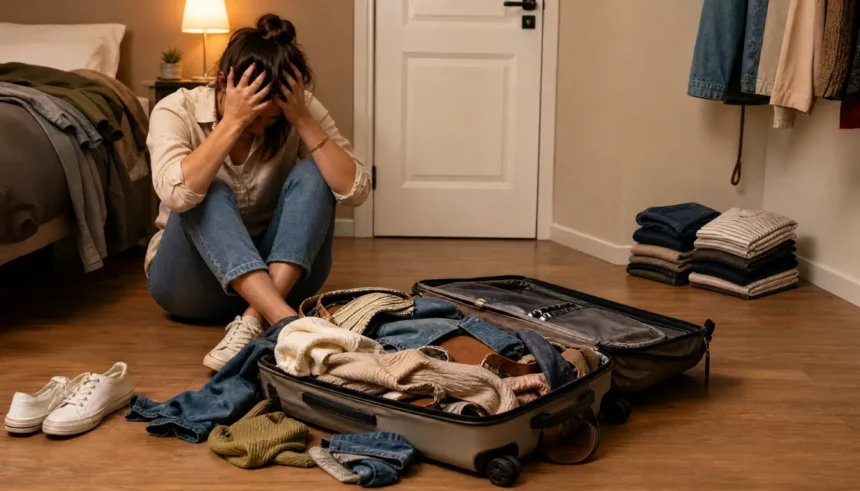
That sinking feeling when your suitcase won’t zip. The extra $50 charge at check-in. The shoulder ache from dragging a bag full of “just in case” outfits you never touched. Overpacking is bad for your back, your wallet, and your trip. This post shows you exactly why it happens and gives you a simple plan to pack light, without feeling like you’re leaving something important behind.
The Real Cost of Overpacking (It’s More Than Just Baggage Fees)
Overpacking hits you in three places: money, time, and energy.
Checked bag fees run $30 to $75 per flight on most airlines. Overweight fees add another $50 to $100 on top. That adds up fast if you travel more than once a year.
Then there’s the physical toll. Hauling a 40-pound suitcase up stairs or across a cobblestone street wears you out before your trip even starts. You spend your first hour in a new city sore and irritated instead of excited.
The hidden cost is decision fatigue. Every extra item is one more thing to dig through, one more thing to lose, one more thing to repack. A lighter bag means a lighter mind.
Why Do We Overpack? The Psychology You Didn’t Expect
Overpacking isn’t a planning failure. It’s a fear response.
Your brain treats an unpacked “what if” scenario as an unsolved problem. What if it rains? What if I need a nice outfit? What if my flight gets delayed? Each question triggers the urge to add one more item, just in case.
Psychologists call this loss aversion. You weigh the pain of not having something higher than the pain of carrying it. So you pack for a version of the trip that probably won’t happen.

Once you name this pattern, it loses power. You start to notice the moment you reach for a “just in case” item and can pause before adding it.
10 Telltale Signs You’re a Serial Overpacker
Check how many of these sound familiar:
- You sit on your suitcase to close it.
- You pack for weather that isn’t in the forecast.
- You bring more than one “backup” outfit.
- You’ve paid an overweight baggage fee more than once.
- You pack shoes for outfits you never actually wear.
- You bring a full-size toiletry bag for a three-day trip.
- You pack “before” you know your itinerary.
- You still have tags on clothes you packed and never wore.
- You need help lifting your bag into the overhead bin.
- You come home having worn less than half of what you packed.
If you nodded along to three or more, the next section is for you.
How to Stop Overpacking: A 5-Step Action Plan
Here’s how I coach my readers through this, step by step.
Step 1: Lay everything out before it goes in the bag. Don’t pack straight from your closet. Put every item on the bed first. Seeing it all at once makes the excess obvious.
Step 2: Sort into “need” and “just in case.” Be honest. If an item is there purely for a hypothetical, set it aside.
Step 3: Cut the “just in case” pile by half. Not all of it. Half. This keeps you from panicking and re-adding everything.
Step 4: Match every item to a real day on your trip. If you can’t say which day you’ll wear it, it doesn’t go in.
Step 5: Pack, then remove one more thing. Once your bag is packed, take out one item you’re least sure about. You rarely miss it.
Packing Methods That Force You to Pack Light
Rules work better than willpower. Here are two that remove the guesswork.
The 5-4-3-2-1 Method
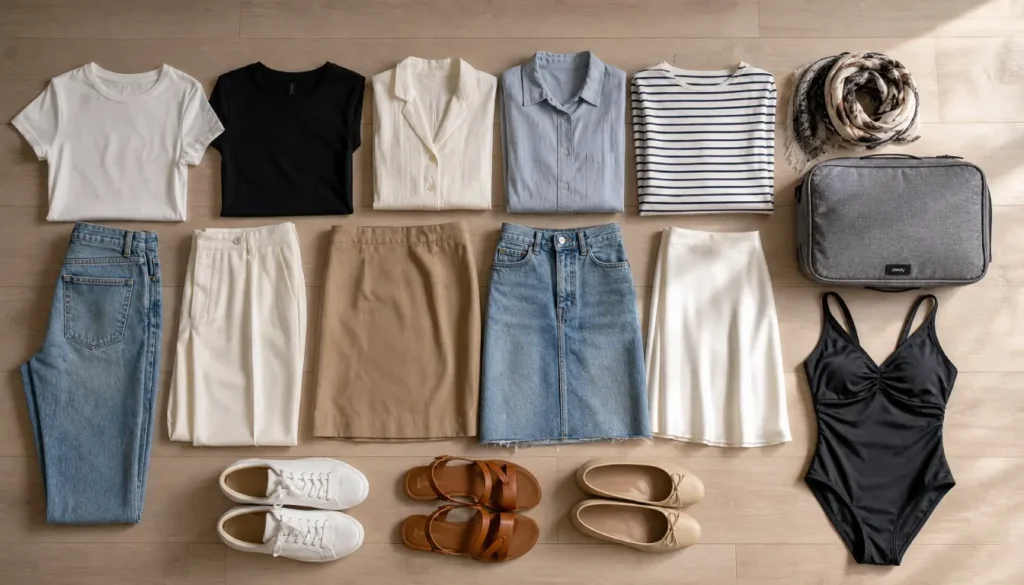
Pack 5 tops, 4 bottoms, 3 pairs of shoes, 2 dresses or jackets, and 1 swimsuit. That’s it. Everything mixes and matches, and you never wonder if you brought enough.
The Capsule Wardrobe
Pick one color palette. Every piece pairs with every other piece. A capsule wardrobe of 10 items can create over 15 outfit combinations without adding a single extra bag.
The Tools That Make Packing Light Almost Automatic
Some tools do the discipline for you.
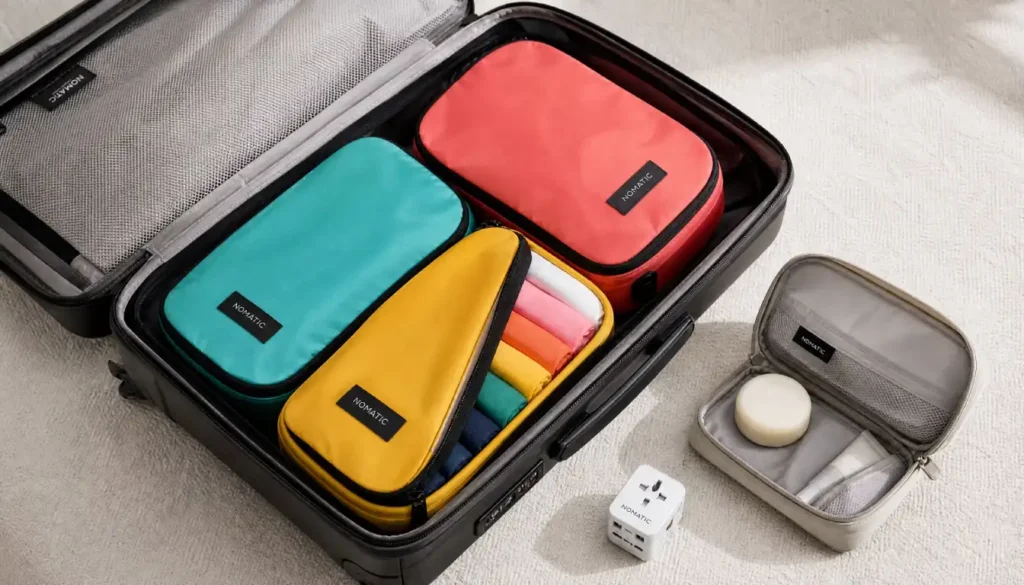
- Packing cubes set a hard limit. If it doesn’t fit in the cube, it doesn’t come.
- A carry-on-only suitcase forces size limits before you even start packing.
- Solid toiletries (shampoo bars, solid deodorant) cut weight and skip the liquid bag rules.
- A minimalist packing list app stops you from re-adding items you already cut.
Your “Don’t Pack” Checklist: What to Leave Behind Every Trip
Skip these on almost every trip:
- A third pair of shoes “just in case”
- Full-size toiletries when travel size exists
- A second jacket for weather you already checked
- Books you haven’t started at home
- Any item you packed “last time and didn’t use”
Overpacking Anxiety: How to Feel Secure with Less
Overpacking anxiety comes from one belief: that having less means you’ll be caught without something you need. Almost every destination sells toothpaste, socks, and phone chargers. You are rarely as stranded as your suitcase makes you feel.
I’ve worked through this with dozens of readers, and the fix isn’t more planning. It’s a smaller container. When your bag is small, your brain stops treating every gap as a risk and starts treating it as normal.
Try this: pack light for a short weekend trip first. Notice what you actually miss. For most people, the answer is nothing.
A Real-Life Example: What I Packed vs. What I Actually Used
I used to be the queen of “just in case” packing. For a four-day business trip, I packed seven tops and four pairs of shoes.
After one trip where I wore only three tops and limped through the airport with a sore shoulder, I tested the 5-4-3-2-1 rule on my next trip. I packed exactly that, did one load of laundry, and never missed a single item.
Here’s what I packed versus what I used on that trip:
| Category | Packed | Actually Used |
|---|---|---|
| Tops | 7 | 3 |
| Shoes | 4 pairs | 2 pairs |
| Jackets | 2 | 1 |
| Toiletries | Full-size kit | Travel-size kit |
That one experiment saved me over $100 in checked bag fees that year, and it’s the reason I now pack this way every time.
Your First Light-Packing Trip Starts Here
Overpacking is bad for your budget, your body, and your peace of mind. But it’s a habit, and habits change with small, repeated proof that less is enough.
Pick one method from this guide. The 5-4-3-2-1 rule is the easiest place to start. Use it on your next trip, even a short one, and pay attention to what you actually wear.
You’ll likely find, like I did, that you needed far less than you thought. That’s the real fix for why overpacking is bad: it’s not a suitcase problem. It’s a trust problem, and you can rebuild that trust one light trip at a time.
Try the 5-4-3-2-1 method on your next trip and tell me in the comments how much lighter your bag felt.