
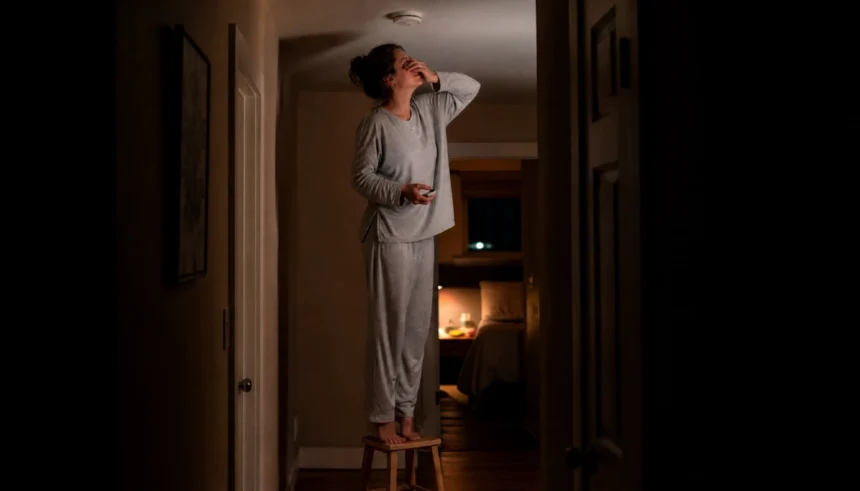
It’s 2:30 a.m. and a single, sharp chirp just pulled you out of a deep sleep. You wait, hoping it was a one-off. Then, thirty to sixty seconds later, it chirps again. The strangest part is that it only happens at night. By morning, it’s silent.
If this sounds familiar, you’re not alone. Why does my smoke alarm chirp at night only is one of the most common questions homeowners search at 3 a.m. Below, I’ll explain the exact reason your alarm waits until dark to chirp, and I’ll show you how to stop it tonight.
Why Your Smoke Alarm Chirps, and Why It’s Almost Always at Night
A chirp is different from a full alarm. It’s a short, single beep that repeats every thirty to sixty seconds. Manufacturers designed it as a low-battery warning, not a fire warning.
Most smoke alarms run on a 9-volt battery or a sealed 10-year lithium cell. As the battery ages, its voltage drops below the threshold the alarm needs to trigger a full alert. The chirp is the alarm telling you it’s running low on power.
Here’s the part most articles skip. Smoke alarm chirping only at night happens because of a simple physics problem: cold air drains battery power faster than warm air. Your house cools down at night, and that temperature drop is often the final push that sends a weak battery below its warning line.
The Cold Truth: How Temperature Triggers Night-Only Chirping
Battery chemistry slows down as temperature drops. A battery that reads fine at 75°F during the day can dip below the alarm’s minimum voltage once the room cools to 65°F overnight.
This is why a chirping smoke alarm only when cold is such a common complaint in fall and winter. Your heating system also cycles down at night, so rooms near exterior walls or attics get colder than the rest of the house.
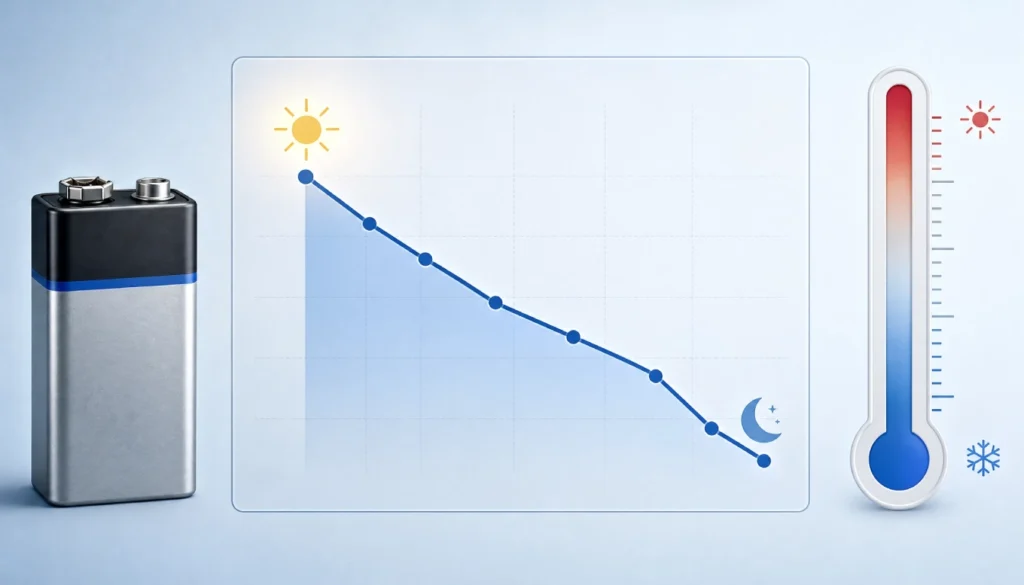
I’ve swapped batteries in dozens of alarms for friends and family over the years. The pattern is almost always the same. The chirping starts in the fall, right when nighttime temperatures first dip below 60°F. That’s not a coincidence. It’s the battery hitting its limit.
Other Sneaky Reasons Your Alarm Only Chirps After Dark
Temperature is the biggest factor, but it’s not the only one. A few other things can make the chirp show up only at night.
- Silence makes it noticeable. A daytime chirp can get lost in household noise. At night, the house is quiet, so you actually hear it.
- Dust buildup. Dust settles on the sensor over the day and can trigger a low-level fault that reads as a chirp once things cool and settle at night.
- Old or expired batteries. A battery near the end of its life is more sensitive to any drop in temperature or power draw.
- Loose battery contact. Vibration from daytime activity (doors closing, footsteps) can temporarily reseat a loose battery, and it slips again once things go still at night.
How to Stop a Chirping Smoke Detector Tonight (4 Simple Steps)
If you’re standing under a chirping alarm right now, here’s what to do this minute.
Step 1: Identify the pattern. A single chirp every thirty to sixty seconds means low battery. A loud, continuous alarm means smoke or fire. If it’s continuous, leave the house and call emergency services.
Step 2: Grab a fresh battery. Don’t reuse an old battery, even one that still works in a remote control. Use a fresh 9-volt alkaline or the specific lithium cell your model requires.
Step 3: Replace it correctly. Twist the alarm off its mounting bracket, open the battery compartment, remove the old battery, and insert the new one, matching positive and negative terminals. Press the test button until it beeps loudly.
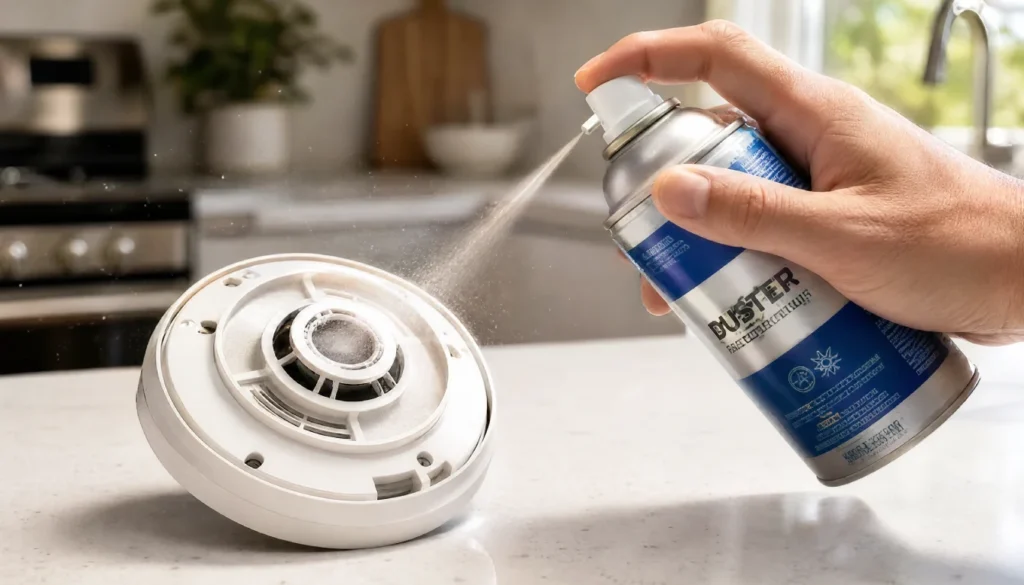
Step 4: Clean and reset if it still chirps. Dust the sensor with a can of compressed air, check for a plastic pull tab you may have missed, and hold the reset button for fifteen to twenty seconds.
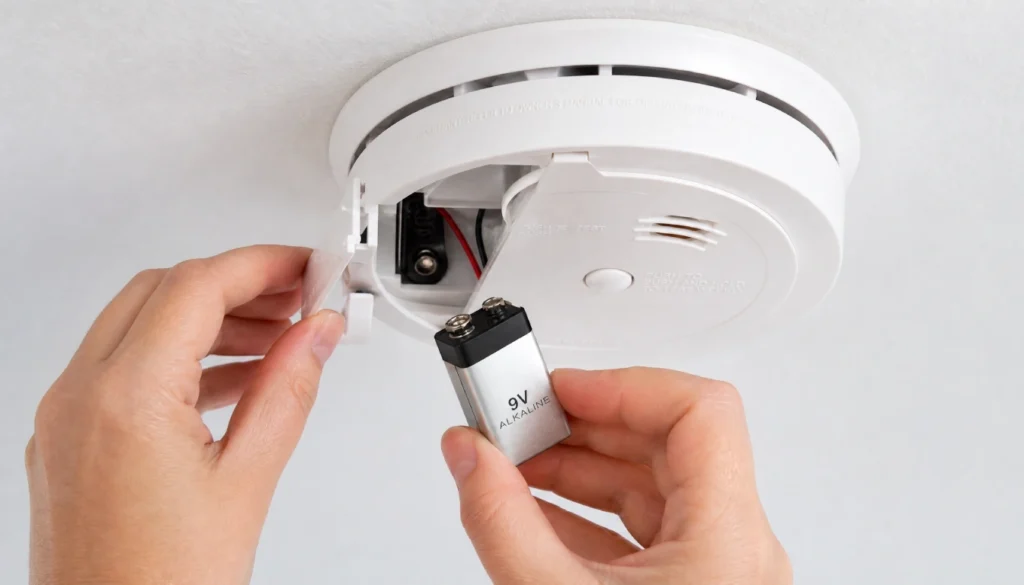
This four-step process clears up most nighttime chirps right away.
“I Put in a New Battery, So Why Is It Still Chirping at Night?”
This is the question I get asked the most. You did everything right, but the chirp comes back the next night anyway.
I’ll never forget the night I was sure my house was haunted, only to find a 9-volt battery was the real culprit. I dragged a chair into the hallway at 3 a.m., pulled the battery, and the chirping stopped. The next night, it started again. I’d grabbed an old battery from a junk drawer instead of a fresh one. Lesson learned: always check the expiration date printed on the battery before you install it.
If a fresh, name-brand battery doesn’t fix it, the problem is usually one of these:
- Dust or debris in the sensor chamber. Even a fresh battery can’t stop a chirp caused by a dirty sensor triggering a fault.
- A loose battery connector. Some alarms have contact springs that weaken over time and lose contact when the unit cools and contracts at night.
- An aging unit. Most smoke alarms have a usable life of about ten years. After that, the internal circuitry itself can cause chirping regardless of the battery.
Check the manufacture date on the back of the unit. If it’s past ten years old, replacing the whole alarm is safer and often faster than continuing to troubleshoot.
How to Prevent Future Nighttime Chirp Scares
A few small habits will keep you from ever losing sleep to this again.
- Replace batteries every six to twelve months, even if the alarm hasn’t chirped yet.
- Set a reminder tied to daylight saving time changes, since most people already check other devices then.
- Vacuum or dust each alarm every few months to keep the sensor clear.
- Write the installation date on the alarm with a marker so you always know its age.
- Replace the entire unit every ten years, no exceptions.
I’ve helped several neighbors set up this routine, and none of them have had a middle-of-the-night chirp since. How to stop a smoke detector from chirping at night really does come down to consistency, not luck.
FAQs
Why does my smoke alarm only chirp at night and not during the day?
Cooler nighttime temperatures reduce battery voltage, and a quiet house makes the chirp easier to hear. Both factors combine after dark.
My smoke alarm beeps every 30 seconds at night. Is that dangerous?
No. A chirp every thirty seconds is a low-battery or fault signal, not a fire warning. A continuous loud alarm is the one that needs immediate action.
I replaced the battery, and it still chirps once a night. What now?
Clean the sensor with compressed air and hold the reset button for fifteen to twenty seconds. If that fails, check the unit’s age and consider replacing it.
Can cold weather alone cause chirping even with a good battery?
Yes, if the battery is already older or partially drained. A brand-new battery rarely chirps from cold alone, but a six-month-old one might.
Should I remove the battery to stop the noise until morning?
No. Removing the battery leaves you without fire protection overnight. Replace it instead, even if it means a quick trip to a 24-hour store.
Final Thoughts
A chirping smoke alarm at night almost always comes down to one thing: a battery that can’t handle the temperature drop after dark. Now that you know why does my smoke alarm chirp at night only, you can fix it in minutes with a fresh battery, a quick clean, and a reset if needed.
Keep a spare 9-volt or lithium battery on hand, note your alarm’s age, and you’ll never have to drag a chair into the hallway at 3 a.m. again. If this guide helped, share it with a friend who’s currently losing sleep over the same mystery chirp.