I still remember the exact moment I realized Instagram was making me miserable.
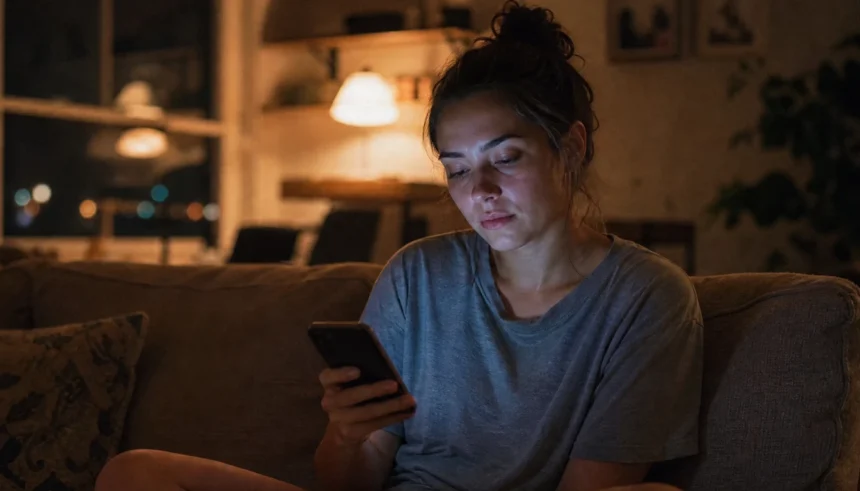
I was sitting on my couch in pajamas at 11 PM, half-eaten dinner beside me, scrolling through a fitness influencer’s account. Perfect abs. Perfect kitchen. Perfect vacation. Perfect everything. And I just sat there thinking: what am I doing with my life?
That feeling, that creeping mix of envy and shame, is something millions of people experience every single day. You open the app for five minutes and close it feeling worse about your body, your home, your relationships, and your bank account. All because of people you have never met.
If you are nodding right now, this article is for you. We are going to talk about why Instagram comparison happens, what it actually does to your brain and self-esteem, and most importantly, how to stop comparing yourself to influencers for good.
Why You Compare Yourself to Instagram Influencers in the First Place
This is not a character flaw. It is not weakness. It is biology.
Humans are wired to compare themselves to others. Social comparison theory, first introduced by psychologist Leon Festinger in 1954, says we naturally measure our worth by looking at the people around us. The problem is that Instagram has completely warped who those “people around us” are.
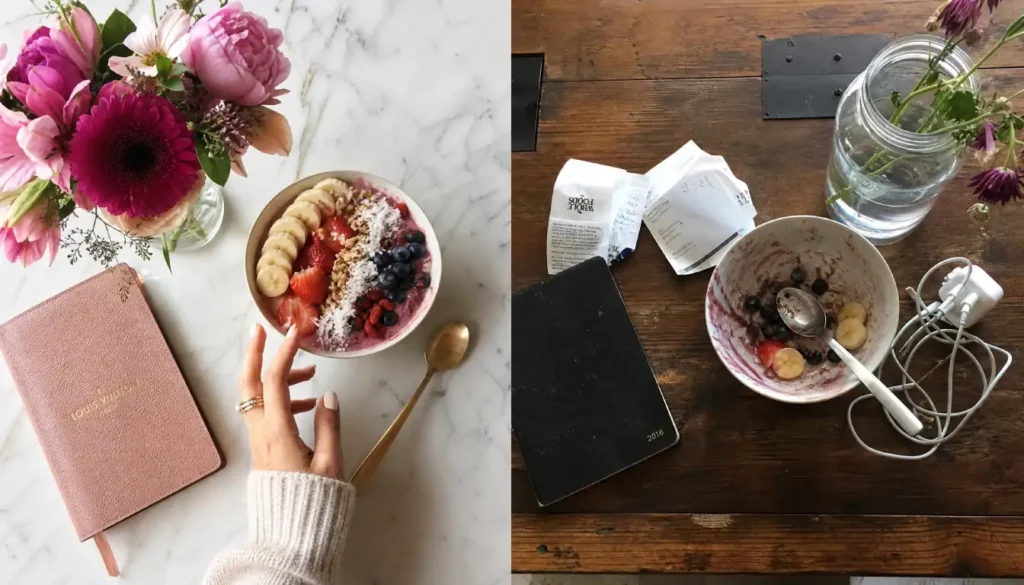
You are no longer comparing yourself to your neighbor or coworker. You are comparing your everyday life to someone’s carefully curated highlight reel, professionally lit, edited, and often sponsored.
That is not a fair fight. And your brain does not know the difference.
What Instagram Comparison Actually Does to Your Mental Health
The research here is detailed, and it is not pretty.
A 2018 study published in the Journal of Social and Clinical Psychology found a direct link between Instagram use and increased feelings of depression, loneliness, and anxiety. A 2021 internal Facebook report (Instagram’s parent company) found that 32% of teen girls said that when they felt bad about their bodies, Instagram made them feel worse.
Instagram self-esteem issues are not just a feeling. They are a documented mental health pattern. When you scroll through influencer content repeatedly, your brain starts to treat what you see as normal. And when your life does not match that version of normal, it reads it as failure.
This is what researchers call “body image distortion,” and it applies to more than just bodies. It warps your perception of success, relationships, lifestyle, and happiness too.
Signs You Have an Unhealthy Relationship with Instagram Influencers
Not sure if Instagram is affecting you? Check yourself against this list.
- You feel anxious or deflated after scrolling, even if nothing bad happened
- You compare your body, home, or life to influencers’ posts regularly
- You check certain accounts repeatedly, even though they make you feel bad
- You feel like your life is boring, ugly, or not enough by comparison
- You spend money trying to match an influencer’s look or lifestyle
- You feel relief when an influencer posts something imperfect or relatable
If three or more of those feel familiar, the Instagram comparison cycle is already affecting your self-worth.
How to Stop Comparing Yourself to Instagram Influencers: 7 Practical Steps
1. Understand What You Are Actually Looking At
Every photo you see from an influencer has gone through a process: planning, shooting multiple takes, selecting the best image, applying filters or editing software, writing a caption, and sometimes hiring a photographer. What looks effortless took hours.
Remind yourself of this every single time you catch that comparison feeling. You are not looking at someone’s life. You are looking at their marketing material.
2. Audit Your Feed Without Mercy
This is the most practical thing you can do right now.
Go through the accounts you follow and ask yourself one question: “Does following this account make me feel inspired or does it make me feel bad about myself?” If the answer is the second one, unfollow. Mute. Do whatever you need to do.
Research consistently shows that curating your Instagram feed to avoid comparison triggers is one of the most effective ways to protect your mental health on the platform. You are not being petty. You are being protective.
3. Limit Your Scrolling Time (With Actual Numbers)
Vague intentions do not work. “I will scroll less” does not work. Numbers do.
Set a daily time limit directly in your phone settings. Many people find that keeping Instagram to 20 to 30 minutes a day significantly reduces feelings of social media envy. Instagram’s built-in daily reminder feature or apps like Screen Time on iPhone make this easy to enforce.
Try it for two weeks and notice how you feel.
4. Replace Comparison with Curiosity
When you feel that pang of envy, pause and get curious instead of spiraling.
Ask yourself: “What is it about this post that triggered me?” Sometimes the answer tells you something useful. Maybe you actually want to prioritize fitness. Maybe you miss traveling. Maybe you are ready for a home refresh. Envy can be a pointer toward what you want, not proof that you are lacking.
Use that information. Then close the app.
5. Practice Gratitude Journaling for Comparison
This sounds simple because it is. And it works because your brain cannot hold gratitude and envy at the same time.
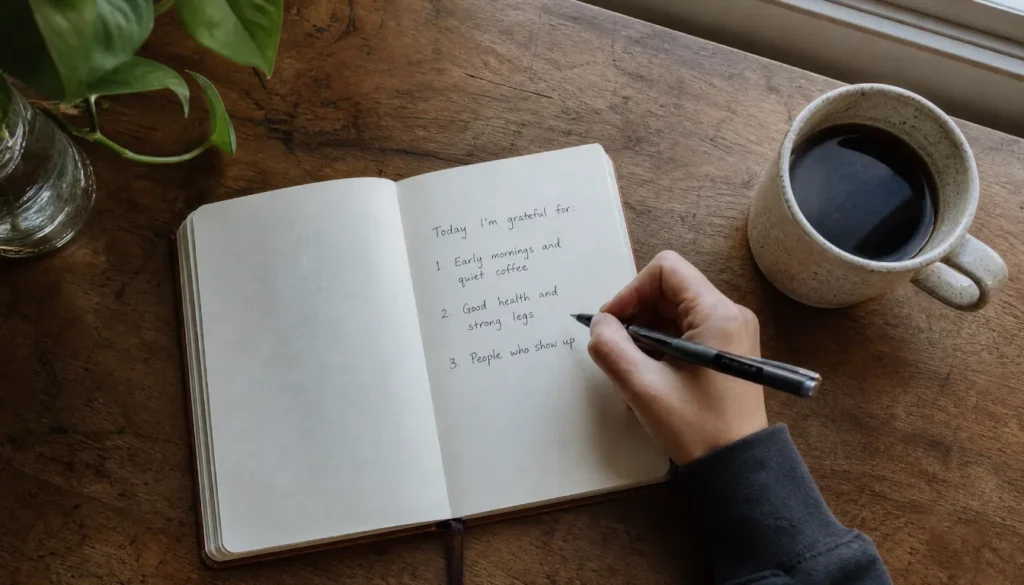
Keep a small notebook or use a phone app. Every morning or evening, write down three things that are genuinely good in your life right now. They do not have to be big. “I had a warm cup of coffee.” “My friend texted to check on me.” “I got a full night of sleep.”
Gratitude journaling for comparison works by redirecting your attention from what you lack to what you have. Do it consistently, and the comparison reflex gets quieter over time.
6. Build Your Internal Validation Muscle
Influencers survive on external validation. Likes, comments, follower counts. That model is their job. It should not be yours.
Ask yourself honestly: whose approval are you actually seeking? When you post something or look at someone else’s post, are you measuring your worth by how it performs?
Internal validation means your self-worth comes from your own values, progress, and choices, not from comparison to others. This takes practice. Therapy helps. So does taking intentional breaks from Instagram and noticing that your value does not disappear when you are offline.
7. Try a Digital Detox (Even a Short One)
You do not have to delete Instagram forever. But taking a week or even a weekend off can reset your baseline faster than anything else.
Many people report that after a digital detox of just 7 days, they feel less anxious, more present, and more confident. The comparison noise quiets down quickly when you stop feeding it.
The Difference Between Inspiration and Comparison on Instagram
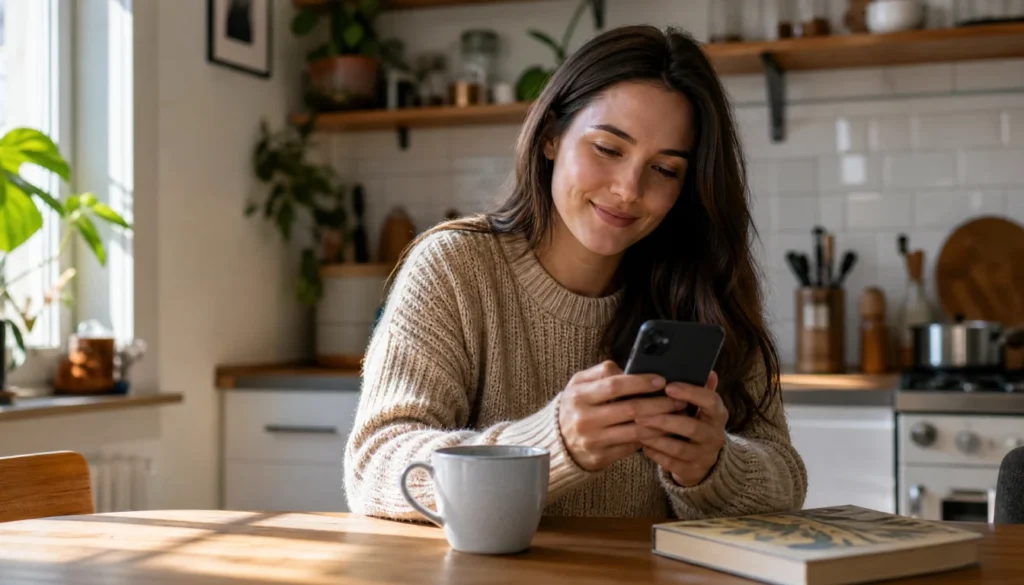
Not all influencer content is harmful. Some accounts are genuinely motivating, educational, or joyful to follow.
The difference is in how you feel. Inspiration feels like a pull forward: “I want to try that.” Comparison feels like a push down: “I am not good enough.”
Follow accounts that pull you forward. Avoid ones that push you down. That boundary is personal, and only you can draw it.
Quick Tips to Stop Social Media Comparison Today
- Turn off Instagram notifications so you open the app on your terms, not its terms
- Switch your Explore page by engaging with different content until the algorithm shifts
- Follow accounts that show real, unfiltered life alongside aspirational ones
- Remind yourself before opening the app: “This is a highlight reel, not real life.”
- Talk to someone you trust when the feeling of comparison gets heavy
FAQs
Why do I feel bad after scrolling Instagram influencers, even when I know it is fake?
Knowing something is curated does not fully protect your brain from social comparison. The emotional reaction happens faster than rational thought. The fix is reducing exposure, not trying to think your way out of the feeling in real time.
Is it okay to unfollow influencers I personally like?
Yes. You can like someone and still recognize that their content is not good for your mental health. Unfollowing is not personal. It is self-care.
How long does it take to stop comparing yourself to influencers?
It varies. Most people notice a real shift within two to four weeks of consistently auditing their feed, limiting scroll time, and practicing gratitude. It is a habit, not a one-time fix.
Can therapy help with Instagram comparison?
Yes. Therapists who specialize in social media anxiety and self-esteem can help you identify comparison triggers and build healthier thought patterns. Cognitive reframing is especially useful here.
Should I delete Instagram entirely?
Not necessarily. For most people, the goal is a healthier relationship with the platform, not total avoidance. But if the app is consistently harming your mental health despite your best efforts, a longer break or permanent deletion is a valid choice.
You Are Not Behind. You Are Just Looking at the Wrong Scoreboard.
Here is the truth: Instagram influencers are not your competition. They are not even a fair reference point. They are professionals whose entire job is to look aspirational. Comparing your life to theirs is like comparing your cooking to a restaurant chef’s and feeling like a failure.
You are living a real life with real context, real challenges, and real moments that no filter can capture. That is no less than what you see online. It is just different, and it is yours.
Start with one step today. Unfollow one account that makes you feel small. Write down three things you genuinely appreciate about your life. Set a timer before your next scroll.
Small shifts, done consistently, change everything.
If this resonated with you, share it with someone who might need it. Or drop a comment below: What is one thing you are going to do differently on Instagram starting today?