

By someone who almost wasted $3,000 on an idea nobody wanted.
I still remember the excitement I felt when the idea hit me.
It was a Tuesday night. I’d been scrolling through Pinterest, half-asleep, when I thought: “Wait. People would actually pay for this.” I spent the next two hours convincing myself it was brilliant. I sketched logos. I named the thing. I even picked a font.
Then I did what most of us do — I started spending. Bought a domain. Hired a freelancer for a logo. Set up a Shopify store.
Three months later? Zero sales. Zero customers. Not even a single “tell me more.”
That experience taught me something I wish someone had told me earlier: you don’t need to build anything to know if your idea works. You just need to validate it first.
The good news? You can test a business idea in 7 days — completely free. No budget, no website, no coding skills required.
Here’s exactly how to do it.
What Is Business Idea Validation (And Why It Matters)?
Before we get into the steps, let’s quickly cover the basics.
Business idea validation is the process of testing whether real people actually want what you’re thinking of building — before you invest time, money, or energy into it.
It’s not about being pessimistic. It’s about being smart. Most businesses don’t fail because the founder wasn’t passionate. They fail because nobody wanted the product.
When you validate a business idea early, you save yourself months of wasted effort. You figure out fast if there’s real demand — or if you need to tweak your direction.
The best part? You can do the whole thing with zero budget. Let me show you how.
The 7-Day Business Validation Plan (Zero Cost)
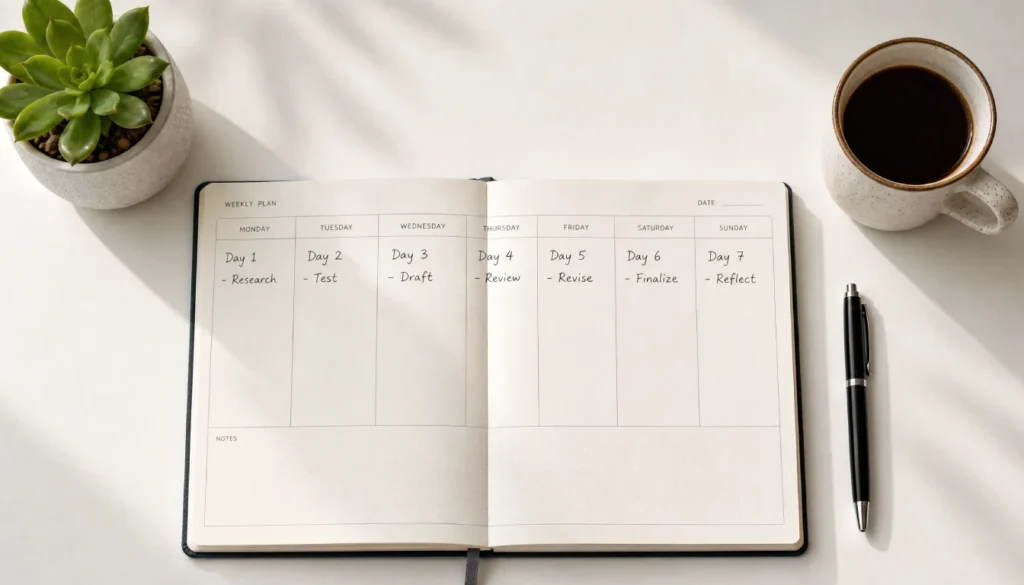
Day 1: Get Clear on the Problem You’re Solving
Here’s a mistake almost everyone makes: they fall in love with their solution before they understand the problem.
Start by asking yourself this honestly: What specific frustration does my idea solve?
Write it out in one sentence. Something like: “I help busy moms find healthy dinner recipes in under 10 minutes.”
This is your value proposition — the core of everything. If you can’t state the problem clearly, your customers won’t connect with your offer either.
Quick tip: Search Reddit, Facebook Groups, and Quora for conversations about the problem you’re solving. If people are already venting about it, that’s a green light.
Day 2: Do Your Market Research (Free Tools Only)
You don’t need expensive software to do solid market research. Free tools can tell you a LOT.
Here’s what to use:
| Tool | What It Tells You |
|---|---|
| Google Trends | Is interest growing or shrinking? |
| Reddit Search | Are people actively discussing this problem? |
| Answer the Public | What questions are people asking? |
| Facebook Groups | Is there an active community around this topic? |
| Etsy / Amazon | Are similar products already selling? |
If you find people already buying something similar — that’s good news, not bad. It means demand exists. Your job is to figure out how you can do it better or differently.
Day 3: Run a “Fake Door” Smoke Test
This is one of my favorite free business idea validation methods, and it’s sneaky-smart.
A fake door test means you put up a simple landing page (or even just a social media post) describing your product or service — before it actually exists.
You can build a free landing page in under an hour using tools like:
- Carrd.co (free plan available)
- Notion (publish a public page)
- Google Sites
Add a basic email signup form. Something like: “Join the waitlist — launching soon.”
Then share it with your network or in relevant online communities. Count how many people sign up. Even 10–20 genuine signups from strangers is strong early proof of demand.
Day 4: Talk to Real Humans (Customer Discovery Interviews)

This is the step most people skip. Don’t.
Customer discovery interviews are conversations where you ask real potential customers about their experiences, frustrations, and habits. You’re NOT pitching your idea yet. You’re listening.
Find 5 people who might be your target audience. You can reach them through:
- Facebook Groups
- LinkedIn connections
- Friends of friends
- Reddit communities
Ask questions like:
- “What’s the hardest part about [problem area]?”
- “How do you currently handle this?”
- “Have you ever paid for a solution? What happened?”
Their answers will either confirm your idea — or show you where to pivot. Either outcome is valuable.
Day 5: Check If Anyone’s Already Searching for This
Now it’s time to do some quick keyword research. Don’t worry — this doesn’t require any paid tools.
Use Google’s free Keyword Planner or just start typing your idea into Google’s search bar. Watch what autocomplete suggests. Those suggestions are real phrases people are typing every day.
If people are actively searching for terms like “how to validate a business idea for free” or “test business idea viability without a website,” that tells you intent is there.
This step is also great for content strategy if you plan to start a blog or build organic traffic later. The more people search, the more opportunities you have.
Day 6: Try Pre-Selling Before You Build Anything
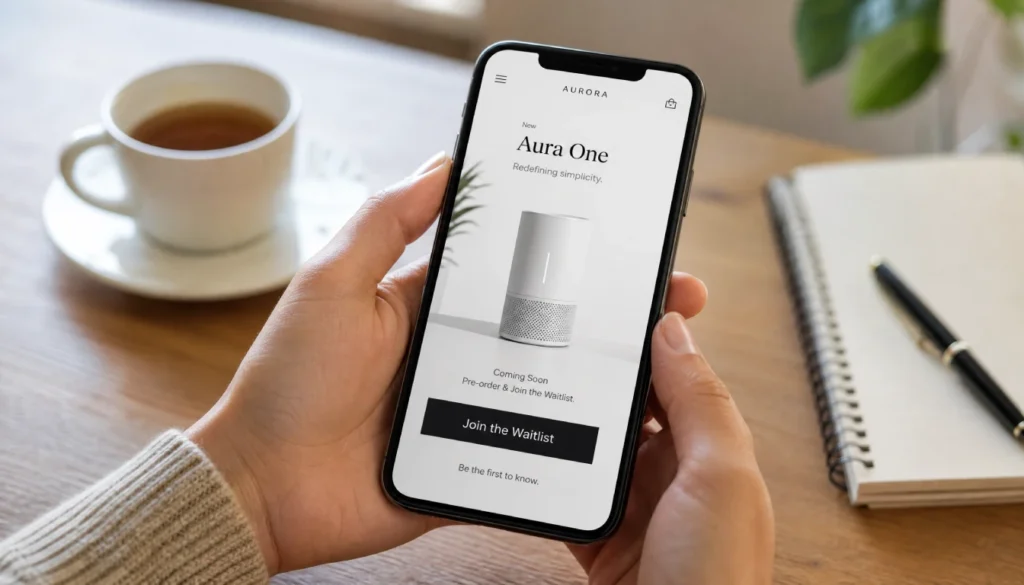
Pre-selling is one of the most powerful forms of zero-cost business validation — and honestly, it’s underused.
Here’s how it works: you describe your product or service to potential customers and ask them to pay (or commit) before you’ve fully built it.
You can do this by:
- Posting in a Facebook Group or community forum
- Sending a direct message to people you’ve already interviewed
- Creating a simple offer post on LinkedIn or Instagram
You don’t need a website. A Google Form or even a PayPal link works fine.
If even 2–3 people say “yes, I’ll pay for this” — that’s real validation. Real money beats any amount of market research data.
Day 7: Score Your Idea and Make a Decision
By now, you’ve collected a lot of information. Day 7 is about making sense of it all.
Use this simple idea scoring sheet to rate your idea:
| Question | Score (1–5) |
|---|---|
| Did people confirm the problem exists? | __ |
| Did you find active online communities around this topic? | __ |
| Did anyone sign up for your waitlist? | __ |
| Did anyone agree to pre-purchase? | __ |
| Is there already a market (competitors selling)? | __ |
If you scored 15–25: Strong signal. Move forward with confidence.
If you scored 8–14: Mixed signal. Revisit your value proposition or target audience.
If you scored below 8: The idea may need a major pivot — and that’s okay. Better to learn this now.
Common Mistakes to Avoid During Validation
A lot of people go through the motions of validation but still get it wrong. Here are the biggest traps:
- Asking friends and family — They love you. They’ll say yes to anything. Talk to strangers instead.
- Pitching before listening — In customer interviews, your job is to ask questions, not sell.
- Taking one “no” as final — Rejection from one person means nothing. Patterns across many conversations mean everything.
- Building before validating — You don’t need a product to test demand. Test first, build second.
- Skipping the pre-sell — Most people are scared to ask for money before they’ve built something. But that willingness to pay is the most honest signal you’ll ever get.
FAQs
How long does it really take to validate a business idea?
You can get meaningful signals in as little as 7 days using free tools and direct outreach. Some ideas need a few more weeks of testing, especially if you’re targeting niche markets or slower-moving industries.
Can I validate a business idea without a website or social media following?
Absolutely. You can test business idea viability using Reddit threads, Facebook Groups, WhatsApp communities, and cold outreach — none of which require a website or existing audience. A simple Google Form or Notion page is enough.
What’s the difference between validation and a feasibility study?
A feasibility study is a formal document that looks at financial, legal, and operational factors. Business idea validation is more scrappy and real-world — it focuses on whether customers actually want what you’re offering. Validation comes first; feasibility analysis comes later.
How do I validate an app or SaaS idea without coding anything?
Use a fake door test. Build a simple landing page describing what the app does, add a waitlist signup, and drive traffic to it. If people sign up, you’ve validated demand without writing a single line of code. Tools like Carrd.co make this free and fast.
What if nobody responds to my validation attempts?
That’s valuable feedback too. If people aren’t even curious enough to click or reply, the messaging may be off — or the market may not be ready. Try tweaking how you describe the problem, or explore a slightly different audience before abandoning the idea entirely.
Final Thoughts: Stop Building. Start Testing.
Here’s what I wish someone had told me before I spent $3,000 on an idea nobody wanted:
The goal isn’t to prove your idea is great. The goal is to find out the truth — fast.
Sometimes the truth is exciting. Sometimes it’s a pivot. And sometimes it’s a full stop. All three outcomes are better than spending six months building something that doesn’t sell.
You don’t need a budget. You don’t need a team. You don’t need a logo or a perfect website. You need 7 days, a little courage, and the willingness to listen to real people.
Start with Day 1 today. Just write down the problem you’re solving. That’s it.
And when you do — or if you’ve already tried validating an idea and hit a wall — I’d love to hear your story. Drop a comment below, share what worked, or ask a question. Every business idea deserves a fair shot, and sometimes all it takes is one conversation to unlock the whole thing.
You’ve got this.
Did this help? Share it with someone who’s been sitting on a business idea for months. They’ll thank you for it.