

I still remember the first time I thought I had a brilliant business idea.
I spent three months planning. I built a full website, designed a logo, wrote a 40-page business plan, and even ordered branded merchandise. I was sure people would love it.
Then I launched. And almost nobody showed up.
The product wasn’t what people actually wanted. I had never stopped to ask them. I just assumed.
That experience cost me time, money, and a lot of confidence. What I needed, and didn’t know existed yet, was the lean startup method. If you’ve ever had an idea and felt unsure where to start, or if you’ve launched something that didn’t land, this guide is for you.
Here’s exactly what the lean startup methodology is, how it works, and how you can use it starting today, even with no business background and no budget.
What is the Lean Startup Method, Really?
The lean startup definition is simpler than it sounds.
The lean startup is a process for building businesses and products based on what customers actually want, not what you think they want. Instead of spending months planning in isolation, you test ideas quickly, gather real feedback, and adjust as you go.
Eric Ries created the lean startup method and introduced it in his 2011 book, The Lean Startup. He developed it after years of watching startups, including his own, fail because they built products nobody asked for.
The core idea? Stop wasting resources on assumptions. Start learning fast.
The 3 Core Lean Startup Principles You Need to Know
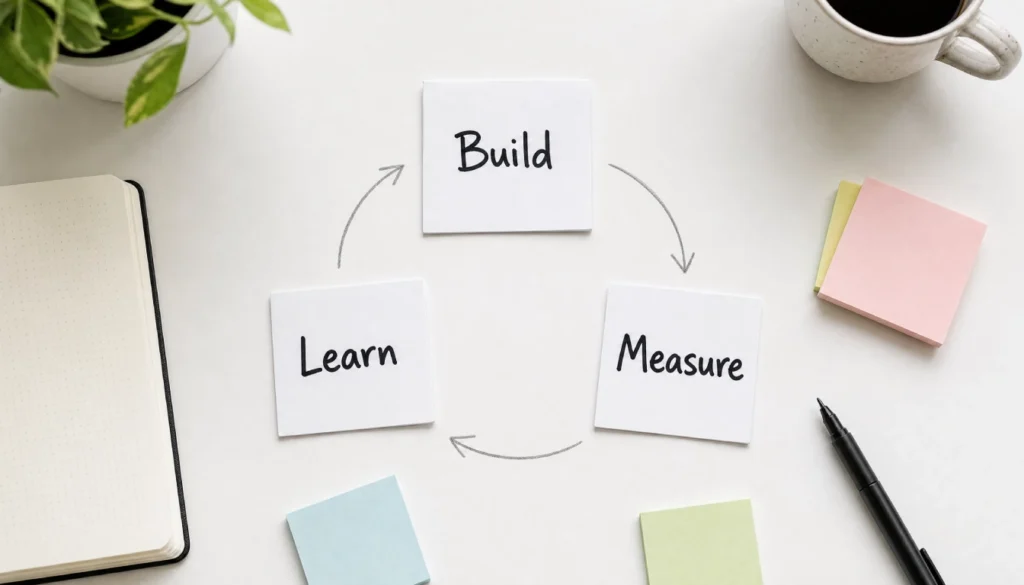
The lean startup framework rests on three ideas that work together as a continuous cycle.
1. Build
You don’t build a finished product. You build a minimum viable product (MVP), which is the simplest version of your idea that you can put in front of real people. It only needs to do one thing well enough to test your core assumption.
Think of Dropbox. Before writing a single line of code for their storage product, the founders made a short video explaining what Dropbox would do. The response told them people wanted it. That video was their MVP.
2. Measure
Once your MVP is out there, you collect data. Not vanity metrics like page views or social followers, but real signals: Did people sign up? Did they use the feature? Did they come back?
This stage is about learning what actually happened, not what you hoped would happen.
3. Learn
You take what the data tells you and make a decision. Do you stay on the same path, known as persevere, or do you change direction, known as a pivot?
This build-measure-learn feedback loop repeats over and over. Each round gets you closer to a product people genuinely want.
Lean Startup vs Traditional Business: What’s the Difference?
If you’ve ever written a full business plan before launching, you’ve used the traditional approach. Here’s how the two compare.
| Factor | Traditional Business | Lean Startup |
|---|---|---|
| Planning style | Long, detailed upfront plan | Short, flexible, assumption-based |
| Product launch | After full development | Early, with an MVP |
| Customer input | After launch | Throughout the process |
| Response to failure | Seen as a setback | Seen as a learning signal |
| Resource use | High upfront investment | Small, tested steps |
| Timeline | Months or years | Weeks or months |
The lean startup model works faster because it treats every launch as an experiment, not a final answer.
What is Validated Learning (And Why It Changes Everything)?
This is one of the most important lean startup concepts, and most beginners overlook it.
Validated learning means you only count something as “learned” when you have real evidence from real customers. Not opinions from friends. Not your own gut feeling. Actual behavior from people who have no reason to be polite.
Eric Ries argues that the goal of a startup isn’t to build a product. It’s to learn what product to build. Validated learning is how you prove you’re making progress, even when the numbers look small.
This is also where innovation accounting comes in. Instead of tracking traditional metrics like revenue in early stages, you track learning milestones. Did customers do what you expected? If not, what did they do instead?
How to Use the Lean Startup Method Step by Step

You don’t need a tech background or a team to start. Here’s how to apply lean startup principles in real life.
Step 1: Write down your biggest assumption. Every idea rests on at least one assumption. “People will pay for this.” “Users will find this helpful.” “This saves time.” Pick the riskiest one first.
Step 2: Build the smallest possible test. What’s the cheapest, fastest way to test that assumption? It could be a landing page, a survey, a manual service, or even a social media post.
Step 3: Get it in front of real people. Don’t show it to family or close friends unless they’re your actual target customer. Find people who genuinely face the problem you’re solving.
Step 4: Measure what they actually do. Watch behavior, not just words. Did they sign up? Did they return? Did they pay? People say many things; their actions tell you the truth.
Step 5: Decide: pivot or persevere? If the data supports your assumption, keep going and build more. If it doesn’t, change something specific and test again.
Common Lean Startup Mistakes Beginners Make
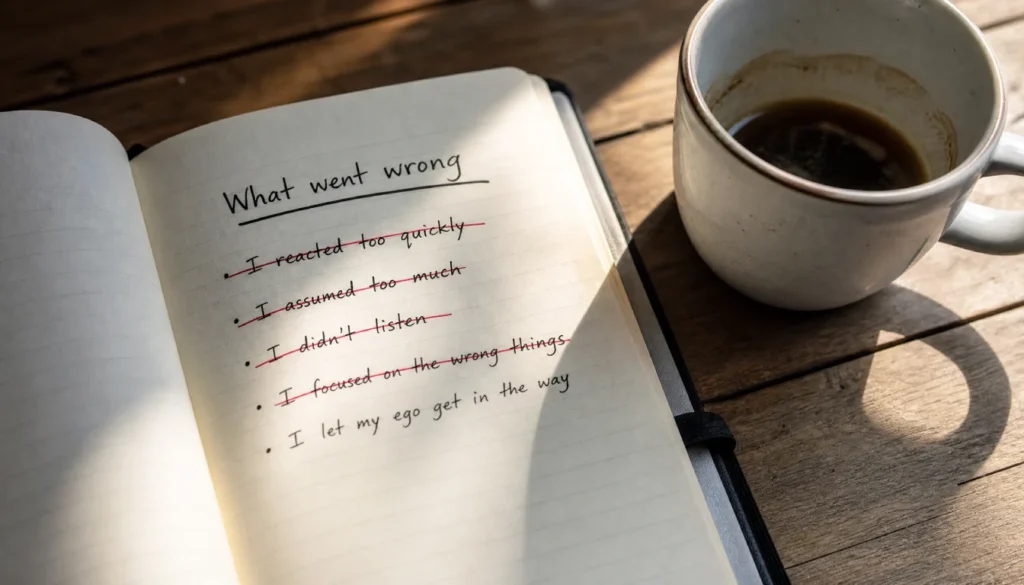
Even with the best intentions, a few patterns trip people up early on.
- Building too much before testing. The MVP should be uncomfortable to show. If you’re proud of how polished it is, it’s probably too big.
- Testing the wrong assumption. Start with the riskiest belief you hold about your idea, not the easiest one to confirm.
- Asking the wrong questions. “Would you use this?” gets you a polite yes. “Have you ever paid for something like this?” gets you the truth.
- Ignoring what the data says. If you keep making excuses for bad results, you’re not actually learning.
- Skipping customer interviews. Talking to 10 potential customers before building anything is one of the highest-return actions you can take.
Can the Lean Startup Method Work for Any Business?
Yes, and this surprises a lot of people.
The lean startup approach was built for tech startups, but it applies to service businesses, freelancers, ecommerce stores, nonprofits, and even corporate teams launching new products. The core logic doesn’t change: test assumptions early, learn from real behavior, adjust before you invest too heavily.
The lean startup methodology for corporate innovation is actually one of the fastest-growing applications right now. Large companies use it to avoid spending millions on products that internal teams thought were great, but customers didn’t want.
Frequently Asked Questions
What is the lean startup method in simple terms?
It’s a way to build a business or product by testing your idea with real customers as early as possible, learning what works, and changing what doesn’t, before spending too much time or money.
Who created the lean startup method and when?
Eric Ries created the lean startup method. He introduced it publicly in his 2011 book, The Lean Startup, drawing on ideas from lean manufacturing and customer development.
What is the build-measure-learn feedback loop?
It’s the core cycle of the lean startup process. You build a small test version of your idea, measure how real people respond to it, and then learn from the results to decide your next move.
What is the difference between a lean startup and a traditional business model?
Traditional businesses plan extensively upfront and launch a finished product. The lean startup launches a rough version early, collects feedback, and improves based on what customers actually do.
Is the lean startup method still relevant in 2026?
Very much so. With faster prototyping tools, AI-assisted product development, and increasingly competitive markets, the ability to test and learn quickly is more valuable than ever. Lean startup principles have become standard in product teams across industries.
You Don’t Have to Figure It All Out Before You Start
Here’s the truth about building something new: nobody knows if it will work at first. Not the founders with the biggest funding rounds. Not the entrepreneurs with 20 years of experience. Nobody.
The lean startup method doesn’t promise success. It reduces the cost of being wrong, and it gets you to the right answer faster.
If you have an idea you keep putting off because you’re waiting until it’s “ready,” this is your sign to shrink it down. Find the one assumption that everything else depends on. Build the smallest possible test. Show it to five real people this week.
That’s how it starts. Not with a perfect plan, but with a question you’re willing to go find the answer to.
Have you tried any version of this in your own work or side project? Drop your experience in the comments. I’d love to hear what you tested, what surprised you, and what you learned.