
Do you check your bank account and wonder where the money went again? You’re not alone. So what is a low spend month rules tracker template, and why is everyone talking about it?
A low spend month is a 30-day reset. You pick a small set of rules, cut spending to the essentials, and track every dollar. No extreme budgeting. No giving up your morning coffee forever.
I’ve done this challenge myself, and it changed how I look at money. In this guide, you’ll get clear rules, real tips, and a free tracker to start today.
What Exactly Is a Low Spend Month?
A low spend month is a set time, usually 30 days, where you spend only on essentials and a few pre-approved extras. You set your own rules before you start.
This isn’t the same as extreme frugality. You still eat well. You still have fun. You just cut out the spending that doesn’t add real value to your life.
Think of it as a financial reset button. You pause the automatic purchases and ask yourself what you actually need.
Key takeaway: A low spend month works because you set the boundaries. Nobody else decides your rules.
10 Simple Low Spend Month Rules for Beginners
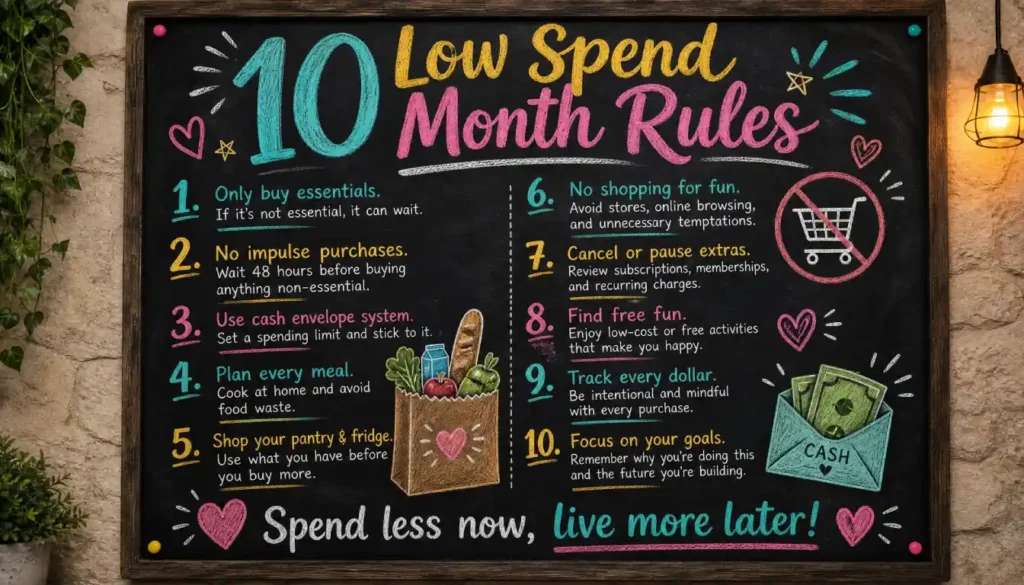
These low-spend month rules for beginners keep things simple. Pick 5 to 10 that fit your life. You don’t need all 10.
- No clothes, shoes, or accessories unless something breaks.
- Cook at home. Limit takeout to one meal a week.
- Cancel or pause unused subscriptions.
- Use what’s already in your pantry and fridge first.
- No impulse buys under $20. Wait 48 hours before any purchase.
- Unsubscribe from marketing emails and delete shopping apps.
- Free entertainment only: library books, hikes, free events.
- Set a strict grocery budget and stick to a list.
- No new subscriptions or memberships during the month.
- Track every expense, even small ones, in your tracker.
Real experience: When I tried this myself, rule 6 made the biggest difference. Once the emails stopped, the urge to shop dropped almost overnight.
The Surprising Benefits of a Low Spend Month
The benefits of a low spend month go beyond your bank balance. You save money, yes. But you also learn something about your habits.
- You save real cash. Most people save $300 to $800 in one month.
- You spot spending leaks. Subscriptions and small purchases add up fast.
- You build confidence. You prove to yourself that you can control spending.
- You reduce stress. Fewer purchase decisions mean less mental clutter.
- You reset your relationship with money. You start asking “do I need this” instead of “can I afford this.”
I’ve helped several friends try this challenge, and the most common surprise is how much they don’t miss. Most people expect to feel deprived. Instead, they feel lighter.
How to Prepare in 3 Easy Steps (Do This First)
Don’t jump in without a plan. These three steps set you up to succeed.
Step 1: Set your “why” and choose your rules. Write down why you’re doing this. More savings? Less debt? Pick 5 to 10 rules from the list above that match your goal.
Step 2: Prep your environment. Stock your pantry, unsubscribe from tempting emails, and download your tracker. Remove saved cards from shopping apps if you can.
Step 3: Track every day and adjust without guilt. Log your spending daily. If you slip up, don’t quit. Just note it and keep going.
Free Low Spend Month Tracker – Download Your Template
You don’t need a fancy app for this. A simple free low spend month printable tracker does the job.
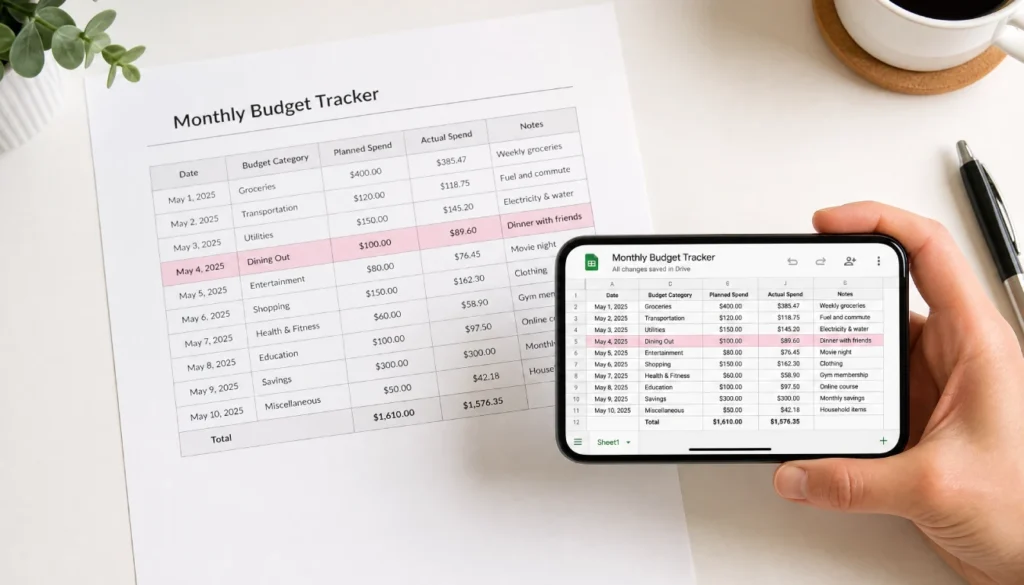
The tracker has five simple columns: date, budget category, planned spend, actual spend, and notes. Fill it in every day. It takes less than two minutes.
You can use the printable PDF version or the Google Sheets version on your phone. Both link to the same download button below.
Grab the tracker here and start your first day today.
7 Tips to Do a Low Spend Month Successfully (Without Feeling Deprived)
These low spend month tips without deprivation focus on how to do a low spend month successfully, not just survive it.
- Plan your meals for the week. This cuts food waste and takeout.
- Find a free substitute for one habit. Swap a paid gym class for a walk.
- Tell a friend or family member. Accountability keeps you on track.
- Use the 48-hour rule for any purchase. Most urges fade within a day.
- Celebrate small wins. Note every day you stay on budget.
- Batch cook on weekends. Fewer decisions during the week means less spending.
- Keep a “want” list. Write down things you want to buy later, then reassess after the month ends.

I remember staring at my bank account after a spendy December and feeling sick. I’d faced the same overspending cycle every month, telling myself next month would be different. After trying a low-spend month with clear rules and this simple tracker, I saved $620 in 30 days without feeling like I was living in punishment mode. Here’s exactly how I did it, using the same steps above.
Common Mistakes to Avoid + Your 30-Day Action Plan
Most people fail this challenge for the same few reasons. Avoid these mistakes, and you’ll finish strong.
- Setting too many rules at once. Start with 5, not 10.
- Not prepping your pantry first. You’ll end up ordering takeout out of necessity.
- Skipping the tracker. Without tracking, you lose sight of your progress.
- Quitting after one slip-up. One bad day doesn’t ruin the month.
- Not planning for social events. Decide your approach before you’re at dinner with friends.
Your 30-day action plan:
- Days 1-3: Set your rules, prep your pantry, download your tracker.
- Days 4-20: Track daily, stick to your list, use the 48-hour rule.
- Days 21-25: Review your tracker. Adjust any rule that feels too strict.
- Days 26-30: Finish strong. Plan how you’ll use your savings.
Final Thoughts
A low spend month gives you a clear, simple reset for your finances. Now you know what a low spend month rules tracker template looks like and how to build your own.
Pick your rules, prep your kitchen, download the tracker, and start tomorrow. Comment below with your savings goal, and share this post with a friend who needs a reset too.